
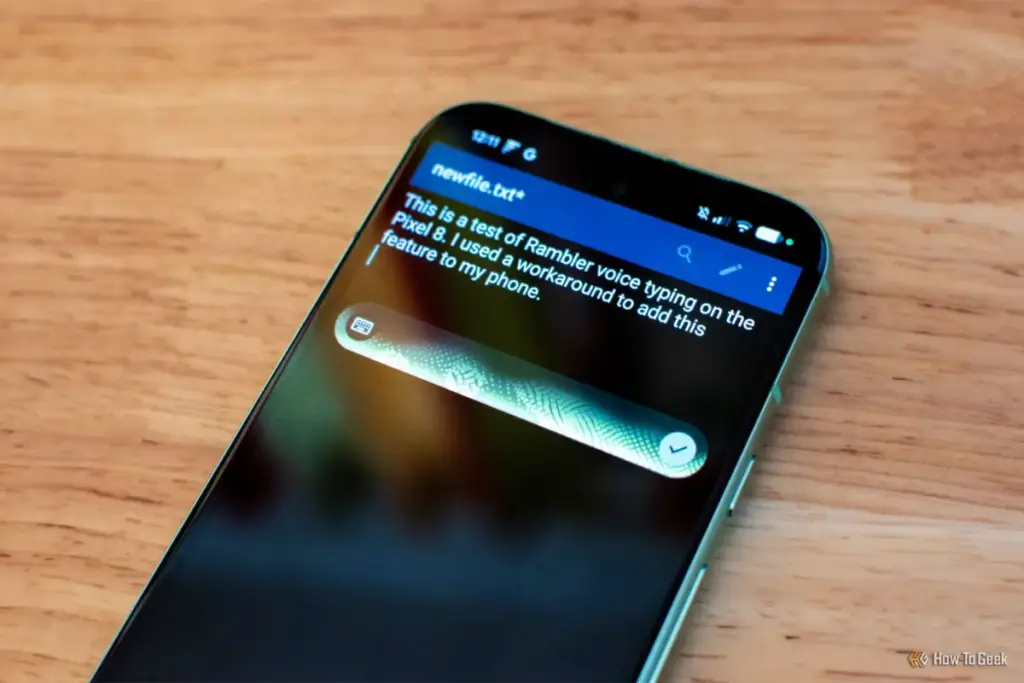
The launch of a new flagship smartphone is almost always accompanied by a suite of exclusive software features designed to entice users into an upgrade. With the release of the Pixel 11, Google’s standout selling point hasn’t been a revolutionary camera sensor or a breakthrough in battery chemistry, but rather a sophisticated AI-driven voice-to-text tool called Rambler. Positioned as the next evolution of mobile dictation, Rambler has been marketed as a feature that leverages the specific architectural advantages of the latest Tensor processing units. However, recent real-world testing suggests that the hardware requirements for this "next-generation" tool may be more of a marketing choice than a technical necessity.
In a series of tests conducted on a Pixel 8a—a mid-range device released two years prior—it has been demonstrated that Rambler is fully capable of operating on older hardware with surprising efficiency. This discovery raises significant questions about Google’s current strategy of artificial feature gating and the true capabilities of its older silicon. While the company has historically used software exclusivity to drive hardware sales, the seamless performance of Rambler on a 2024-era device suggests that the benefits of the Pixel 11’s newest features could, and perhaps should, be made available to a much wider audience.
What is Rambler?
To understand why Rambler is considered a significant leap forward, one must first look at the long-standing frustrations associated with standard voice-to-text algorithms. For years, Google’s standard voice typing tool has been a double-edged sword. While it is often fast, it remains notoriously unreliable in casual settings. Traditional algorithms struggle with the nuances of human speech, often mangling punctuation, mishearing homophones, or simply disconnecting mid-sentence.
The primary obstacle for older voice-to-text systems is that human speech rarely follows the rigid rules of written language. In casual conversation, we utilize grammatical shortcuts, mid-sentence self-corrections, and a constant stream of filler words—the "uhms," "ahs," and "likes" that pepper our daily interactions. Standard dictation tools usually attempt to transcribe these noises literally, resulting in a "stream-of-consciousness soup" that requires extensive manual editing before it can be sent as a professional email or even a coherent text message.
Rambler attempts to solve these systemic issues by processing speech through a combination of on-device and cloud-based Large Language Models (LLMs). Rather than acting as a simple stenographer, Rambler functions more like a real-time editor. As you speak, the system analyzes the context of your sentences. It automatically strips out filler words, corrects grammatical inconsistencies, and applies logical punctuation based on the cadence of your voice. Crucially, it manages to do this while retaining the user’s general tone and intent, ensuring the output still sounds like the person who spoke it.
Beyond simple transcription, Rambler introduces a level of precision editing previously unseen in mobile keyboards. Because it is built on an LLM foundation, it understands natural language commands. Users can dictate a paragraph and then simply say, "make this sound more professional," or "make this shorter and more casual," and the keyboard will rewrite the text accordingly. It even supports specific insertion commands, allowing users to ask the AI to "insert a coffee emoji at the end" or "add a sentence about the meeting time after the first paragraph."
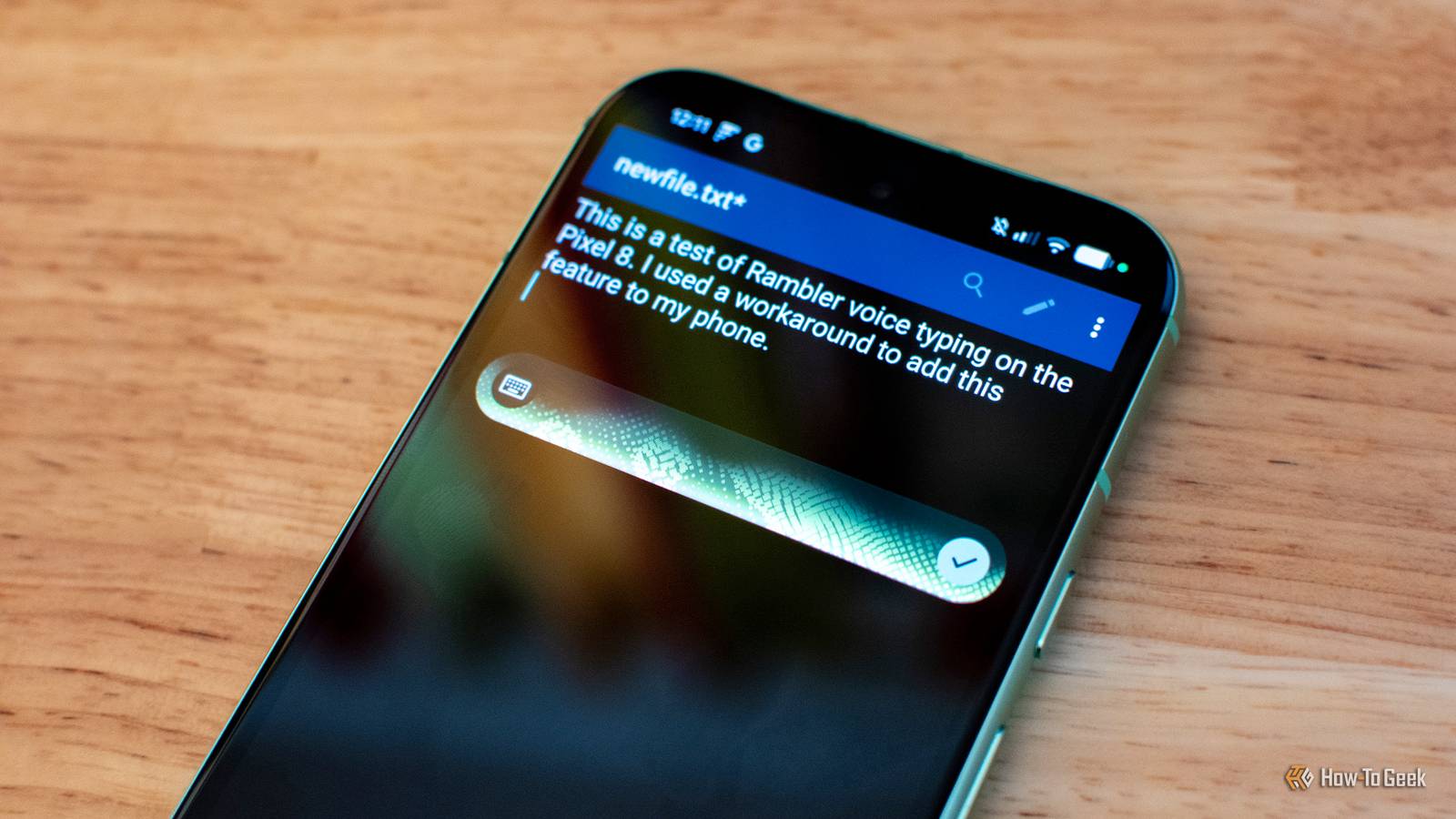
Exclusive to the Pixel 11 and the newly released Googlebook 14, Rambler replaces the standard microphone icon in the top-right corner of Gboard. For the average user, the transition is designed to be seamless. There are no new buttons to learn; the act of voice typing remains the same, but the results are fundamentally more polished.
One of the most striking design choices in Rambler is the absence of real-time transcription. Unlike traditional dictation, where words appear on the screen as you say them, Rambler shows nothing until the user has finished speaking. Instead, a glowing animation appears over the keyboard to indicate that the AI is listening. While this may be jarring for users accustomed to watching their words appear in real-time, there is a psychological benefit to this approach. Traditional speech-to-text forces the user to look for mistakes while they are still trying to formulate their thoughts, which can be highly distracting. Rambler’s "listen first, type later" philosophy allows for a more natural flow of thought.
The Pixel 8a Experiment
The exclusivity of Rambler to the Pixel 11 has been a point of contention since the phone’s announcement, particularly given Google’s promises at the I/O event in May 2026 to bring more AI features to its legacy lineup. To test the validity of this exclusivity, Rambler was forced onto a Pixel 8a using a modified version of Gboard.
The results of the experiment were unexpected. Despite the Pixel 8a utilizing older Tensor hardware, the installation of "PixelBoard"—a modified keyboard APK available on GitHub—brought full Rambler functionality to the older device. The setup process was remarkably straightforward, requiring no root access and taking less than two minutes to complete.
The most surprising takeaway from the test was the speed and reliability of the feature. On the Pixel 8a, Rambler’s response times were nearly instantaneous, mirroring the performance seen on the flagship Googlebook 14. Even more impressive was the discovery that the core features of Rambler work entirely offline. While it was assumed that the intensive processing required for LLM-based rewriting would necessitate a constant cloud connection, the Pixel 8a handled the tasks locally without a significant hit to performance.
The fact that a mid-range phone from 2024 can handle the "signature" feature of a 2026 flagship suggests that the hardware gap is not as wide as marketing materials might suggest. The revising and rewriting features, while perhaps slightly less "intense" without a cloud connection, remained fully functional. For users who struggle with non-native languages or those who find it difficult to strike the right tone in written communication, this level of AI assistance on an affordable, older device could be a game-changer.
Security Risks and Ethical Concerns
While the technical success of the experiment is noteworthy, it comes with significant caveats. Utilizing modified versions of system-level apps like Gboard is not a practice that can be recommended for the general public. There are two primary areas of concern: security and terms of service violations.

First and foremost, keyboard applications are a primary target for malicious actors because they have access to every single character a user types. From private messages and emails to passwords and credit card numbers, a keyboard is the gateway to a user’s digital life. Unofficial, modified versions of Gboard—such as PixelBoard or Gboardwu—do not come from the Google Play Store and do not receive official security updates. If a critical vulnerability is discovered in the modified code, users are left exposed to potential keystroke logging or data exfiltration.
Furthermore, there is an ethical and legal dimension to bypassing these restrictions. Rambler’s cloud-based features are not free for Google to operate; every request processed by their servers incurs a cost in terms of compute power and AI tokens. By forcing the feature onto an unsupported device, users are essentially consuming a paid service that Google has not authorized for their hardware. This constitutes a violation of Google’s Terms of Service, which could, in theory, lead to account-level repercussions.
For those who are desperate for AI-enhanced dictation but are unwilling to take the risks associated with modified APKs, third-party alternatives like Wispr Flow offer similar functionality through legitimate channels. These tools provide a safer way to access advanced voice-to-text features without compromising device security or violating manufacturer agreements.
The Case for Broader Availability
The success of Rambler on the Pixel 8a serves as a compelling argument for Google to reconsider its exclusivity window. While it is understandable that a company wants to provide "hero features" for its latest hardware, the utility of a tool like Rambler is so high that gatekeeping it feels counterproductive to Google’s broader goal of being an "AI-first" company.
There is a significant portion of the user base that relies on speech-to-text for accessibility reasons. For these individuals, Rambler isn’t just a convenience; it’s a tool that significantly lowers the barrier to digital communication. Given that the hardware is clearly capable of supporting the software, the decision to keep it exclusive to the Pixel 11 feels increasingly like a missed opportunity.
At the I/O event in May 2026, Google executives spoke at length about democratizing AI and ensuring that the benefits of their research reached as many people as possible. If the company wants to live up to that rhetoric, it should look toward a more inclusive rollout strategy. Whether that means including Rambler as a perk for Google One subscribers on older devices or simply fulfilling its promise to update legacy Pixels, broader availability should be the ultimate goal.
For now, Rambler remains the "killer app" of the Pixel 11—a feature that genuinely changes how one interacts with their phone. But as this experiment has shown, the walls around Google’s garden may be more about sales figures than silicon limitations. As the line between mid-range and flagship hardware continues to blur, the pressure on manufacturers to provide long-term software parity will only continue to grow.
 Tech Tutorials & How-To Guides
Balancing the Spooky Season: Paramount+ Highlights Comedic Classics and Dystopian Thrills This October
As the calendar turns deep into October, the cultural landscape shifts toward...
 Tech Tutorials & How-To Guides
Paramount+ Strengthens Its Streaming Position with a Curation of Definitive Modern Film Epics
In the increasingly crowded landscape of digital streaming, the competition for subscriber...
 Tech Tutorials & How-To Guides
The Evolution of Mobile Audio: Why Your Smartphone is a Professional-Grade Microphone in Disguise
In the modern era of digital content creation, the barrier to entry...







