
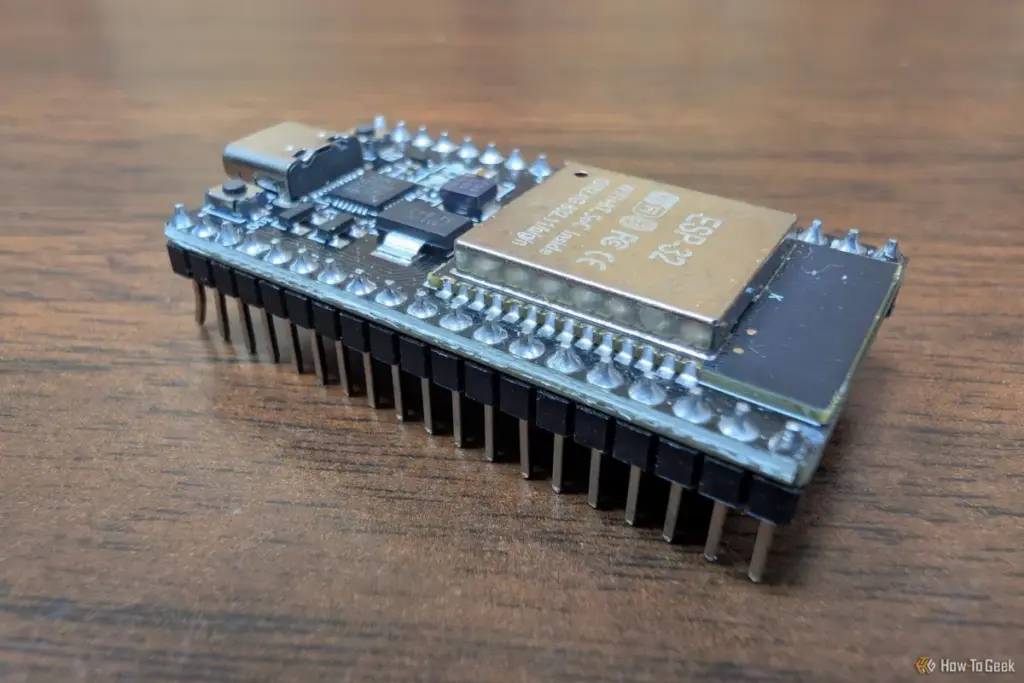
Presence Detection Through mmWave Radar Technology
One of the most persistent challenges in home automation is accurately determining if a room is occupied. For years, the industry has relied on Passive Infrared (PIR) sensors. While effective at detecting broad movement, such as someone walking into a room, PIR sensors are notoriously flawed when it comes to "static presence." If a person sits down to read a book or work at a desk, they eventually become "invisible" to a PIR sensor, leading to the common and frustrating experience of the lights turning off while the room is still very much in use.
The solution to this "frozen person" problem lies in mmWave (millimeter-wave) radar technology. By pairing an ESP32 with a 24GHz mmWave module, such as the LD2410, users can create presence sensors that are sensitive enough to detect the minute movements of human breathing or the slight shift of a person in a chair. This technology functions similarly to radar, emitting high-frequency waves and measuring the reflection to detect even the most subtle changes in the environment.
From a practical standpoint, this transforms how a smart home reacts to its inhabitants. Instead of setting a five-minute timer on a motion sensor and hoping for the best, a mmWave-equipped room can maintain the lights, climate control, or music as long as someone is physically present. When implemented through ESPHome, these sensors allow for fine-tuned calibration, enabling users to "zone" their rooms or adjust sensitivity levels to prevent false positives from moving curtains or oscillating fans. At a hardware cost that often totals less than ten dollars, these DIY sensors provide a level of sophistication that was once reserved for high-end industrial automation.

Local Voice Assistants and the Privacy Frontier
The rise of voice-controlled assistants like Amazon’s Alexa and Google Assistant has brought undeniable convenience to the home, but it has also sparked significant privacy concerns. Many users are uncomfortable with the idea of a microphone constantly streaming audio to a corporate cloud for processing. Furthermore, the reliance on external servers means that if the internet goes down, or if a company decides to end support for a specific device, the "smart" functionality vanishes.
The ESP32-S3 has emerged as a powerful tool for those seeking a "local-first" alternative. This specific variant of the ESP32 includes hardware acceleration for AI-related tasks, making it capable of running lightweight machine-learning models directly on the device. Using a framework like microWakeWord, the ESP32-S3 can listen for a specific "wake word" without ever sending audio data outside the home network. Once the wake word is detected, the subsequent command is piped to a local server—such as a dedicated PC or a powerful single-board computer—running local large language models (LLMs) or speech-to-text engines like Whisper.
This architecture ensures that the "intelligence" of the home remains entirely under the owner’s control. Users can experiment with various open-source models, such as Kokoro for high-quality text-to-speech or Llama-based models for interpreting complex natural language commands. While these DIY setups may lack the polished multi-room audio sync of a high-end commercial ecosystem, they offer a level of security and customization that no "off-the-shelf" product can match. Whether it is used to control lighting or act as a hands-free kitchen assistant, the local voice assistant represents the ultimate expression of digital sovereignty in the modern home.
 Tech Tutorials & How-To Guides
Beyond the Command Line: How btop is Redefining System Monitoring for the Modern Linux User
The terminal has long been the sanctuary of the Linux power user—a...
 Tech Tutorials & How-To Guides
Paramount+ Expands Library with Major October Update as Spooky Season Begins
As the calendar turns to October and the first chill of autumn...
 Tech Tutorials & How-To Guides
The Best Documentaries and Docuseries to Stream: September 2026’s Top Picks
The landscape of streaming television continues to be heavily influenced by the...







