

In its most recent earnings report, Microsoft announced a significant milestone in the adoption of generative artificial intelligence within the corporate world. Microsoft 365 Copilot has officially surpassed 30 million paid seats, with the company reporting that net seat additions more than doubled on a quarter-over-quarter basis. While the raw numbers highlight a rapid commercial expansion, Microsoft executives suggest the data points to a more profound structural shift in the global labor market: a transition where AI moves from a passive digital assistant to an active, autonomous participant in the professional environment.
This evolution marks the end of what Microsoft describes as the first phase of enterprise AI, which was largely defined by initial deployments, licensing agreements, and the pursuit of incremental time savings. According to company leadership, the market is now entering a "transformation" phase. In this new era, organizations are no longer merely layering AI on top of existing processes; they are redesigning their entire workflows around the capabilities of AI agents. These agents are increasingly being tasked with managing entire projects and complex processes, effectively expanding the agency of human employees and allowing them to focus on higher-level strategic objectives.
The current transformation is being driven by three distinct trends: the depth and breadth of AI integration into daily habits, the emergence of net-new capabilities that were previously impossible to achieve, and a move toward hyper-specialization where AI is tailored to specific professional roles rather than provided as a one-size-fits-all tool.
A Step Change in Innovation
The technological underpinnings of this shift involve a move toward "agentic" AI. Unlike earlier versions of generative models that required constant prompting for every small step, new products are designed with an agentic harness that allows the system to close its own feedback loop. This means the AI can plan a project, execute the necessary steps, test the results, and correct its own errors before delivering a finished product to the human user.
A primary example of this technology in action is Copilot Cowork, which reached general availability in June. Cowork is designed to handle multi-step work end-to-end. A user defines a high-level task, and the system utilizes a multi-model design to scale its capabilities based on the complexity of the work. Internal testing at Microsoft indicated that this multi-model approach was not only more efficient but also 30% to 40% more cost-effective than relying on a single, massive model for every task.
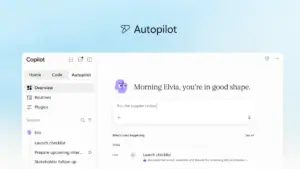
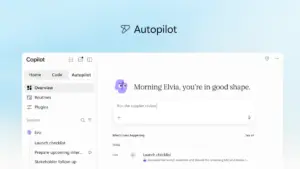
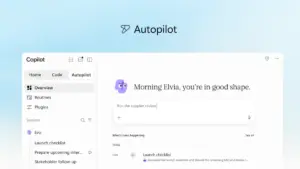
In tandem with Cowork, Microsoft introduced Microsoft Scout, an "autopilot" agent. Unlike a chat interface that waits for user input, Scout operates in the background with its own identity and permissions. It is designed to keep projects moving even when the human employee is focused elsewhere. Both tools are grounded in what Microsoft calls "Work IQ," a system that allows the AI to understand the specific context of an organization, including its internal hierarchies, project priorities, and institutional knowledge.
The speed at which these tools are being developed reflects a change in the software engineering process itself. The core team behind Copilot Cowork remained intentionally small, growing from just three engineers at the start to nine at the time of general availability. Despite this lean staffing, the product moved from inception to being utilized by half of the Fortune 500 within six months. This rapid speed-to-market was made possible by rebuilding the development process around agents, allowing a small group of human experts to achieve a level of scale and automation that would have traditionally required hundreds of engineers.

Omar Shahine, Corporate Vice President of Microsoft Scout, noted that the role of leadership is changing in this environment. In the past, scaling required coordinating large groups of people to move forward together. Now, the focus is on creating conditions where small, expert teams can use autonomous agents to experiment safely and capture learnings continuously, ensuring that each new project begins with a greater foundation of knowledge than the last.
 Productivity Software & Office Suites
Microsoft Reimagines Copilot as a Centralized Engine for the Future of AI-Driven Work
In a major strategic shift aimed at redefining the intersection of human...
 Productivity Software & Office Suites
Microsoft Reimagines Copilot: New "Autopilot" and "Code" Features Lead a Major Shift Toward Agentic Work
In a significant pivot toward the next era of enterprise productivity, Microsoft...
 Productivity Software & Office Suites
Microsoft Reimagines Copilot as a Central Hub for Autonomous AI and Agentic Work
Microsoft has announced a significant evolution of its AI strategy, unveiling what...







