
The landscape of software development is undergoing a fundamental transformation as artificial intelligence redefines the boundaries of who can create functional digital tools. For decades, the ability to build software was a specialized skill reserved for those proficient in complex programming languages and development frameworks. However, a new era of "agentic coding" is emerging, promising to lower the barrier to entry so significantly that anyone with a clear idea can manifest a working application through simple conversation.
Microsoft is at the forefront of this shift, recently announcing the integration of natural language app building capabilities into Copilot Cowork and Copilot Studio. This move is designed to empower "citizen developers"—individuals within an organization who understand business needs but may lack formal technical training—to generate enterprise-grade applications in a matter of minutes. By leveraging advanced AI agents, the platform translates descriptive prompts into functional code, effectively bridging the gap between conceptualization and execution.
While the ability to generate a standalone application is a significant milestone, the true challenge in a corporate environment lies in integration and sustainability. For an application to provide genuine value to a business, it cannot exist in a vacuum; it must be able to securely access enterprise data, interface with existing systems, and adhere to the rigorous governance standards required by IT departments. Microsoft’s latest updates address these complexities by nesting app creation within its existing, trusted enterprise ecosystem, ensuring that the democratization of development does not come at the cost of security or administrative control.
Build an app by describing what you need
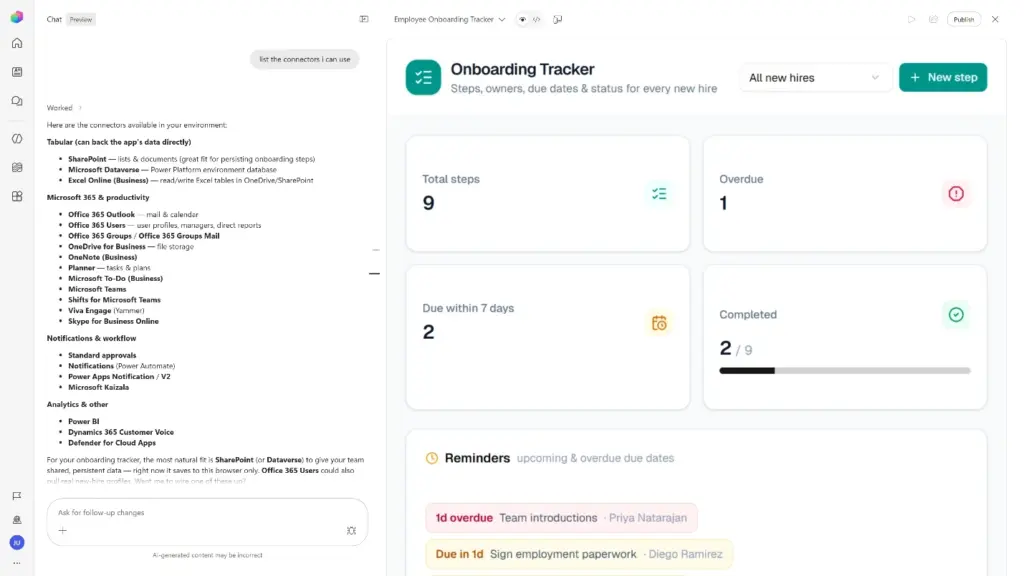
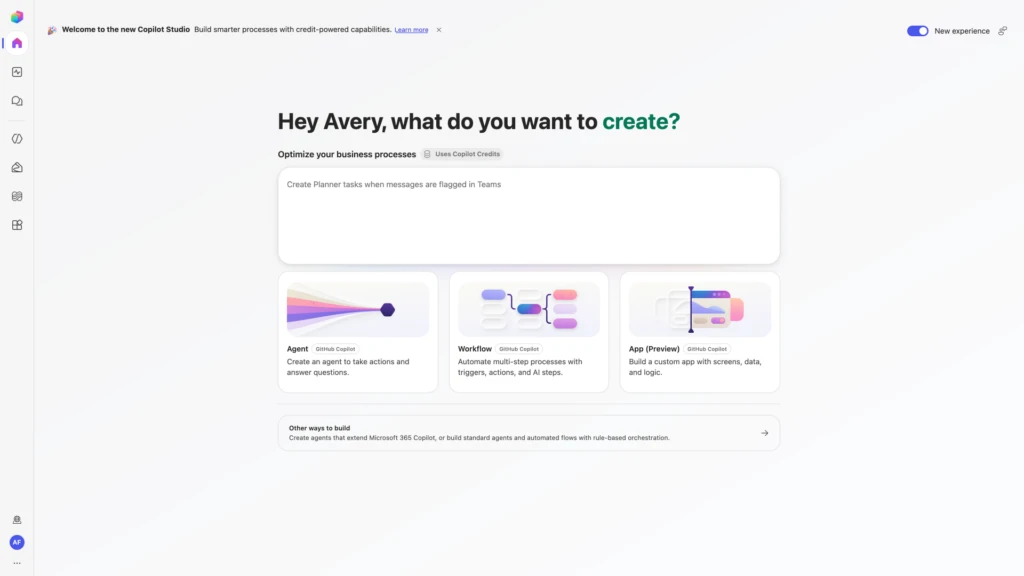
The journey from a business requirement to a functional tool now begins with a dialogue. Through the new "/app" skill in Copilot Cowork or the "App (Preview)" option within Copilot Studio, users can initiate the creation process by simply describing what they intend to achieve. This conversational approach allows the builder to define the desired business outcome, the intended user base, the necessary data inputs, and the specific actions the software should perform.

Behind the scenes, Copilot Studio employs agentic coding solutions to interpret these natural language instructions and construct a working app scaffold. This is not merely a static template but a dynamic starting point that reflects the user’s specific intent. The "agentic" nature of this technology means the AI acts as an active collaborator, understanding the logic required to fulfill the user’s request rather than just predicting the next line of text.
Once the initial scaffold is generated, the experience remains iterative. Builders can continue to refine their creation through further conversation, adjusting features or adding functionality as they see the preview take shape. This dual-layered approach is designed to cater to a broad spectrum of users. Information workers can remain focused on the high-level solution and user experience, while more advanced makers and professional developers have the option to dive deeper into the underlying code and structure. This ensures that while the entry point is accessible to all, the ceiling for customization remains high for those who require more granular control.
Connect apps to your business data
A software application is only as powerful as the data it can access and manipulate. To move beyond simple task-tracking or basic interfaces, these AI-generated apps must be deeply integrated into the organizational fabric. Microsoft has addressed this by ensuring that apps built within Copilot Cowork and Copilot Studio utilize a robust system of connectors, including the use of "Work IQ" to provide critical organizational context.
This connectivity allows makers to transform raw organizational information into interactive, actionable experiences. Rather than simply surfacing data for a user to read, these applications are designed to take action—such as updating records, triggering workflows, or writing results back to systems within the Microsoft 365 tenant boundary. This capability ensures that the apps function within the "trusted boundary" where actual work occurs, maintaining data integrity and security.
The practical applications of this connectivity are vast. For instance, an organization could quickly spin up an employee onboarding application. This tool would not only show a new hire their progress but could also use connectors to pull real-time data from HR sources, surface relevant learning modules, and automatically update internal records as tasks are completed. Similarly, in a field service context, a technician could use a custom-built app to retrieve technical specifications from a third-party database, follow guided repair steps generated by the app, and then write the service report directly back into the company’s maintenance system. By grounding the app experience in the services and data that employees already use, Microsoft is ensuring that these tools are practical additions to the daily workflow rather than extraneous distractions.
Build enterprise apps with open standards and centralized control
One of the primary concerns for IT leadership regarding the rise of "low-code" or AI-generated software is the potential for "shadow IT"—the proliferation of unsupported, unmonitored applications that could pose security risks or create data silos. Microsoft’s strategy aims to mitigate these risks by ensuring that every app created through Copilot is built on a foundation of open standards and remains under the direct oversight of IT administrators.
Despite being initiated through natural language, the resulting products are full-stack applications. They are designed to support Git-backed source control, allowing for professional-grade versioning and deployment cycles. This means that teams can work on improvements in isolated environments and move through deployment stages without risking the stability of the live application. This level of technical rigor ensures that AI-generated apps can be maintained and scaled with the same discipline as traditionally developed software.
Security and identity management are baked into the process from the start. All applications respect Microsoft Entra identity protocols and organizational data policies. This ensures that users only see the data they are authorized to see and that all interactions remain compliant with corporate standards. For the IT department, the Microsoft 365 admin center serves as a centralized "cockpit," providing a comprehensive inventory of all published apps. From this vantage point, administrators can exercise operational controls, manage lifecycles, and ensure that every solution deployed across the organization meets the necessary security benchmarks. This balance allows makers to innovate freely while giving IT the visibility required to maintain a secure and organized digital environment.
Start building apps with Copilot Studio
The rollout of these capabilities marks a significant expansion of the Microsoft Copilot ecosystem, moving it from a tool that assists with content creation to one that builds the very infrastructure of business processes. Currently, organizations can begin exploring these features by joining the Microsoft Frontier program, which provides access to the "/app" skill within Copilot Cowork. The native integration of app building within Copilot Studio is scheduled to begin rolling out in public preview over the coming week.

Once the feature is active in their environments, users will find a new "apps" tile on the Copilot Studio home screen. Clicking this tile opens the conversational interface where they can begin describing their vision. Microsoft has also clarified the economic model for these tools, noting that the building and running of these applications will follow a usage-based billing structure, aligning costs with the actual value derived from the solutions.
To facilitate discovery and adoption within a company, Microsoft is introducing a dedicated portal at managedapps.cloud.microsoft.com. This will serve as a central hub where employees can find and launch the shared, enterprise-ready applications created by their colleagues. By placing app creation alongside agents and workflows within Copilot Studio, Microsoft is providing a unified platform where teams can turn a simple idea into a sophisticated, interactive business solution.
As the public preview expands, the company intends to refine the experience based on user feedback, further smoothing the path between human intent and digital execution. The ultimate goal is a workplace where the ability to solve a problem with a custom software solution is no longer limited by one’s knowledge of syntax, but only by the clarity of their objective. With these advancements, the role of the "developer" is expanding to include anyone with the insight to identify a business need and the words to describe its solution.
 Productivity Software & Office Suites
Microsoft Unveils Strategic Roadmap for Enterprise AI, Prioritizing Agentic Workflows and Flexible Economic Models
In an era defined by rapid-fire technological breakthroughs and a relentless cycle...
 Productivity Software & Office Suites
Microsoft Announces Fifth Annual Power Platform Community Conference in Las Vegas to Explore the Future of AI-Driven Business Processes
The landscape of modern enterprise operations is undergoing a fundamental shift. For...
 Productivity Software & Office Suites
Microsoft Outlines Strategic Roadmap for Enterprise AI: Navigating the Shift from Hype to Economic Value
In a comprehensive memo addressed to the global business community, Jared Spataro,...







