
Connect apps to your business data
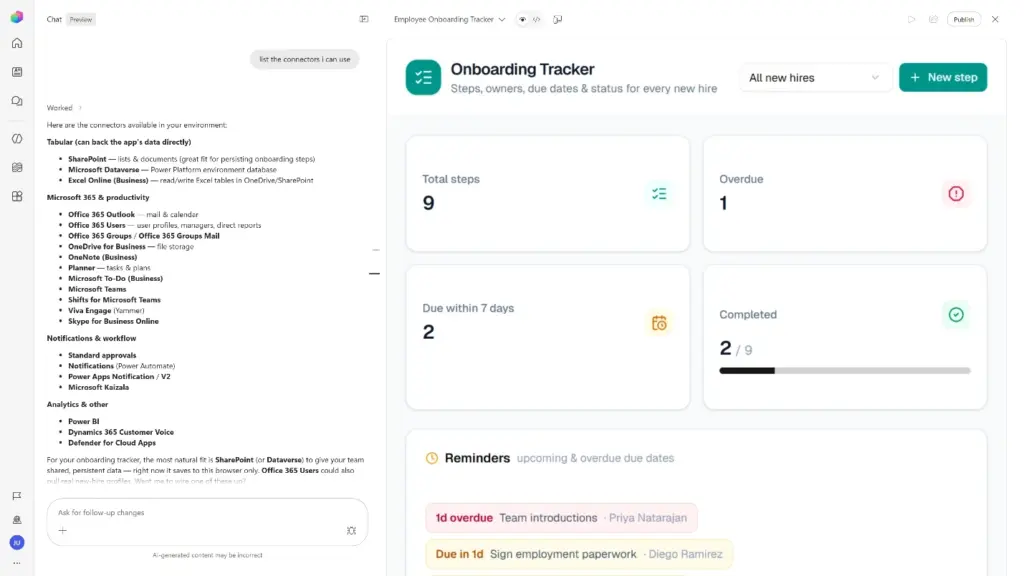
A software application is only as powerful as the data it can access and manipulate. To move beyond simple task-tracking or basic interfaces, these AI-generated apps must be deeply integrated into the organizational fabric. Microsoft has addressed this by ensuring that apps built within Copilot Cowork and Copilot Studio utilize a robust system of connectors, including the use of "Work IQ" to provide critical organizational context.
This connectivity allows makers to transform raw organizational information into interactive, actionable experiences. Rather than simply surfacing data for a user to read, these applications are designed to take action—such as updating records, triggering workflows, or writing results back to systems within the Microsoft 365 tenant boundary. This capability ensures that the apps function within the "trusted boundary" where actual work occurs, maintaining data integrity and security.
The practical applications of this connectivity are vast. For instance, an organization could quickly spin up an employee onboarding application. This tool would not only show a new hire their progress but could also use connectors to pull real-time data from HR sources, surface relevant learning modules, and automatically update internal records as tasks are completed. Similarly, in a field service context, a technician could use a custom-built app to retrieve technical specifications from a third-party database, follow guided repair steps generated by the app, and then write the service report directly back into the company’s maintenance system. By grounding the app experience in the services and data that employees already use, Microsoft is ensuring that these tools are practical additions to the daily workflow rather than extraneous distractions.
Build enterprise apps with open standards and centralized control
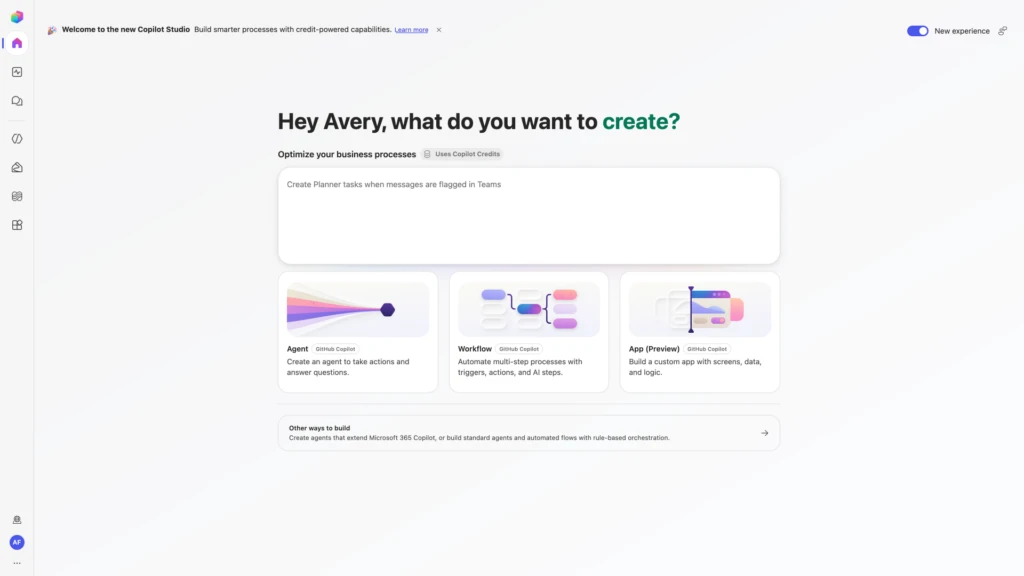
One of the primary concerns for IT leadership regarding the rise of "low-code" or AI-generated software is the potential for "shadow IT"—the proliferation of unsupported, unmonitored applications that could pose security risks or create data silos. Microsoft’s strategy aims to mitigate these risks by ensuring that every app created through Copilot is built on a foundation of open standards and remains under the direct oversight of IT administrators.
Despite being initiated through natural language, the resulting products are full-stack applications. They are designed to support Git-backed source control, allowing for professional-grade versioning and deployment cycles. This means that teams can work on improvements in isolated environments and move through deployment stages without risking the stability of the live application. This level of technical rigor ensures that AI-generated apps can be maintained and scaled with the same discipline as traditionally developed software.
 Productivity Software & Office Suites
Microsoft Reimagines Copilot as a Centralized Engine for the Future of AI-Driven Work
In a major strategic shift aimed at redefining the intersection of human...
 Productivity Software & Office Suites
Microsoft Announces Fifth Annual Power Platform Community Conference to Showcase AI-Driven Business Transformation
In the modern corporate landscape, every enterprise is essentially a collection of...
 Productivity Software & Office Suites
Microsoft Announces Fifth Annual Power Platform Community Conference to Address the Future of AI-Driven Business Processes
The modern enterprise is defined by its processes. From the simplest internal...







