The landscape of modern enterprise operations is undergoing a fundamental shift. For decades, the core of every organization has been built upon a complex web of business processes—frameworks where applications house critical data, permissions define access, and rules dictate the flow of information. Historically, the burden of connecting these disparate systems has fallen on people. Employees have served as the essential glue, providing the judgment necessary to manage exceptions and manually moving data between software platforms that were never originally designed to communicate with one another. However, the rapid maturation of artificial intelligence is beginning to dissolve these traditional boundaries, offering a new blueprint for how work gets done.
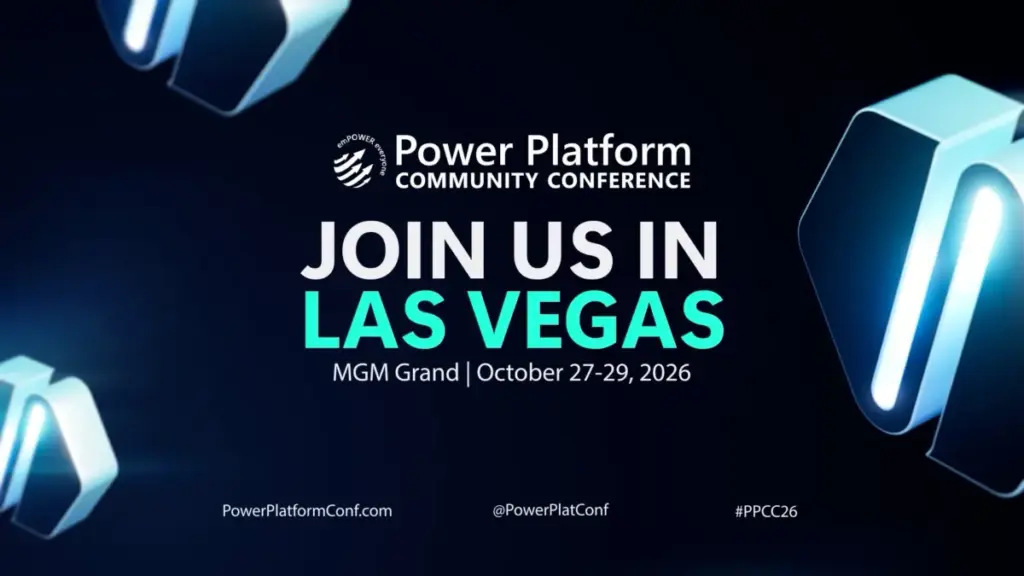
To address this transformation, Microsoft has announced the fifth annual Power Platform Community Conference (PPCC), scheduled to take place from October 27–29, 2026. Hosted at the MGM Grand in Las Vegas, the event is designed to be a definitive gathering for business experts, developers, solution builders, administrators, and IT leaders. The conference will focus on the practical application of Microsoft Copilot, Work IQ, autonomous agents, and the broader Power Platform ecosystem to refine and secure the processes that drive global commerce.
As organizations move beyond the initial hype of generative AI, the focus has shifted toward integration and sustainability. Leaders are no longer merely asking what AI can do in a vacuum; they are asking how it can be woven into the fabric of existing workflows without compromising security or ballooning operational costs. The upcoming conference aims to tackle these practical challenges head-on, providing a roadmap for governing AI at scale and optimizing it through effective cost management.
The Evolution of Integrated Solutions
The central theme of this year’s conference is the move away from siloed tools toward holistic, end-to-end process improvement. In the past, digital transformation often involved optimizing a single step in a chain—perhaps automating a single data entry task or adding a chatbot to a customer service page. Today, the availability of more powerful and interconnected tools allows for a complete rethinking of entire business cycles.
Consider the complexity of a standard procurement process. In a traditional setting, this involves multiple manual hand-offs, email chains, and cross-referencing various supplier databases. Under the new model facilitated by the Power Platform and AI agents, the process is streamlined into a cohesive experience. An employee can initiate a request through Copilot, which then triggers an intelligent agent to automatically gather relevant supplier information and verify internal purchasing policies.
The application layer then applies the necessary data models and approval rules, ensuring that permissions are respected. From there, a workflow routes the request through the appropriate channels, handling routine administrative steps automatically. Crucially, the system is designed to identify high-risk exceptions, flagging them for human review. This synergy between automation, agent reasoning, and human oversight represents the next frontier of enterprise efficiency.

Building these types of sophisticated solutions requires a diverse set of skills that rarely reside within a single department. One of the primary goals of the Power Platform Community Conference is to facilitate collaboration between different professional cohorts. Business experts provide the essential context of where current processes fail; developers and solution builders provide the technical architecture to bridge those gaps; and administrators establish the guardrails necessary for responsible operation. The conference will explore how these groups can work together to determine where automation is sufficient and where human judgment remains an indispensable asset.
 Productivity Software & Office Suites
Microsoft Unveils the "New Copilot" Ecosystem: Integrating Autonomous Agents, Custom Code, and Advanced Office Workflows
REDMOND, Wash. — In a major step toward redefining the intersection of...
 Productivity Software & Office Suites
Microsoft Shifts Focus from AI Hype to Enterprise Utility as Jared Spataro Outlines New Strategic Roadmap
In a comprehensive message addressed to the global business community, Jared Spataro,...
 Productivity Software & Office Suites
Microsoft Unveils Reimagined Copilot with Agentic Capabilities and New "Autopilot" Digital Teammate
Microsoft has announced a sweeping overhaul of its Copilot platform, signaling a...