
In the modern digital landscape, the mobile gaming market is increasingly saturated with high-octane battle royales, complex strategy epics, and visually demanding RPGs. However, there remains a significant and growing demographic of players who seek the exact opposite: "silly little puzzle games." These are the titles that prioritize systematic organization, tactile sorting, and the gentle untangling of logic puzzles over competitive stress. For many, these games serve as a vital tool for nervous system regulation—a way to quiet an overstimulated brain during the mundane stretches of a daily commute or the sterile waiting room of a dentist’s office.
The latest title to capture this specific brand of digital obsession is Meowdoku, a game that takes the foundational logic of Sudoku and reimagines it through a lens of feline aesthetics and color theory. Developed by Oakever Games, the title has recently seen a surge in visibility, largely driven by an aggressive advertising campaign that has blanketed social media feeds. While many casual gamers are often wary of "ad-bait" games, Meowdoku has proven to be a rare instance where the gameplay behind the marketing is genuinely compelling—even if the delivery method leaves much to be desired.
The perfect cat-themed brain teaser to unwind
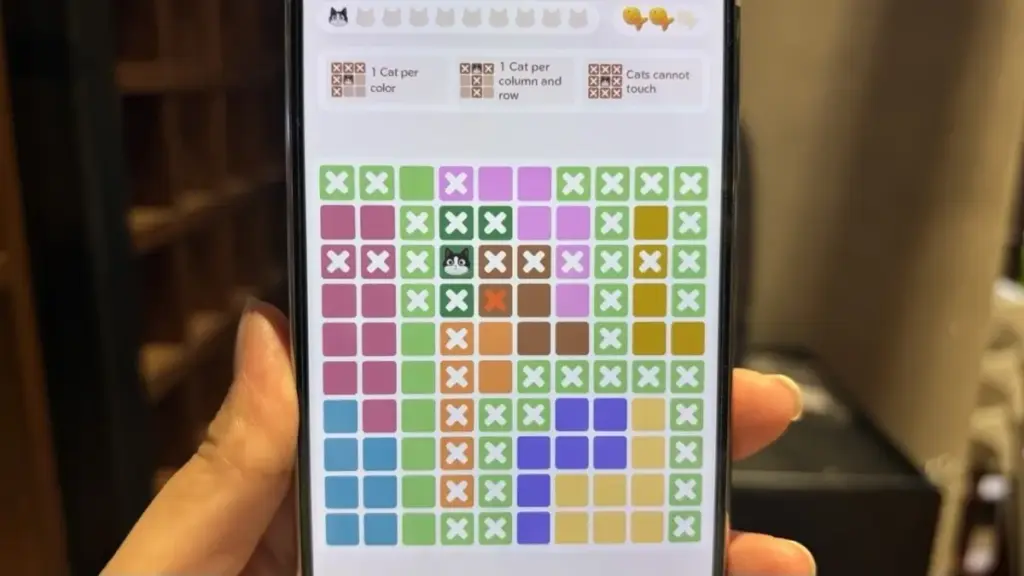
At its core, Meowdoku is a sophisticated evolution of the classic Sudoku formula. For decades, Sudoku has relied on the placement of numbers 1 through 9 within a grid, requiring players to ensure that no digit repeats within a row, column, or sub-grid. It is a game of elimination and cold, hard logic. Meowdoku strips away the mathematical clinicality of the original and replaces it with visual patterns. Instead of numbers, players are tasked with placing various cats of different colors into a grid.
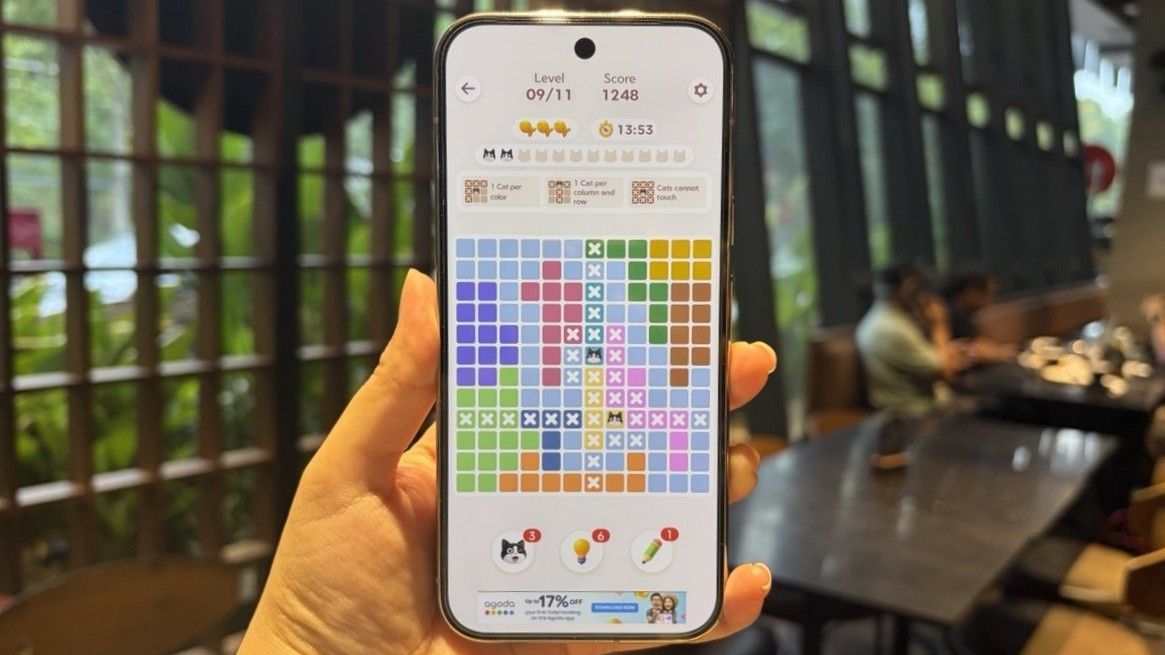
The transition from digits to cats is more than just a cosmetic skin; it alters the way the brain processes the puzzle. Where traditional Sudoku feels like an arithmetic exercise, Meowdoku feels like a spatial and visual arrangement task. The game is built upon three cardinal rules that players must master to progress through its increasingly difficult levels:
- The Row and Column Constraint: Borrowing directly from its namesake, the game dictates that there can only be one cat of a specific type per row or column.
- The Color Constraint: Each level features a variety of colors, and the game mandates that there can only be one cat assigned to each color group.
- The Proximity Constraint: In a twist that adds a layer of complexity reminiscent of "Minesweeper" or certain chess-based puzzles, cats cannot be placed in neighboring blocks. They require their own personal space, much like their real-world counterparts.
Players are tasked with finding and placing ten cats per level by adhering to these rules. To maintain a sense of challenge and prevent mindless trial-and-error, the game employs a "three strikes" system. If a player incorrectly places a cat three times, the level is lost, and they must restart the entire puzzle from scratch. This introduces a tension that is often missing from more lenient casual games, forcing the player to be intentional with every move.
For those who find themselves stuck, the game offers a limited number of hints. These can be used to reveal the correct placement of a cat when the logic becomes too dense to untangle. However, these hints are a finite resource. Once exhausted, players must either earn them through the in-game reward system or, more commonly, by opting into even more advertisements.
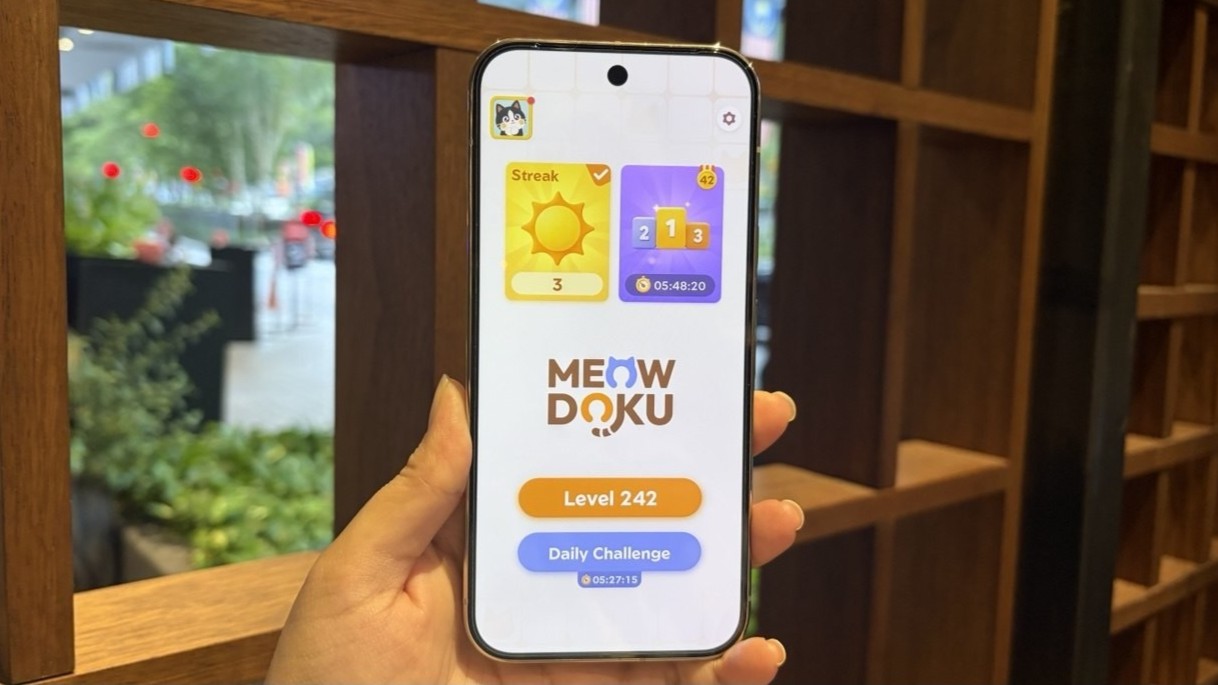
Beyond the standard progression, Meowdoku includes a daily challenge mode. This feature provides a curated, often more difficult puzzle that allows the global community of players to compete on the same playing field every 24 hours. It is this combination of familiar logic and fresh visual constraints that has led many players—including those who have played traditional Sudoku for years—to find the classic version of the game boring by comparison. The charm of the feline icons and the clever integration of color-based rules provide a level of engagement that black-and-white numbers simply cannot match.
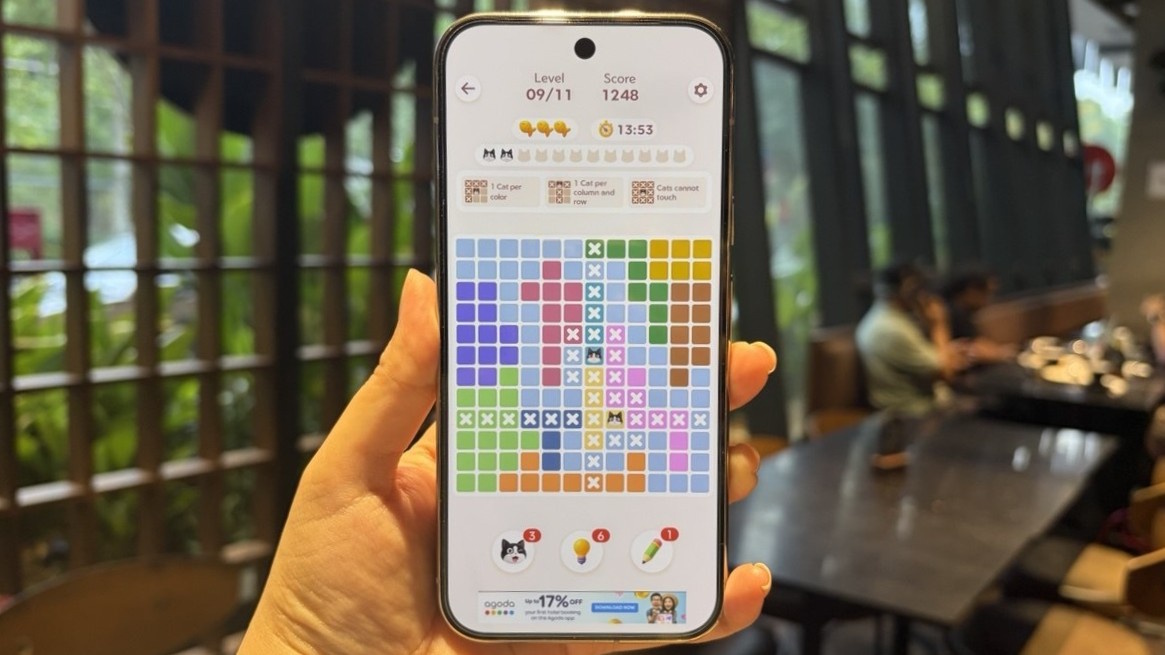
I kept coming back to Meowdoku, despite the sheer number of ads after almost every level
Despite the undeniable mechanical quality of Meowdoku, the user experience is currently defined by a significant point of friction: the monetization model. The game has gained a reputation not just for its puzzles, but for its "unholy" frequency of advertisements. In its current state on the Android platform, players are frequently bombarded with mandatory ads that trigger after almost every completed level.
In the contemporary mobile app ecosystem, users have generally come to accept a "freemium" model where they can choose between a free, ad-supported version or a one-time "premium" payment to remove interruptions. Surprisingly, Oakever Games has yet to implement such an option for Meowdoku on Android. There is currently no way for a player to pay their way out of the "ad purgatory" that defines the gameplay loop.
This lack of a premium tier is particularly baffling given the clear demand from the game’s growing fanbase. A cursory search of digital communities reveals a player base that is simultaneously enamored with the game and frustrated by its delivery. On Reddit, dedicated threads have cropped up where users discuss the game’s addictive quality while lamenting the intrusive commercial breaks. On YouTube and Instagram, creators have shared videos of their gameplay, often accompanied by comments from viewers seeking workarounds—such as using DNS blockers or playing offline—to mitigate the constant interruptions.
The irony of Meowdoku is that its core gameplay is perfectly designed for relaxation, yet its ad frequency is designed in a way that actively disrupts the "flow state" required for puzzle-solving. For a game that many use to "quiet an overstimulated brain," the sudden jump from a serene, cat-filled grid to a loud, high-energy advertisement for another mobile game can be jarring.
From a business perspective, Oakever Games appears to be sitting on a potential goldmine. The "cozy gaming" trend is at an all-time high, and Meowdoku fits perfectly into that niche. By introducing a modest ad-free tier, the developers could likely convert a significant portion of their daily active users into paying customers. Many players have expressed a willingness to pay for the privilege of playing uninterrupted, yet they are currently left with no choice but to sit through the ads or stop playing entirely.
For the time being, many players find themselves in a state of reluctant addiction. They continue to "grind their teeth" through thirty-second clips of other apps because the underlying logic of Meowdoku is simply too satisfying to abandon. It is a testament to the game’s design that it remains popular despite a user interface that feels designed to test the player’s patience as much as their logic.
The story of Meowdoku is a modern parable of the mobile gaming era. It highlights the power of a well-executed mechanical hook—taking a century-old puzzle and making it feel brand new through clever thematic changes. However, it also serves as a cautionary tale about the importance of user experience and the risks of over-monetization through forced interruptions.
As the game continues to trend on the Google Play Store and across social media platforms, the ball remains in Oakever Games’ court. If they can address the community’s outcry for a premium, ad-free experience, Meowdoku could transition from a viral curiosity into a staple of the puzzle genre. Until then, players will continue to balance their love for the cats with their disdain for the commercials, one row and column at a time. Whether the game is "worth" the time spent watching ads is a question each player must answer for themselves, but for those who find peace in the systematic sorting of colorful felines, the answer—for now—seems to be a frustrated "yes."
 Mobile Device Management (MDM) & Mobile OS
Google Implements Significant Price Hike for Pixel 10a, Reshaping the Mid-Range Smartphone Landscape
In a move that signals a shift in the value proposition of...
 Mobile Device Management (MDM) & Mobile OS
Motorola Signals a High-End Return to North America with the Snapdragon-Powered Signature 27
At the recent Snapdragon Summit hosted by Qualcomm, an event typically dominated...
 Mobile Device Management (MDM) & Mobile OS
Google Prepared to Expand Wearable Lineup with New Fitbit Edge Tracker
The landscape of the wearable technology market is undergoing a significant shift...







