
For decades, the promise of silicon photonics has lingered on the horizon of the datacenter industry, a perennial "technology of the future" that seemed perpetually stuck there. The industry has long anticipated the moment when light-based interconnects would finally arrive in force to break the tyranny of distance and latency that separates compute, memory, and storage. The vision was elegant: with light pipes providing massive bandwidth and near-zero latency, engineers could move away from building discrete, nearly identical servers. Instead, they could assemble vast banks of components—CPUs, GPUs, and memory modules—and configure them on the fly into distinct, fluid architectures tailored specifically to the shifting demands of modern workloads.
It was a compelling concept, yet for years, it failed to materialize at scale. The transition was deemed too expensive and too risky. As long as electrical signaling could be pushed to the absolute limits of physics, the industry preferred the known path of copper. This hesitation created a classic "chicken-and-egg" problem for high-volume photonics manufacturing: without mass adoption, costs remained high, and because costs remained high, mass adoption stayed out of reach.
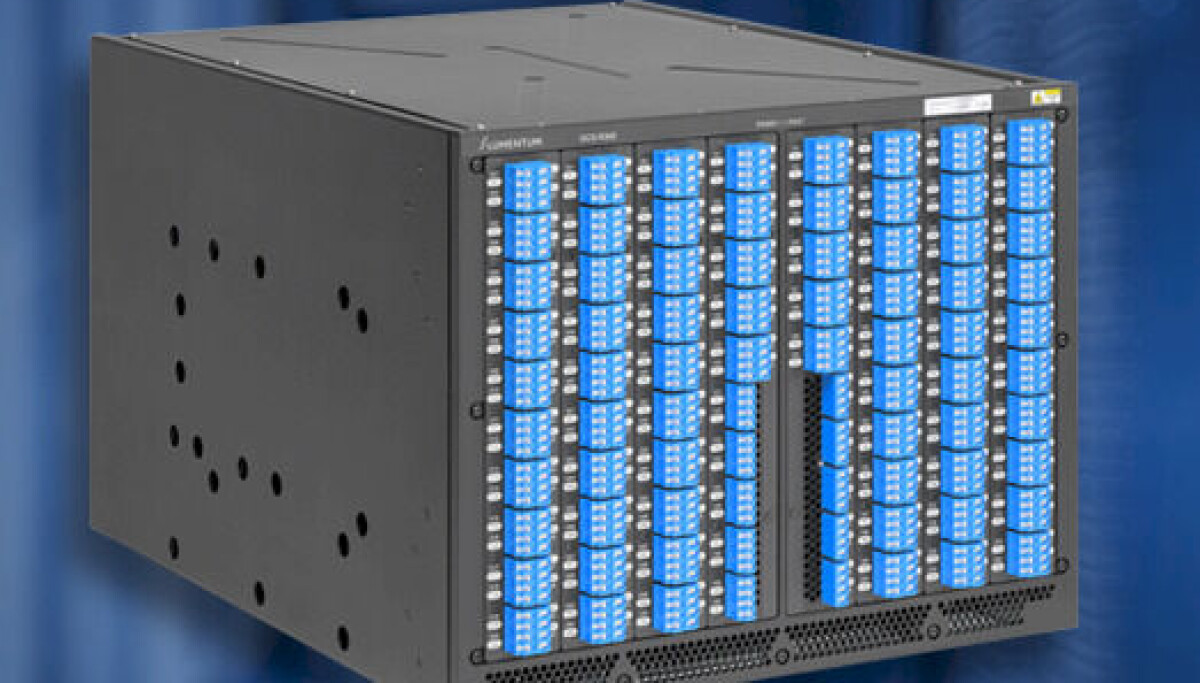
The emergence of Generative AI has shattered that stalemate. Unlike classical machine learning, the massive scale of modern Large Language Models (LLMs) demands bandwidth and latency performance that traditional electrical signaling can no longer sustain over necessary distances. The "copper wall" is no longer a theoretical concern; it is a physical barrier to the next generation of AI clusters. Consequently, the startups and optical experts who spent decades advocating for photonics—many hailing from the deep-rooted optics traditions of the telecom and service provider sectors—now find themselves at the center of the most aggressive hardware land grab in history.
We are currently standing on the precipice of the mass commercialization of photonics within systems, moving beyond the optical transceivers that connect datacenters to the very heart of the compute engine. This shift is being fueled by a market reality where hyperscalers, cloud builders, and AI model developers appear willing to pay almost any price for the most advanced hardware Earth can muster. While composability remains a long-term benefit, the immediate goal is survival in an era where copper can no longer keep up.
In a move that signals the gravity of this transition, Marvell Technology has announced a definitive agreement to acquire photonics specialist Lumentum for $80 billion in stock. Including the assumption of Lumentum’s debt, the transaction yields an enterprise value of approximately $115 billion. To put the scale of this deal in perspective, it is nearly double the $67 billion Dell spent to acquire the combined forces of VMware and EMC in 2015. It is also four times the amount Avago Technologies paid for Broadcom that same year—a deal that formed the foundation of the current semiconductor and software giant that serves as Marvell’s primary rival.
The acquisition comes at a time when Marvell’s prospects in the GenAI era have been accelerating. By absorbing Lumentum, Marvell secures a dominant position in the supply of indium phosphide lasers, a critical component for optical interconnects in scale-up networks. These networks are the vital links that connect elements of a compute engine to the outside world and bridge racks into unified clusters. Lumentum is one of only two primary suppliers of these specialized lasers; the other is Coherent, which recently received a $2 billion infusion to expand its manufacturing capabilities. Marvell itself recently secured a $2 billion investment from Nvidia to help integrate NVLink ports on custom chips, further highlighting the interconnected nature of the high-end silicon ecosystem.
The strategic necessity of this deal is underscored by the limitations facing even the largest players like Nvidia. With a market capitalization hovering around $5 trillion, Nvidia technically possesses the "funny money" required to buy any or all of these optical specialists. However, such a move would almost certainly trigger intense antitrust scrutiny. Furthermore, buying only one of the major laser suppliers would not satisfy Nvidia’s insatiable demand for components. In the current market, it is arguably more beneficial for multiple suppliers to exist, theoretically driving innovation and competition. Yet, as seen in the High Bandwidth Memory (HBM) market, competition does not always guarantee supply. The entire GenAI industry is currently gated by HBM capacity, and optical interposers and lasers are rapidly becoming the next critical bottleneck.
This is the central motivation behind Marvell’s move. Marvell has established a fast-growing business as a "chip shepherd," helping titans like Amazon Web Services, Microsoft, and Google design and manufacture their own custom CPUs and XPUs. By acquiring Lumentum, Marvell ensures that it can prioritize the supply of essential laser components for its own custom chip business while still generating significant revenue by selling to the broader market, including Nvidia, AMD, and Intel.
Marvell CEO Matt Murphy has framed the deal as a step toward becoming the "category leader for the next generation of AI connectivity." However, the subtext is one of supply chain security. Industry insiders suggest that the order books for high-end photonics lasers are already effectively sold out through early 2029. For Marvell, owning Lumentum is not just about market leadership; it is about ensuring the viability of its custom silicon roadmap.
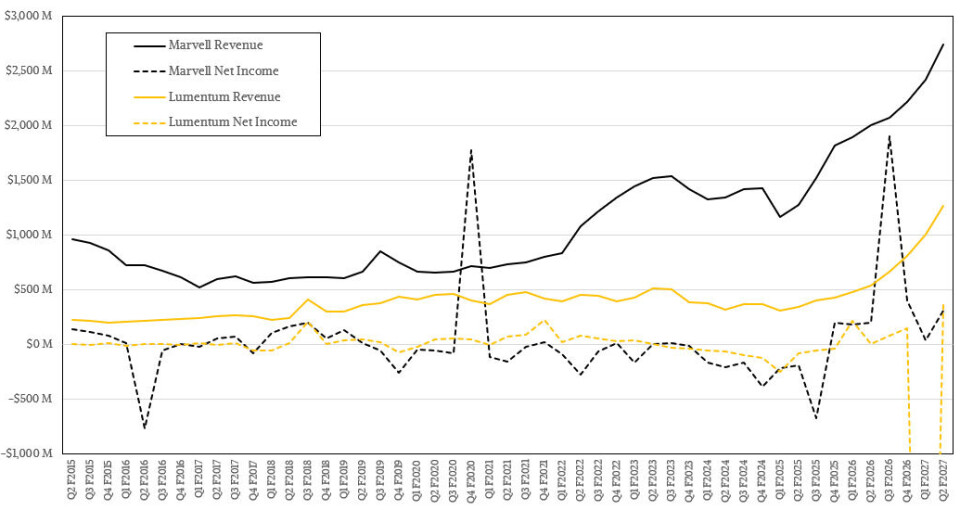
The financial scale of the merger is significant relative to the current revenues of both companies, though both are experiencing "hockey stick" growth. Marvell’s previous acquisitions, such as the purchase of PHY maker Inphi and the $3.25 billion acquisition of Celestial AI for its photonics interposer technology, were early indicators of this strategy. These moves positioned Marvell to de-risk the optical on-package compute engines that its largest customers are now demanding.
Lumentum’s recent financial performance highlights the sudden surge in value for these technologies. While the company reported a technical loss of $7.16 billion two quarters ago due to debt-to-stock conversions, its underlying operations are robust. In its most recent quarter, Lumentum posted $360.3 million in profits on $1.26 billion in sales, demonstrating a higher profit margin than Marvell’s own $308 million net income on $2.74 billion in sales. This profitability reflects the newfound premium placed on the lasers that will power future Nvidia systems and other AI clusters.
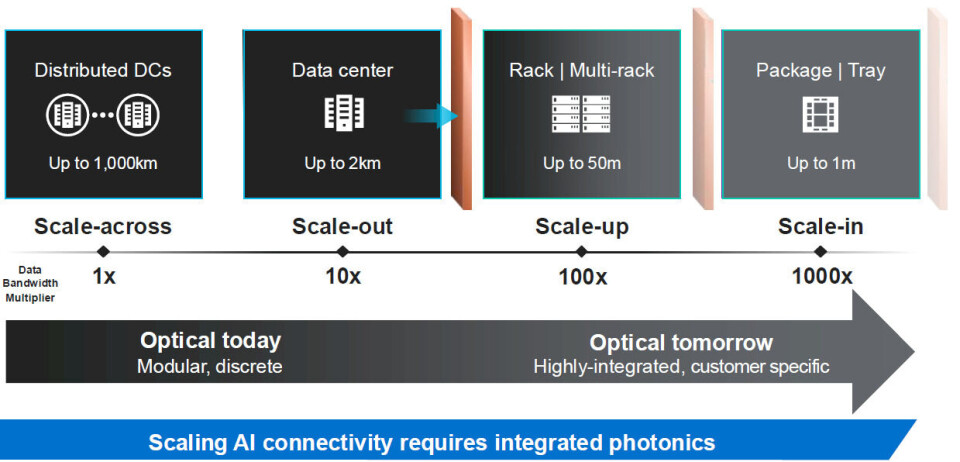
Murphy believes the Lumentum deal will prove even more transformational than the Inphi acquisition, which has been the primary driver of Marvell’s AI-related growth to date. He explained to investors that the industry is at the inception of a transition where the "copper wall" is moving from scale-out networking to scale-up and, eventually, scale-in architectures. The scale of the Lumentum opportunity over the next several years is estimated to be an order of magnitude larger than what was expected from Inphi five years ago, backed by firm orders rather than mere projections.
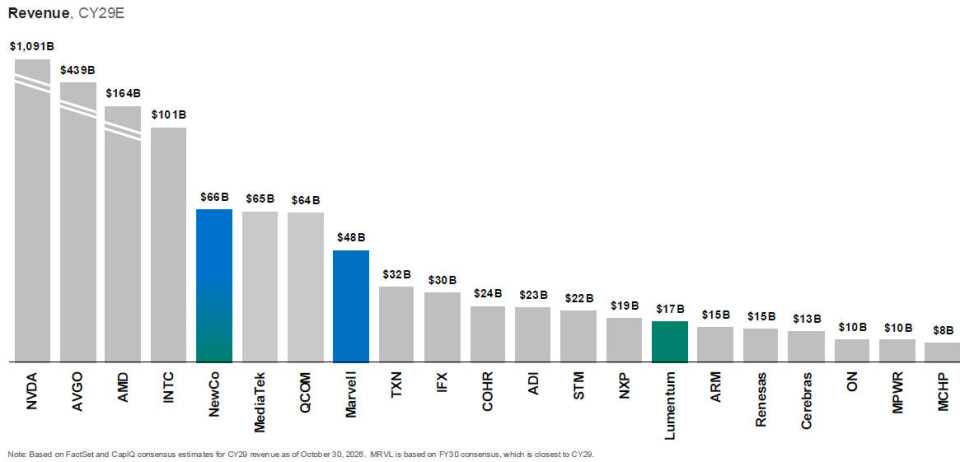
Beyond securing components, Marvell aims to elevate its status within the semiconductor hierarchy, moving past companies like MediaTek and Qualcomm to challenge the dominance of Intel and AMD in the datacenter. Marvell is positioning itself as the largest pure-play provider of datacenter connectivity chips, spanning the entire spectrum from individual compute engines to inter-region datacenter links. While Nvidia and Broadcom maintain larger overall connectivity businesses, Marvell’s focus on the "full stack" of optical fabrics is intended to capture a Total Addressable Market (TAM) that it estimates will reach $400 billion by 2030.
The fundamental driver for this full-stack optical approach is the need for massive compute complexes that function as a single entity. As the hierarchy of networking moves from "scale across" (connecting datacenters) to "scale out" (connecting racks) to "scale up" (coherent memory across elements) and finally "scale in" (on-package components), the bandwidth requirements increase by roughly 10x at each step. Copper signaling simply cannot maintain the necessary integrity at these densities.
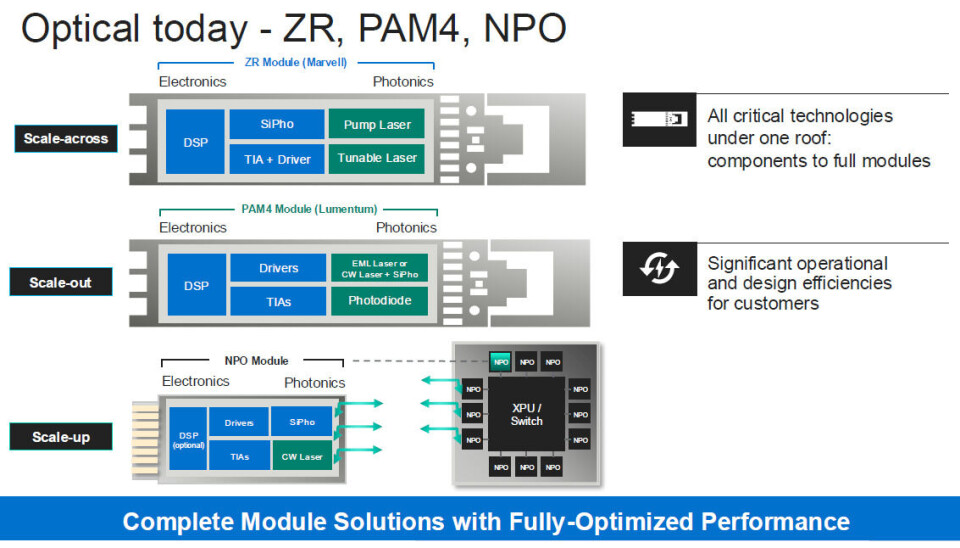
The combined expertise of Marvell and Lumentum covers the essential materials science required for this transition. This includes Indium Phosphide for lasers, Silicon Germanium for the analog front ends of optical links, and Gallium Arsenide for secondary laser applications. While this vertical integration provides a competitive advantage and simplifies the design process for customers, it also concentrates risk—a classic "all eggs in one basket" scenario for the supply chain.
Another significant element of the deal is the potential for optical circuit switches (OCS) to disrupt traditional networking. Google has already demonstrated the viability of this approach with its "Palomar" OCS, which uses micro-mirrors to connect thousands of TPU accelerators in reconfigurable topologies. By reducing power consumption and latency, OCS technology offers a compelling alternative to traditional Ethernet switches in AI backends. With Lumentum’s expertise, Marvell can now offer these optical switching solutions alongside its existing TeraLynx Ethernet ASICs.
The path to completion for this merger, however, is long. The deal is not expected to close until the first half of 2028, a timeline that feels like an eternity in the fast-moving AI sector. Regulatory hurdles loom large, particularly in China and Europe, where antitrust authorities have become increasingly wary of vertical integration in the semiconductor space. The 20-month window also leaves room for potential counteroffers or market shifts that could disrupt the arrangement. Furthermore, the deal immediately puts Coherent into play as a potential acquisition target for other industry giants, much as Intel’s acquisition of Altera a decade ago triggered a corresponding move for Xilinx.
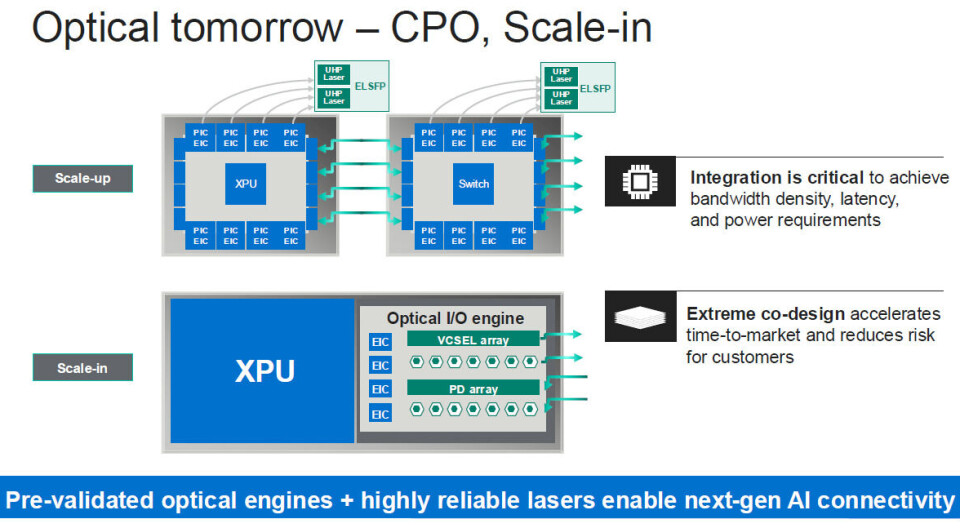
As the industry moves toward an era where light replaces electricity as the primary medium for data movement within the server, the Marvell-Lumentum merger represents a massive bet on the fundamental physics of the next decade of computing. If successful, it will cement Marvell’s role as the indispensable architect of the AI datacenter.
 Enterprise Tech & Infrastructure
Understanding the Architecture of Modern Storage: The Nuances Between Flash Memory and Solid-State Drives
In the rapidly evolving landscape of data management, the terminology used to...
 Enterprise Tech & Infrastructure
NVIDIA Unveils Containerized "AI Factory" to Drastically Accelerate Global Data Center Deployment
NVIDIA CEO Jensen Huang took the stage at GTC Europe this week...
 Enterprise Tech & Infrastructure
Upscale AI Challenges Nvidia’s Dominance with SkyHammer Scale-Up Fabric and Unified AI Networking
The history of the semiconductor industry is littered with the remains of...







