

For decades, the promise of silicon photonics has lingered on the horizon of the datacenter industry, a perennial "technology of the future" that seemed perpetually stuck there. The industry has long anticipated the moment when light-based interconnects would finally arrive in force to break the tyranny of distance and latency that separates compute, memory, and storage. The vision was elegant: with light pipes providing massive bandwidth and near-zero latency, engineers could move away from building discrete, nearly identical servers. Instead, they could assemble vast banks of components—CPUs, GPUs, and memory modules—and configure them on the fly into distinct, fluid architectures tailored specifically to the shifting demands of modern workloads.
It was a compelling concept, yet for years, it failed to materialize at scale. The transition was deemed too expensive and too risky. As long as electrical signaling could be pushed to the absolute limits of physics, the industry preferred the known path of copper. This hesitation created a classic "chicken-and-egg" problem for high-volume photonics manufacturing: without mass adoption, costs remained high, and because costs remained high, mass adoption stayed out of reach.
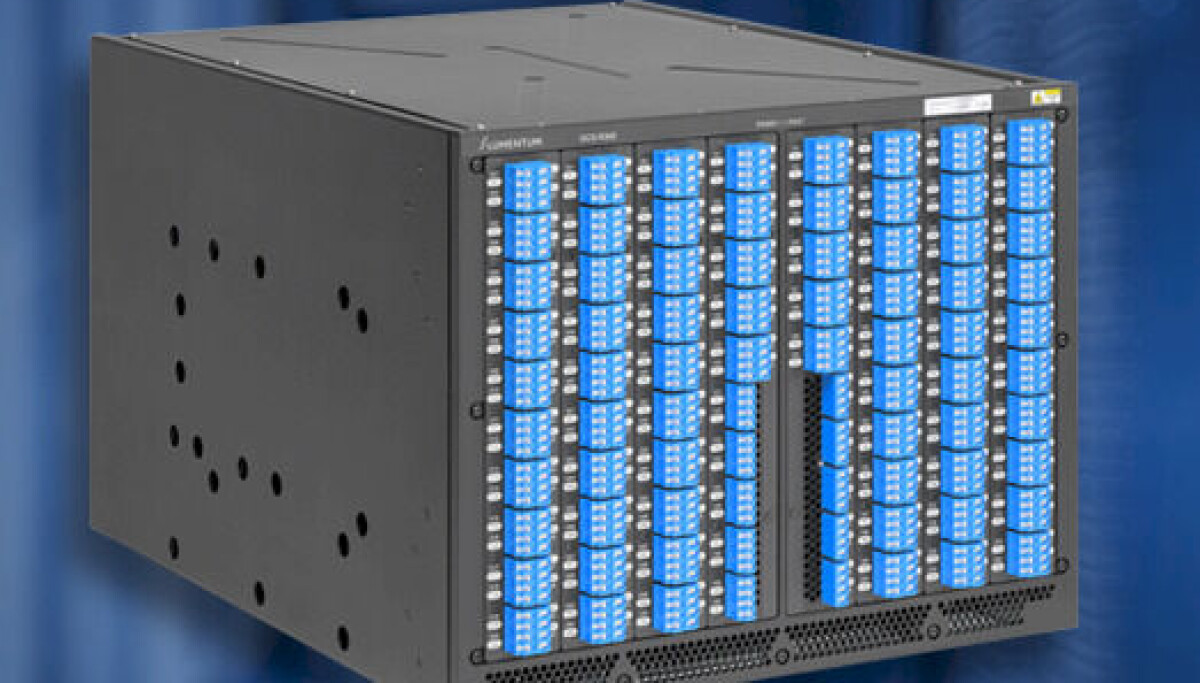
The emergence of Generative AI has shattered that stalemate. Unlike classical machine learning, the massive scale of modern Large Language Models (LLMs) demands bandwidth and latency performance that traditional electrical signaling can no longer sustain over necessary distances. The "copper wall" is no longer a theoretical concern; it is a physical barrier to the next generation of AI clusters. Consequently, the startups and optical experts who spent decades advocating for photonics—many hailing from the deep-rooted optics traditions of the telecom and service provider sectors—now find themselves at the center of the most aggressive hardware land grab in history.
We are currently standing on the precipice of the mass commercialization of photonics within systems, moving beyond the optical transceivers that connect datacenters to the very heart of the compute engine. This shift is being fueled by a market reality where hyperscalers, cloud builders, and AI model developers appear willing to pay almost any price for the most advanced hardware Earth can muster. While composability remains a long-term benefit, the immediate goal is survival in an era where copper can no longer keep up.
In a move that signals the gravity of this transition, Marvell Technology has announced a definitive agreement to acquire photonics specialist Lumentum for $80 billion in stock. Including the assumption of Lumentum’s debt, the transaction yields an enterprise value of approximately $115 billion. To put the scale of this deal in perspective, it is nearly double the $67 billion Dell spent to acquire the combined forces of VMware and EMC in 2015. It is also four times the amount Avago Technologies paid for Broadcom that same year—a deal that formed the foundation of the current semiconductor and software giant that serves as Marvell’s primary rival.
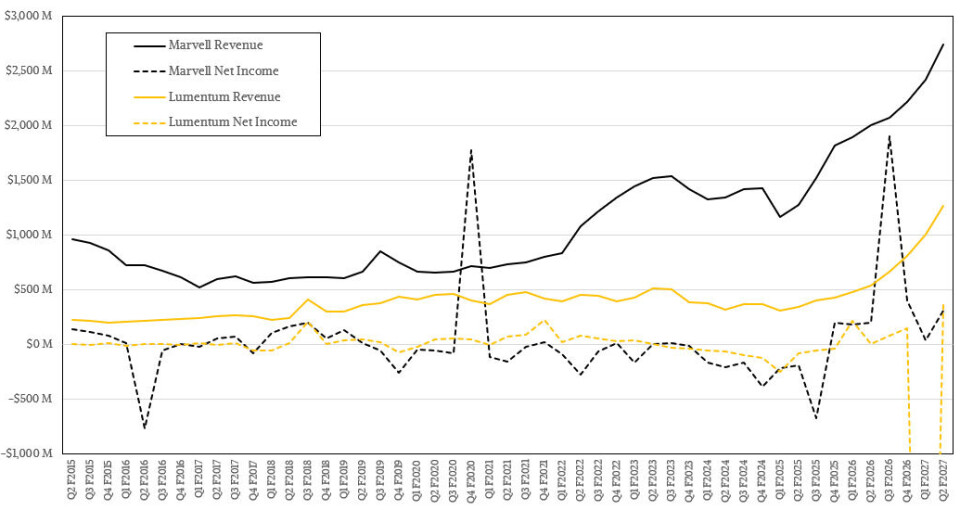
The acquisition comes at a time when Marvell’s prospects in the GenAI era have been accelerating. By absorbing Lumentum, Marvell secures a dominant position in the supply of indium phosphide lasers, a critical component for optical interconnects in scale-up networks. These networks are the vital links that connect elements of a compute engine to the outside world and bridge racks into unified clusters. Lumentum is one of only two primary suppliers of these specialized lasers; the other is Coherent, which recently received a $2 billion infusion to expand its manufacturing capabilities. Marvell itself recently secured a $2 billion investment from Nvidia to help integrate NVLink ports on custom chips, further highlighting the interconnected nature of the high-end silicon ecosystem.
 Enterprise Tech & Infrastructure
Microsoft Scales Up AI Infrastructure with Custom Clea Maia 300 Accelerators to Tackle the Global Inference Bottleneck
As the generative AI revolution matures, the industry has pivoted from the...
 Enterprise Tech & Infrastructure
Navigating the Hidden Complexities of Amazon S3 Cost Management for the Modern Enterprise
The promise of cloud storage has always been centered on its elasticity...
 Enterprise Tech & Infrastructure
Mastering the Economics of Amazon S3: Strategies for Navigating Complex Cloud Storage Costs
For modern enterprises, the migration to cloud storage was once championed as...







