
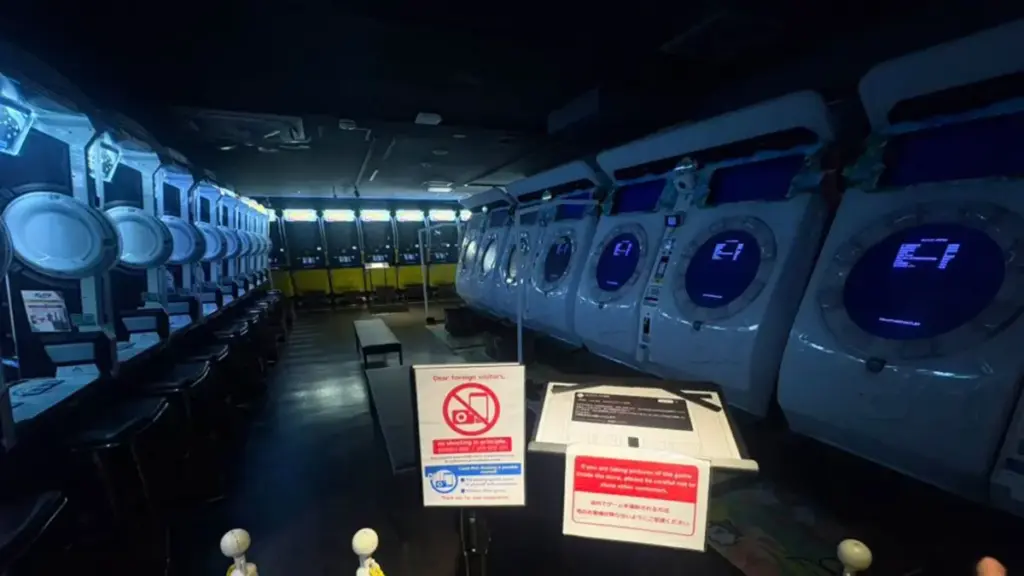
The timing of the outage has been particularly difficult for arcade operators who are already navigating a complex economic landscape. While the industry has seen a resurgence in certain sectors, the reliance on networked services means that a single point of failure at the server level can effectively shut down an entire business’s revenue stream for the duration of the crisis. When ITMedia News first reported on the situation, the outlook was grim, with technical teams reportedly struggling to identify the root cause of the disconnection, leading to the "no end in sight" assessment that circulated through the gaming community earlier in the week.
Sega and Bandai Namco represent the dual pillars of the arcade world. Sega, a company that famously pivoted its business model multiple times over the decades, has maintained a dominant presence in arcades even after exiting the home console hardware market. Their history is deeply intertwined with the evolution of the arcade, having survived various industry shifts through innovation and strategic lifelines. Bandai Namco, similarly, holds a massive share of the market with perennial favorites ranging from the Tekken series to the ubiquitous Mobile Suit Gundam cockpit simulators. The fact that both ecosystems were brought down simultaneously suggests a deep-seated issue within the shared ALL.net infrastructure that links these competitors’ products.
As the week progressed, the tension among arcade enthusiasts and operators began to shift toward a cautious optimism. ALL.net has since issued a more hopeful update, indicating that technicians have made enough progress to begin the recovery phase. The network operator announced that affected arcades would "gradually resume operation on a trial basis starting today." This phased approach suggests that while the core issue may have been identified, the process of bringing thousands of machines back online across the country requires a controlled rollout to ensure server stability and prevent a secondary collapse under the sudden load of returning players.
The "trial basis" restoration is a standard procedure in large-scale IT recoveries, particularly when dealing with distributed hardware like arcade cabinets. It involves monitoring a subset of machines and locations to ensure that data packets are being handled correctly and that the IC card login systems are accurately retrieving player profiles without lag or loss of information. For the regular players who frequent these establishments, the resumption of service is more than just the return of a hobby; it is the restoration of a social routine.
The significance of this outage extends beyond the immediate loss of playtime. It highlights the inherent vulnerability of the "always-online" model that has come to dominate the amusement industry. While networking has allowed for deeper gameplay experiences, more frequent content updates, and a sense of global community, it has also created a dependency on centralized infrastructure that can be a single point of failure. When the servers at Sega or Bandai Namco experience a critical error, the physical cabinets—which can cost tens of thousands of dollars each—become little more than expensive furniture.
 Hardware Reviews & PC Building
Nvidia CEO Jensen Huang admits to an affair with a suspected Chinese spy — Jensen apologizes in letter to staff,…
The revelation came to light after a series of reports suggested that...
 Hardware Reviews & PC Building
Big Tech is cashing in on AI while the rest of corporate America sees no financial returns — report outlines how…
The disparity highlights a growing tension in the financial markets. On one...
 Hardware Reviews & PC Building
GlobalFoundries to produce silicon interposers for TSMC’s CoWoS in the US — Five-year agreement valued at $2…
The deal establishes a robust, U.S.-based manufacturing source for essential advanced packaging...







