

The landscape of home automation has undergone a radical shift over the last decade. What was once the exclusive domain of high-end custom installations costing thousands of dollars has been democratized by a wave of affordable, open-source hardware. At the center of this movement is the ESP32, a versatile and remarkably inexpensive microcontroller that has become the darling of the "prosumer" tech community. While many enthusiasts view these devices as mere components for hobbyist experimentation, a growing body of evidence suggests that strategically deployed ESP32 projects are more than just toys; they are sophisticated financial tools capable of paying for themselves through energy savings, waste reduction, and risk mitigation.
Adam Davidson, a veteran technology writer with a background in engineering, argues that the true value of the ESP32 lies in its ability to solve specific, localized problems that commercial "off-the-shelf" products often overlook or overcharge for. By integrating basic sensors that cost only a few dollars, users can build custom solutions that outperform expensive brand-name alternatives. The beauty of these projects, Davidson notes, is that they often require minimal interaction once configured, operating behind the scenes to create a home that functions with a sense of "magic" rather than manual effort.

Precision Climate Control Through Presence Detection
One of the most significant drains on a household budget is the inefficiency of central heating and cooling systems. Traditional smart thermostats have made strides in this area by utilizing geofencing—a technology that uses a resident’s smartphone location to determine when the house is empty. However, geofencing is a blunt instrument; it knows if you are in the building, but it cannot distinguish between an occupied living room and an empty guest bedroom.
The ESP32 offers a more granular solution to this problem through advanced presence detection. By flashing an ESP32 with Bluetooth proxy firmware and utilizing integrations such as the Bermuda Home Assistant, homeowners can track the precise location of wearable devices and smartphones within the house. This allows the smart home system to estimate which specific rooms are occupied at any given time.
The financial implications of this room-level awareness are substantial. By dynamically adjusting smart radiator valves or air conditioning units based on actual room occupancy, users can stop the wasteful practice of climate-controlling empty spaces. For those seeking even higher precision, the ESP32 can be paired with mmWave (millimeter-wave) sensors like the LD2410. Unlike traditional PIR (Passive Infrared) sensors, which only detect significant movement, mmWave sensors are sensitive enough to detect the micro-movements of a person breathing. This ensures that the heating doesn’t shut off while someone is quietly reading a book or watching a movie, providing a seamless balance between comfort and cost-cutting.
 Tech Tutorials & How-To Guides
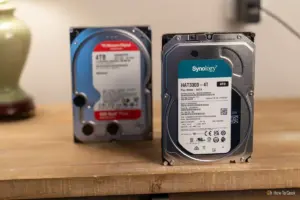
The Mechanical Resilience of the Hard Disk Drive: Utilizing Hook-and-Loop Fasteners to Combat Vibration and Extend Hardware Longevity
In an era increasingly dominated by the blistering speeds of NVMe solid-state...
 Tech Tutorials & How-To Guides
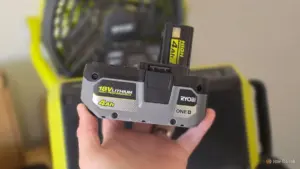
Beyond the Drill: How Ryobi’s ONE+ Ecosystem is Redefining the Modern Home and Workshop
For decades, the image of a cordless power tool was tethered strictly...
 Tech Tutorials & How-To Guides
Paramount+ Expands Library with Major October Update as Spooky Season Begins
As the calendar turns to October and the first chill of autumn...







