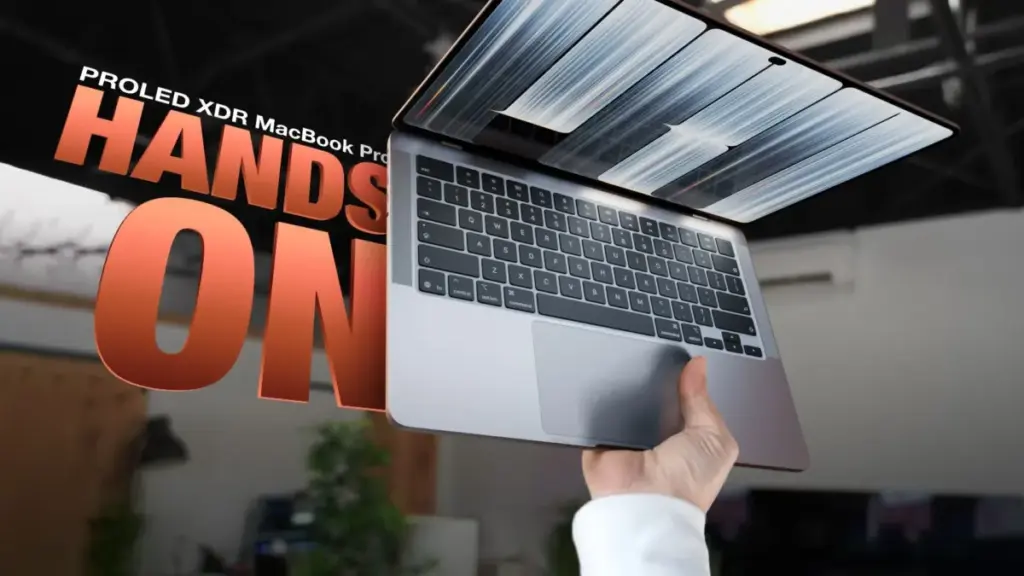
Under the hood, the internal silicon strategy for the PROLED MacBook Pro presents a notable point of continuity. Next-generation processor chips were not ready in time for the release of these PROLED machines. As a result, Apple has outfitted the new models with the same M5 Pro and M5 Max chips that power the existing mini-LED versions. For a laptop family that commands a starting price near $3,000, the reliance on current-generation processing hardware represents a potential drawback for users seeking generation-over-generation performance leaps in compute power.
Because Apple continues to keep the mini-LED MacBook Pro models in its active retail lineup, buyers face a clear pricing divide. The new PROLED MacBook Pro carries a premium of approximately $400 over the equivalent mini-LED models. The entry-level 14-inch PROLED configuration starts at $2,899, while the 16-inch model begins at $3,399. Customers choosing to pay the $400 price difference are primarily paying for the upgraded OLED display panel, the lighter and thinner chassis design, the returning illuminated logo, the Dynamic Island, and the multi-touch display integration.
The arrival of the PROLED MacBook Pro resolves weeks of industry speculation regarding Apple’s branding and launch strategy. Ahead of the official announcement, hardware rumors suggested that Apple might introduce these touch-enabled OLED models under a brand-new "MacBook Ultra" moniker. However, invitations issued for Apple’s launch event in Los Angeles on October 28 featured the tagline "Pro and tell," signaling that the company intended to maintain its established MacBook Pro naming convention. This outcome mirrors Apple’s recent branding decisions across other product categories, such as when early speculation regarding an "iPhone Ultra" ultimately culminated in the release of the iPhone Duo.
The PROLED MacBook Pro release also fits into a broader rollout of OLED screen updates across Apple’s hardware portfolio late this fall. Alongside the MacBook Pro announcement, Apple expanded OLED technology to its compact tablet line with a redesigned iPad mini featuring an 8.5-inch OLED display. That device similarly received an overhaul, incorporating an A20 Pro chip, a nano-texture display option, a thinner and lighter body, an IP67 rating for water and dust resistance, a landscape front camera, an Acoustic Display audio system that removes traditional speaker holes, and Apple’s custom N1 wireless chip supporting Wi-Fi 7 and Bluetooth 6.
For potential MacBook Pro buyers, the choice between the existing mini-LED hardware and the new PROLED generation comes down to hardware priorities. While the internal processing capabilities remain identical due to the shared M5 Pro and M5 Max silicon, the physical refinements of the PROLED models—most notably the lighter chassis and superior OLED display quality—deliver tangible benefits for users who prioritize portability and color accuracy, with touch input serving as an added extra.
 macOS & Apple IT Support
Apple Blocks Compromised eMudhra Cryptographic Certificates Across Platforms to Safeguard Web Traffic
Apple has implemented automated security controls across its operating systems to block...
 macOS & Apple IT Support
Apple Store Subscription Controversy Prompts Removal of Retail Sales Metric and Internal Memo on Customer Consent
A growing controversy surrounding sales practices at Apple Store retail locations has...
 macOS & Apple IT Support
Apple Seeds iOS 27.3 Beta 2: Face Unlock for iPhone Duo, Siri AI Web Awareness, Tiered Usage Limits, and System Refinements
Apple has officially seeded the second beta of iOS 27.3 to developers...