
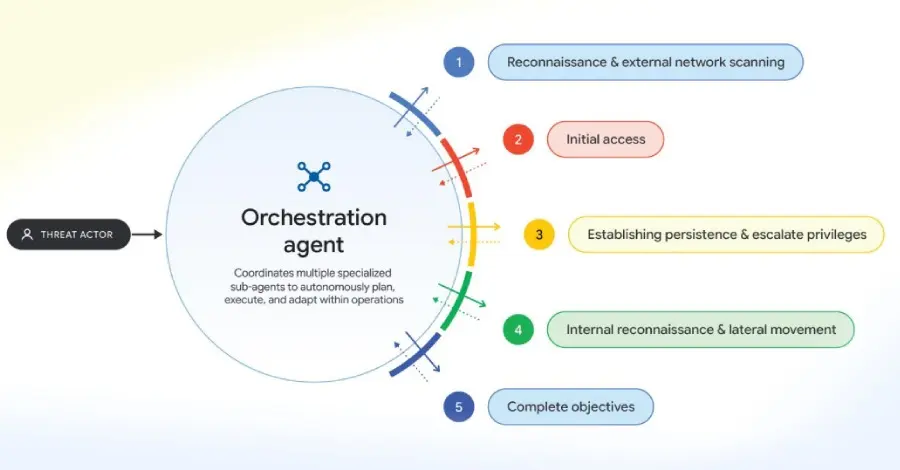
The Jieyou platform is a stark example of Phishing-as-a-Service (PhaaS) providers leveraging LLMs as a "modular force multiplier." By removing the technical hurdles associated with payload customization, these platforms allow a much larger pool of bad actors to mount convincing and highly dynamic campaigns. The ability to generate pretext lures on the fly means that phishing attacks can be tailored to specific targets or current events with almost no manual effort, further increasing the success rates of these malicious operations.
The shift toward autonomous agentic activity represents a crossing of a significant threshold in the ongoing arms race between attackers and defenders. As these frameworks become more integrated and their ability to chain together complex tasks improves, the traditional reliance on human-centric security operations may become increasingly untenable. The ability of AI agents to autonomously scale attacks and integrate new exploits into their workflows means that the volume and sophistication of threats are likely to grow exponentially.
Google’s findings suggest that the cybersecurity industry must prepare for a future where the primary adversary is not just a human hacker using tools, but a self-correcting, autonomous system capable of navigating a network with minimal guidance. The emergence of agentic AI in the hands of threat actors suggests that the window for detection and response is shrinking toward a point where only equally sophisticated, AI-driven defenses will be capable of mounting an effective resistance.
As the GTIG report concludes, the evolution of these platforms highlights a growing industry trend where the focus has moved from the novelty of AI to its practical application as a tool for operational dominance. Whether through the rapid weaponization of vulnerabilities, the theft and resale of computational resources, or the simplification of complex phishing schemes, the integration of agentic AI into the threat actor’s toolkit is no longer a theoretical concern—it is a present and rapidly accelerating reality. The shift to machine-speed warfare in the digital domain is well underway, and the implications for global security are profound.
 Cybersecurity Basics & Security News
U.S. Authorities Seize Infrastructure Used in Massive North Korean Cryptocurrency Theft Campaigns
In a significant blow to the digital financing of sanctioned regimes, the...
 Cybersecurity Basics & Security News
The Evolution of the Digital Frontier: How AI and Cloud Expansion are Redefining Modern Cybersecurity Strategy
The global cybersecurity landscape is currently undergoing a fundamental transformation, driven by...
 Cybersecurity Basics & Security News
Russia-Aligned Cyber Espionage Group UAC-0099 Deploys New ASHVEIN Malware in Sophisticated Campaign Against Ukraine
The landscape of cyber warfare in Eastern Europe continues to shift as...







