
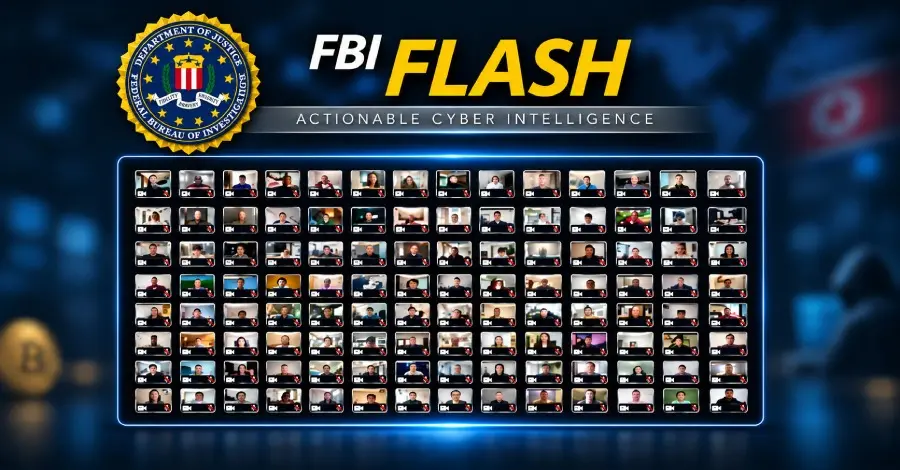
In a significant blow to the digital financing of sanctioned regimes, the U.S. Federal Bureau of Investigation (FBI) and the Department of Justice (DoJ) have announced a series of coordinated actions to disrupt a sophisticated North Korean cyber-theft operation. Federal investigators have confirmed that threat actors tied to the Democratic People’s Republic of Korea (DPRK) have successfully siphoned more than $400 million in cryptocurrency over the past 18 months through a highly targeted social engineering scheme dubbed "FaceStealer."
The announcement marks a critical milestone in the ongoing battle against state-sponsored financial crime. As part of these operations, law enforcement agencies successfully seized the cloud-based infrastructure that underpinned the FaceStealer campaign. Authorities described the operation as "hard-to-detect," noting its reliance on advanced psychological manipulation and cutting-edge technology to bypass traditional security perimeters.
Parallel to the FaceStealer disruption, the Department of Justice revealed the court-authorized seizure and restraint of an additional $1.2 billion in digital assets. These funds are linked to the North Korea-backed "TraderTraitor" group, which was responsible for the high-profile hack of the cryptocurrency exchange Binance. According to federal officials, these plundered assets are not merely criminal proceeds but serve a direct geopolitical purpose: funding Pyongyang’s illicit weapons of mass destruction (WMD) and ballistic missile programs.
"The North Korean regime relies on proceeds from large-scale cryptocurrency theft to fund its illicit weapons program, stealing billions of dollars in recent years," stated FBI Cyber Branch Operations Director Brett Leatherman. He emphasized that the FaceStealer scheme specifically targeted the most vulnerable and yet most valuable links in the digital asset chain: individuals working within the cryptocurrency and Web3 sectors. Through deceptive social engineering, the regime has turned digital innovation into a primary source of state revenue.

The Mechanics of FaceStealer: Deepfakes and Deception
The FaceStealer campaign represents a sophisticated evolution in North Korean cyber tactics. Unlike traditional phishing, which often relies on bulk emails and generic lures, FaceStealer is characterized by its intimacy and technical complexity. The Justice Department revealed that the scheme relies heavily on surreptitiously recorded videos and deepfake technology to facilitate theft.
The operation often begins with the compromise of a trusted contact. Using stolen accounts belonging to previous victims, the attackers send invitations to video meetings to individuals within the victim’s professional or personal circle. When a target joins the meeting, they are met with a sophisticated illusion. The attackers use a dual-stream approach: they record the victim’s live video feed while simultaneously playing a prerecorded webcam video of a person known to the target. This use of familiar likenesses is designed to build immediate trust and lower the target’s defenses.
To further increase the effectiveness of the scheme, the DoJ noted the use of "super intelligence" (SI) to develop deepfake videos of influential figures in the cryptocurrency and Web3 industries. By appearing as a well-known industry leader or a trusted peer, the attackers can manipulate targets into performing high-risk actions.
 Cybersecurity Basics & Security News
Chainalysis Targeted in Cybersecurity Breach Involving Advanced AI-Driven Offensive Techniques
In a disclosure that underscores the escalating sophistication of the modern threat...
 Cybersecurity Basics & Security News
CERT-UA Issues Urgent Warning Over Massive Compromise of Dahua Video Surveillance Systems via P2P Vulnerabilities
The Computer Emergency Response Team of Ukraine (CERT-UA) has issued a critical...
 Cybersecurity Basics & Security News
Critical Vulnerability in Elementor Plugin Leaves Two Million WordPress Sites Open to Full Takeover
A high-severity security flaw has been identified in Elementor, the most widely...







