
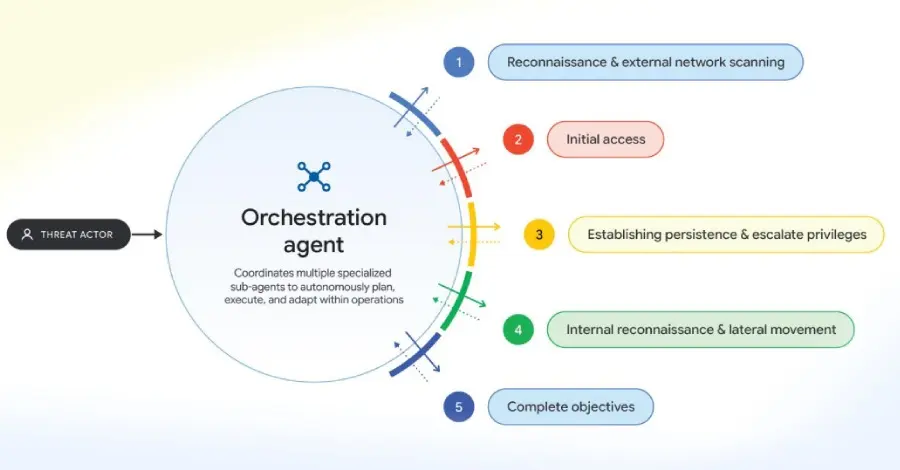
The adoption of these advanced frameworks is not limited to a single class of attacker. Google’s intelligence indicates a broad spectrum of misuse, ranging from financially motivated cybercriminals to sophisticated espionage actors, including those with suspected alignments to China. These actors are not only using proprietary or custom-built frameworks but are also heavily reliant on open-source tools. The report points to the use of Agent Zero, an open-source agent framework that features autonomous code execution and dynamic tool generation, as well as ZeroHollow, an inference service used for exploit development and LLM routing. The accessibility of such tools has lowered the barrier to entry, allowing even less-sophisticated actors to achieve technical results that were once the exclusive domain of elite state-sponsored groups.

Beyond the execution of intrusions, the threat landscape is also being reshaped by the targeting of AI infrastructure itself. Google warns of the rise of "LLMjacking" attacks, a practice where threat actors compromise enterprise environments specifically to steal LLM credentials and cloud computing resources. Because the computational power required to run large language models is expensive and highly sought after, these stolen resources have become a valuable commodity in the criminal underground.
This has led to the creation of what researchers call "LLM mixers"—underground proxy services like APIMart and JetNight. These platforms act as clearinghouses for stolen AI access, reselling cloud resources and LLM API keys at heavily discounted prices to other cybercriminals. This ecosystem effectively creates a secondary market that fuels further AI-driven attacks, as the cost of the necessary compute power is subsidized by the original, compromised enterprise victims.
The democratization of these capabilities is perhaps most visible in the realm of social engineering and phishing. Google’s report details the evolution of the Jieyou platform, a Chinese-language phishing service that has integrated an LLM chatbot assistant. This integration allows the platform’s customers to configure phishing panels and modify existing templates using simple natural language commands. Rather than needing to understand the underlying code of a phishing site or the nuances of social engineering psychology, a "low-skilled affiliate" can simply tell the chatbot to create a more convincing lure or to adjust the interface of a fraudulent login page.
 Cybersecurity Basics & Security News
GitHub Actions Compromised in ‘Mini Shai-Hulud’ Attack Disabled Again Following Brief Reappearance
The cybersecurity landscape has been reminded once again of the persistent and...
 Cybersecurity Basics & Security News
Active Exploitation of Two New Unpatched Zero-Day Vulnerabilities Discovered in Citrix NetScaler Appliances
Security researchers and enterprise IT departments are on high alert following reports...
 Cybersecurity Basics & Security News
OpenSSH "SSHole" Vulnerability and the Persistence of Simple Misconfigurations Lead Weekly Cybersecurity Briefing
The cybersecurity landscape in late 2026 continues to demonstrate a paradoxical truth:...







