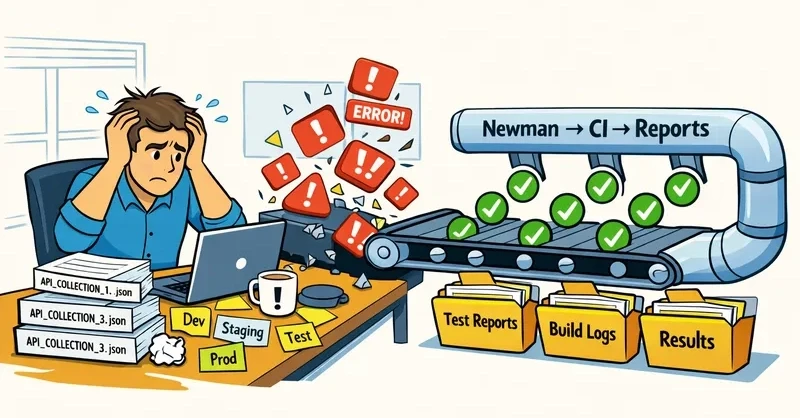
JUnit is widely regarded as the best format for machine parsing and CI gating. Because it is a standard format, it can be consumed by almost any CI/CD tool, including Jenkins, GitLab CI, and Azure DevOps, to provide a "pass/fail" signal to the pipeline. On the human side, the "htmlextra" reporter—a community-maintained favorite—is frequently used to produce detailed iteration breakdowns. It offers a more granular view than the standard HTML reporter, making it easier for developers to diagnose exactly why a specific data set caused a test to fail. For teams requiring even more interactive and rich exploration of test results, the Allure framework is often integrated, though it requires an additional step to generate the final interactive reports from the raw results.
Versioning is equally important. Following Semantic Versioning (SemVer) principles for API collections allows teams to track changes in the testing logic alongside changes in the API itself. This ensures that as an API evolves from version 1.0 to 2.0, the regression suite remains synchronized, preventing false negatives or positives caused by outdated test logic.
Practical Application and Operational Checklists
To successfully transition a service to this formalized model, many teams are adopting a "conversion sprint"—a focused effort, usually lasting one to two days, dedicated to stabilizing a single service’s testing suite. During this sprint, the team works through a checklist that includes decoupling tests from hard-coded data, implementing proper variable scoping, and ensuring that the collection can run successfully in a headless environment.
Operational efficiency is further enhanced by using package.json scripts in Node.js environments. By defining a simple command like npm run ci:newman, developers can encapsulate complex Newman CLI strings, making it easy for any team member to run the full suite locally with the same parameters used in the CI pipeline.
The final piece of the puzzle is a robust troubleshooting process. When a CI run fails, teams need a clear path to resolution. This typically involves verifying that the environment variables were correctly injected, checking that the target service was reachable from the CI runner, and reviewing the HTML reports to see if the failure was a legitimate regression or a result of malformed test data.
By automating Postman collections into a repeatable, versioned regression suite, organizations can remove the manual variability that often leads to production incidents. This shift not only speeds up the feedback loop for developers but also makes failures actionable. Ultimately, it represents the difference between being surprised by a production regression and having the systems in place to stop it before it ever reaches a customer. As APIs continue to serve as the backbone of modern software architecture, the formalization of their testing suites is no longer an optional luxury—it is a foundational requirement for reliable delivery.
 Software Development & Scripting for IT
UNC6240 Exploits Critical Oracle PeopleSoft Vulnerability Through Sophisticated WAF Bypass Techniques
A sophisticated cyber-espionage and data theft campaign has been identified targeting organizations...
 Software Development & Scripting for IT
The Problem-First Paradigm: Why Solving Business Pain Points Outlasts Tool Mastery in the AI Automation Era
In the rapidly evolving landscape of digital transformation, the allure of new...
 Software Development & Scripting for IT
AI-Driven Development Reaches New Milestone as Formal Verification and Statecharts Detect Elusive Edge Cases
In the rapidly evolving landscape of software engineering, the integration of artificial...