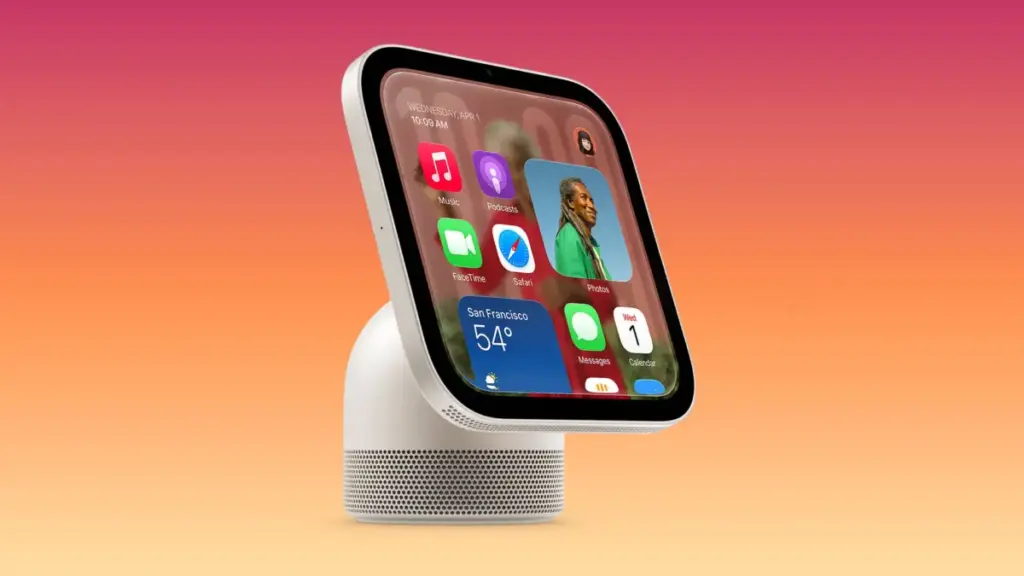
Apple has officially released HomeView Software 27.2, providing an unexpected early look at the operating system built to power the company’s upcoming smart home display. While the physical HomeView hardware is not scheduled to hit retail shelves until November 13, the advance deployment of its underlying software update has allowed developers and code analysts to dissect the system files. The discoveries reveal key user interface components, wallpaper options, unique system architecture, and hidden graphics that point to an extended development timeline driven by Apple’s artificial intelligence strategy.
The early availability of HomeView Software 27.2 serves as a precursor to Apple’s broader hardware launch, offering concrete details about how the central smart display will function in daily use. From customized lock screen faces to a completely reworked launcher architecture designed specifically for home environments, the build confirms several unannounced features while shedding light on the internal testing process Apple used to bring the product to market.
Background and the Road to HomeView
The release of HomeView Software 27.2 comes shortly after Apple’s official announcement of the HomeView hardware earlier in October. The device represents Apple’s long-rumored entry into dedicated tabletop smart displays, featuring a 7-inch Liquid Retina display designed to act as a centralized hub for home automation, media playback, and household communication.
Before the official unveiling, details surrounding the hardware and software were closely guarded. Early leaks indicated that Apple was preparing a home-focused display hub, with Bloomberg’s Mark Gurman outlining key specifications just days ahead of Apple’s media event in New York. Around the same time, regulatory trademark filings under shell companies revealed the "HomeView" name, which Apple ultimately adopted instead of the widely speculated "homeOS" branding. In line with the naming conventions used for the HomePod—where the operating system is simply categorized as HomePod Software—Apple opted to officially brand the display’s system as HomeView Software.
At the hardware’s announcement, Greg Joswiak, Apple’s senior vice president of Worldwide Marketing, highlighted the product’s dual nature as both a shared family device and a personalized assistant.
"Apple HomeView is designed to be shared by everyone in the home yet feel completely personal to each user," Joswiak noted during the product reveal. "It recognizes your face to shift from a household screen to your own experience."
With HomeView Software 27.2 now available for technical analysis, the specific mechanics behind that user experience are coming into sharper focus.
Wallpapers and Display Customization
Analysis of the HomeView Software 27.2 update reveals that the system includes a varied selection of built-in display customization options. At launch, users will have access to 20 default wallpapers featuring a broad spectrum of colors, gradients, and subtle visual textures.
The software structure indicates that these wallpapers will serve as the backdrop for the primary Home Screen interface. In addition to the default options preloaded onto the device, code references suggest that users will have the ability to select personal photos from their library to use as custom wallpapers, bringing a familiar level of iOS-style personalization to the smart home display.
The visual assets inside the update demonstrate how Apple is adapting its design language for an ambient, always-on tabletop screen. Rather than relying on static images, the software manages wallpapers alongside dynamic "faces"—customizable ambient screens that display time, widgets, and home status updates when the device is idle or viewed from a distance.
 macOS & Apple IT Support
Amazon Cuts $200 Off M5 MacBook Air Models, Matching All-Time Low Prices Across 13-Inch and 15-Inch Lineups
Amazon has launched a major weekend promotion on Apple’s M5 MacBook Air,...
 macOS & Apple IT Support
Official EU Energy Label Confirms 4,883 mAh Battery Capacity for Apple’s Upcoming iPhone Duo
Apple has officially published a new European Union energy label regulatory filing...
 macOS & Apple IT Support
Apple Leaks Reveal New Hardware Pipeline as $250 Million Siri AI Settlement Portal Opens
The ecosystem surrounding Apple moves at a relentless pace, with hardware leaks,...