

For Johnston and her mother, both of whom are senior citizens, the technical hurdles are particularly daunting. Some services have already begun demanding multiple forms of identification and the completion of complex data protection forms to verify their identities before allowing an email change. This bureaucratic friction turns a simple update into an exhausting ordeal, one that is being forced upon them through no fault of their own.
If the domains are terminated before these updates are complete, the situation becomes even more dire. Once an email address is no longer functional, "forgot password" features and identity verification emails become useless. Users can find themselves permanently locked out of their own data, forced to undergo manual account recovery processes that can take weeks and offer no guarantee of success.
Confusion and Misinformation at the Registrar Level
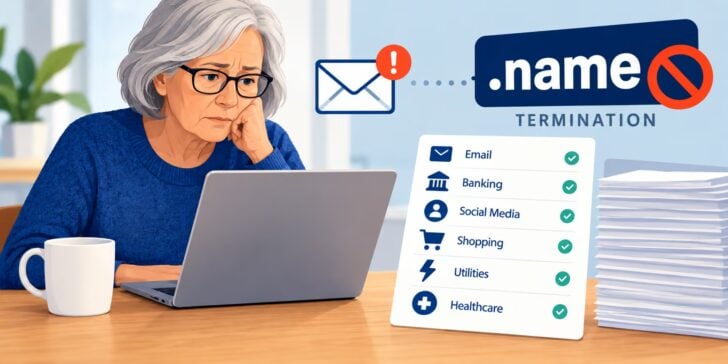
Adding to the frustration of affected users is a significant breakdown in communication between the registry, ICANN, and the registrars who interface with the public. Johnston’s experience with her registrar, Network Solutions, highlights a troubling lack of awareness regarding the termination policy.
Upon receiving a notification that her domain would be terminated, Johnston contacted Network Solutions to explore her options and seek clarification. To her surprise, multiple customer service representatives repeatedly informed her that the notification was a scam. The representatives pointed to the fact that her domain was officially registered and "secured" through 2030, leading them to believe that any talk of early termination must be fraudulent.
This internal confusion at a major registrar suggests that the rollout of the termination plan has been poorly coordinated. Johnston reported that she eventually had to instruct a customer service representative to perform a web search for ".name termination" to prove that the situation was real. When the frontline support staff of a multi-billion-dollar domain registrar are unaware of a major policy shift affecting their customers, it leaves users like Johnston in an incredibly vulnerable position, fighting against both the policy itself and the ignorance of those supposed to help them navigate it.
The Case for Reversing Course
The hardship described in Johnston’s reconsideration request has added weight to the arguments of industry observers who believe ICANN and Verisign should reconsider their path. The core of the issue lies in the discrepancy between the technical goals of the registry and the real-world impact on long-term users.
 Web Hosting & Domain Management
The Hidden Economy of Expired Domains: Analyzing the June SEO Auction High-Rollers
In the specialized world of domain name investing, a high sale price...
 Web Hosting & Domain Management
D3 Unveils Frontier: A New Pre-Order Ecosystem Designed to Gauge Demand and Streamline Next-Generation TLD Launches
In a strategic move to reshape how new top-level domains (TLDs) are...
 Web Hosting & Domain Management
Twente Region Set to Secure Dedicated Digital Identity with Application for .Twente Top-Level Domain
The digital landscape of the Netherlands is poised for a significant expansion...







