
The prevailing narrative surrounding the generative artificial intelligence revolution often focuses on the ethereal—the complexity of neural networks, the trillions of parameters in frontier models, and the seemingly infinite billions of dollars being poured into Silicon Valley startups. However, a starker reality is beginning to settle over the industry: the growth of GenAI is not a purely digital phenomenon, nor is it one that can be accelerated by capital alone. No matter how much money is thrown at the problem, the expansion of the AI sector is physically tethered to the rate at which datacenters can be designed, built, and successfully connected to the electrical grid.
This physical bottleneck is becoming the defining characteristic of the current era. While political, social, and economic pressures are mounting to speed up the deployment of AI, these forces have little power to accelerate the manufacturing of massive transformers, the installation of high-voltage power lines, or the pouring of concrete. The industry was largely caught off guard by the sheer velocity of the AI boom, and the specialized supply chains—ranging from semiconductor manufacturing equipment to the heavy electrical gear required for power distribution—were simply not prepared to ramp up production at the scale the market now demands.
The human element remains the most significant variable in this equation. Despite the automation and intelligence promised by the software being developed, it still requires human labor to construct the physical shells that house these machines. In an era where remote work has become a standard for many—a shift that some observers note has been a personal reality since the mid-1990s—the demand for physical labor on construction sites has never been more critical. Ironically, the current economic climate, characterized by high interest rates for residential mortgages, has provided a convenient side effect for the tech industry. As the construction of homes and traditional office spaces slows down due to borrowing costs, a larger portion of the labor pool is being redirected toward massive datacenter projects.

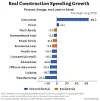
Recent economic data highlights the profound impact this shift is having on the broader American economy. Jason Furman, a professor of economics at Harvard University and a former high-ranking economic advisor, recently highlighted data through August 2026 that illustrates the divergence in the construction sector. According to figures from the U.S. Census Bureau and the Bureau of Labor Statistics, datacenter and power utility construction are currently serving as a vital stabilizer for the United States economy. As residential and commercial office construction face significant declines, the aggressive build-out of infrastructure for the digital age is counter-balancing what might otherwise be a more pronounced economic contraction.
It is important to distinguish what these construction figures represent. The data accounts for the cost of raw materials and the labor required for the physical project, as well as the power distribution and energy backup equipment integrated into the facilities. Crucially, it does not include the cost of the actual IT hardware—the GPUs, CPUs, storage arrays, and networking switches—that will eventually populate these halls. When one considers that the hardware often costs more than the building itself, the total capital expenditure being funneled into this sector becomes even more staggering.
 Enterprise Tech & Infrastructure
Unmasking the Hidden Costs of Amazon S3: A Strategic Framework for Enterprise Storage Optimization
In the landscape of modern enterprise infrastructure, Amazon Simple Storage Service (S3)...
 Enterprise Tech & Infrastructure
Seagate, Western Digital, and Toshiba Lead 2023 Rankings for Enterprise-Grade Storage Solutions
In the rapidly evolving landscape of corporate data infrastructure, the demand for...
 Enterprise Tech & Infrastructure
Securing the Data Core: Evaluating the Security Architectures of DAS and NAS in the Enterprise
In the modern enterprise landscape, data is frequently described as the new...






