
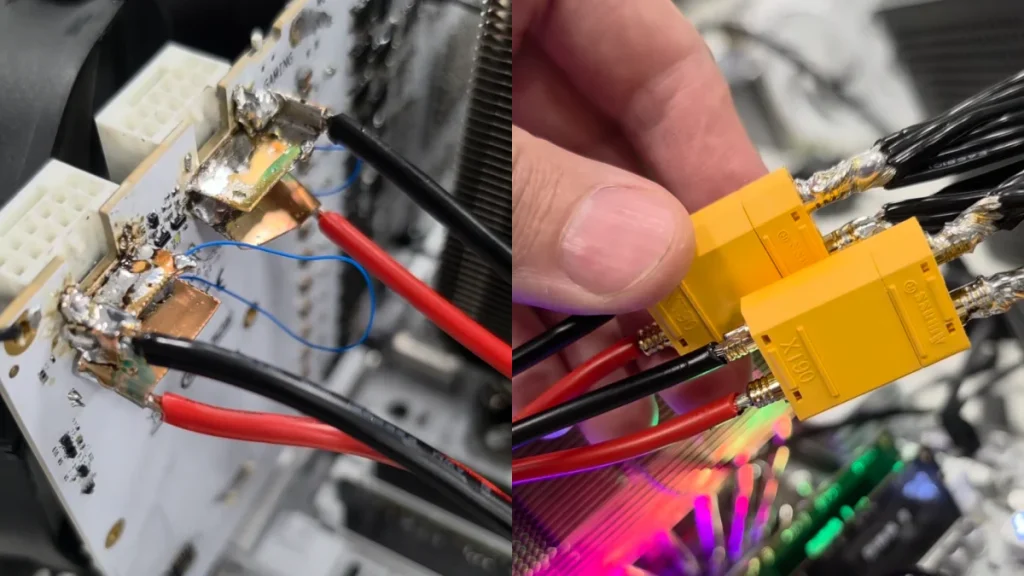
The involvement of a custom shop like GRAVEPC suggests that there is a market for "hardened" versions of these flagship cards. For professional users and extreme enthusiasts who cannot afford downtime, a card that has been modified at the factory or by an authorized partner to include superior power distribution might be worth the premium. If the partnership with PNY is as robust as u/DallasGrave claims, it could represent a new business model where boutique firms act as specialized "tuners" for high-end silicon, much like how performance shops modify high-end sports cars with the blessing of the original manufacturer.
Until these modified cards become a retail reality with clearly defined legal protections, consumers are advised to remain cautious. The claim that a third-party modification will be fully supported by a major manufacturer like PNY is a significant one, and it remains to be seen how the official RMA departments will handle such hardware if it eventually fails for reasons unrelated to the power module. For now, the mod serves as a fascinating proof of concept and a testament to the ingenuity of the PC building community. It highlights the lengths to which enthusiasts will go to protect their investments and optimize their hardware performance.
As the RTX 5090 continues its lifecycle, the industry will be watching closely to see if other partners or third-party manufacturers adopt similar power distribution strategies. If overheating remains a persistent concern for the 12VHPWR standard, the " DallasGrave fix" might transition from a niche Reddit post to an industry-standard approach for ultra-high-performance GPUs. For the time being, however, most users will likely stick to the standard cables provided by their power supply manufacturers, ensuring they are fully seated and following all safety guidelines provided by NVIDIA and its partners to avoid the risk of a denied warranty claim. The evolution of PC power delivery is clearly still in a state of flux, and the community-led innovations emerging today may well dictate the design standards of tomorrow.
 Hardware Reviews & PC Building
Microsoft brings Snapdragon X2 Plus to 13-inch Surface Laptop, 12-inch Surface Pro — low-end systems finally get…
The introduction of the Snapdragon X2 Plus represents a substantial leap over...
 Hardware Reviews & PC Building
Rising Component Costs and AI Demand Create Unprecedented Crisis for Consumer PC Market
The landscape of the consumer PC market is currently navigating a period...
 Hardware Reviews & PC Building
Tom’s Hardware Expands Digital Reach with Launch of Official Mobile Application for Android and iOS
The landscape of technology journalism has undergone a profound transformation over the...







