
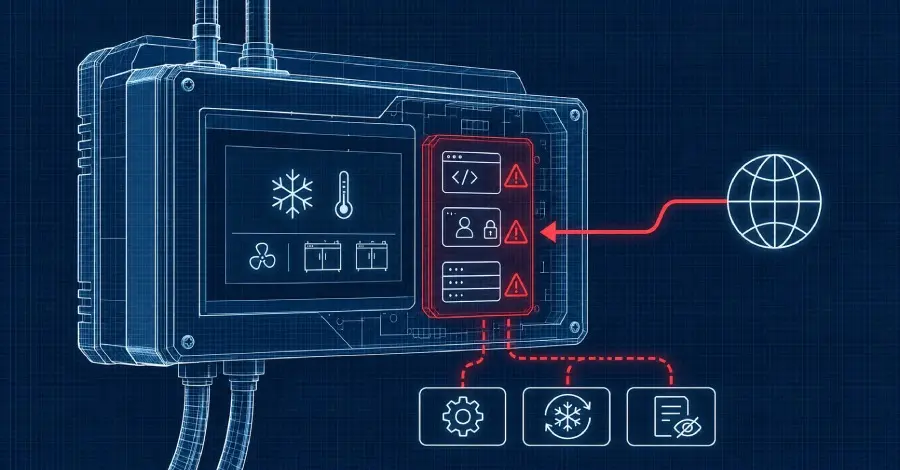
The Dutch researchers have expressed frustration with the current state of ICS security, calling the practice of patching individual flaws or relying on features like Strict mode a "misallocation of scarce security and personnel resources." They suggest that the underlying codebase likely contains numerous other similar vulnerabilities that have yet to be found.
What Operators Can Do
In the absence of a definitive patch, the primary recommendation from international cybersecurity experts is the immediate isolation of these devices from the public internet. The Centre for Cybersecurity Belgium (CCB) and Ireland’s National Cyber Security Centre (NCSC) have both issued advisories emphasizing that internet exposure must be eliminated regardless of whether the firmware is up to date or if Strict mode is enabled.
Operators are urged to move the management interface of the AK-SM800A behind a firewall or a Virtual Private Network (VPN). This ensures that only authorized personnel with internal network access can reach the controller. Additionally, the German BSI recommends that any operator who suspects their system may have been tampered with should immediately change all administrative credentials and conduct a thorough physical inspection of the connected refrigeration equipment to ensure it is operating within safe parameters.
However, disconnecting these systems is not always a straightforward task. Many supermarkets rely on third-party maintenance firms that monitor these controllers 24/7 via the internet. The Belgian advisory warns operators to review their service contracts and insurance policies before cutting off data transmissions, as doing so might inadvertently violate service-level agreements or void insurance coverage for spoiled stock. The recommended approach is to transition to a protected remote access solution that allows for continued monitoring without exposing the device to the open web.
Danfoss’s own documentation has historically recommended that the AK-SM800A should not be directly reachable from the public internet. An update guide from the company explicitly states: “This recommendation applies to all software versions, including those with Strict Mode enabled.” Despite this, a significant number of units remain exposed globally, often due to legacy configurations or a lack of awareness regarding the risks of internet-connected industrial hardware.
The current situation serves as a stark reminder of the vulnerabilities inherent in the "Internet of Things" (IoT) and Industrial Control Systems. As threat actors increasingly target the physical infrastructure that supports daily life, the security of a supermarket’s freezer may become just as critical as the security of a bank’s database. For now, the message to operators is clear: disconnect, verify, and wait for a formal resolution from the manufacturer.
 Cybersecurity Basics & Security News
Critical Linux Kernel TCP Vulnerability Triggers Urgent Patching Cycle Across Enterprise Distributions
A severe security flaw residing within the Linux kernel’s networking stack has...
 Cybersecurity Basics & Security News
Critical WordPress Vulnerability Turns Core Update Process Into Attack Vector
The very mechanism designed to keep millions of websites secure has emerged...
 Cybersecurity Basics & Security News
LiteLLM Supply Chain Breach: How a Leaked Master Key Led to the Distribution of Malicious Python Packages
The cybersecurity landscape has been served a stark reminder of the long-tail...







