
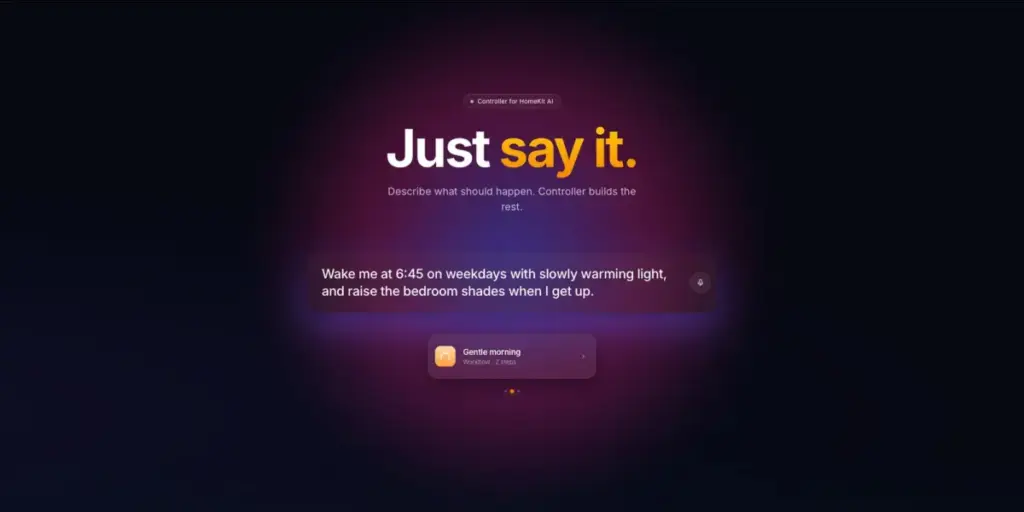
The landscape of smart home management is undergoing a significant shift as artificial intelligence begins to bridge the gap between technical complexity and user-friendly operation. In a major update aimed at streamlining the user experience, the popular third-party management tool, Controller for HomeKit, has launched a sophisticated new feature powered by generative AI. Marketed under the straightforward slogan "Just say it," the update promises to transform the way users interact with their Apple-based smart home ecosystems by allowing them to describe their desired outcomes in plain, natural language.
For years, the promise of a truly "smart" home has often been hampered by the friction of configuration. While Apple’s native Home app provides a foundational interface for controlling devices, creating intricate automations—those that involve multiple triggers, conditions, and sequential actions—frequently requires a level of patience and technical logic that can be daunting for the average consumer. Controller for HomeKit has long established itself as the go-to solution for power users seeking to unlock the deeper capabilities of the HomeKit framework. With this latest integration, the developers are now leveraging AI to make those high-level capabilities accessible to everyone, regardless of their familiarity with Boolean logic or automation workflows.
The core functionality of the "Just say it" feature is rooted in its ability to parse descriptive sentences and translate them into the specific technical commands required by the HomeKit protocol. Instead of manually selecting devices, setting brightness levels, choosing colors, and defining time constraints through a series of menus and toggles, users can simply type or speak a request. The AI then analyzes the intent behind the words and constructs the necessary scenes, workflows, and automations automatically.
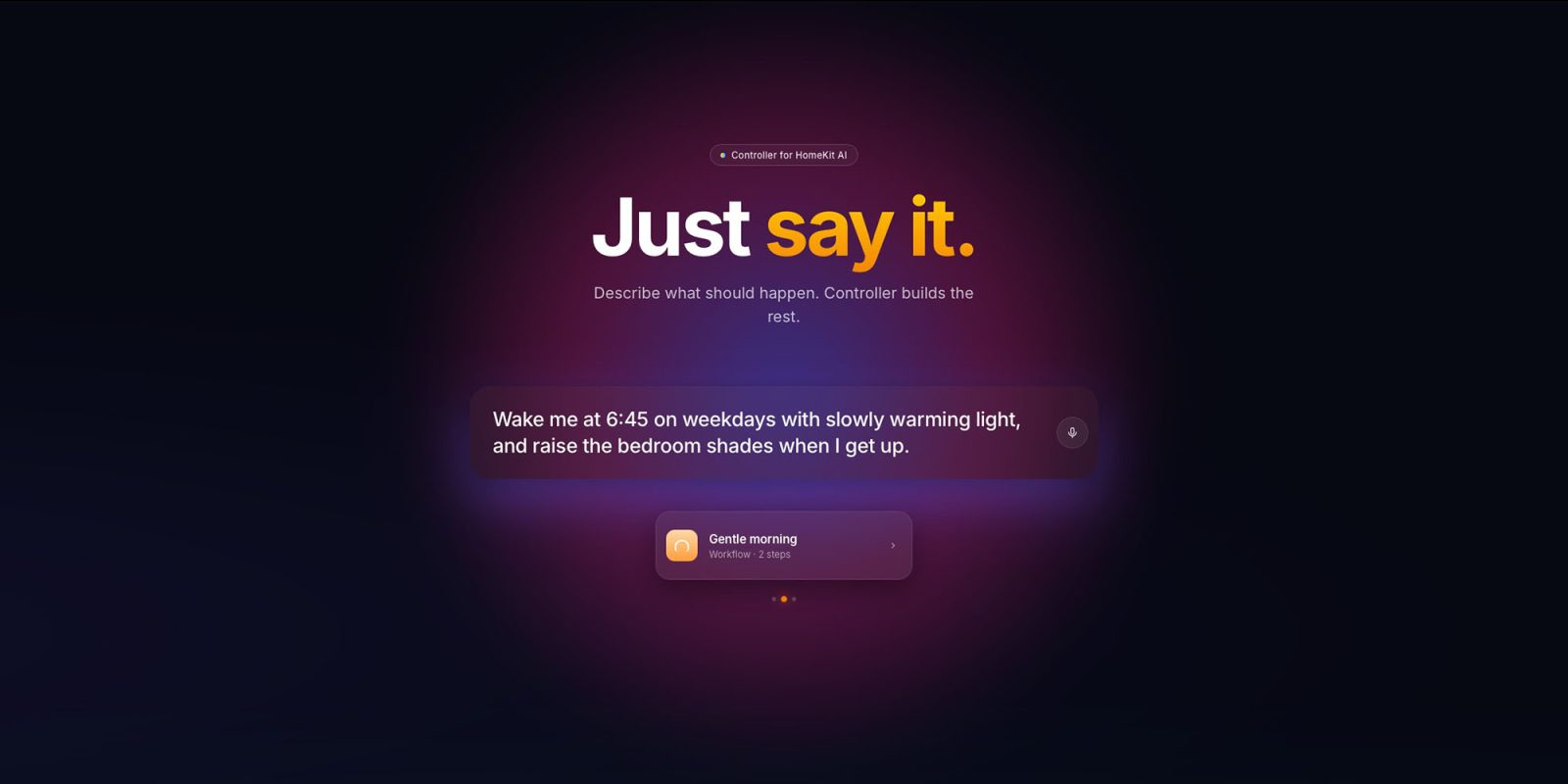
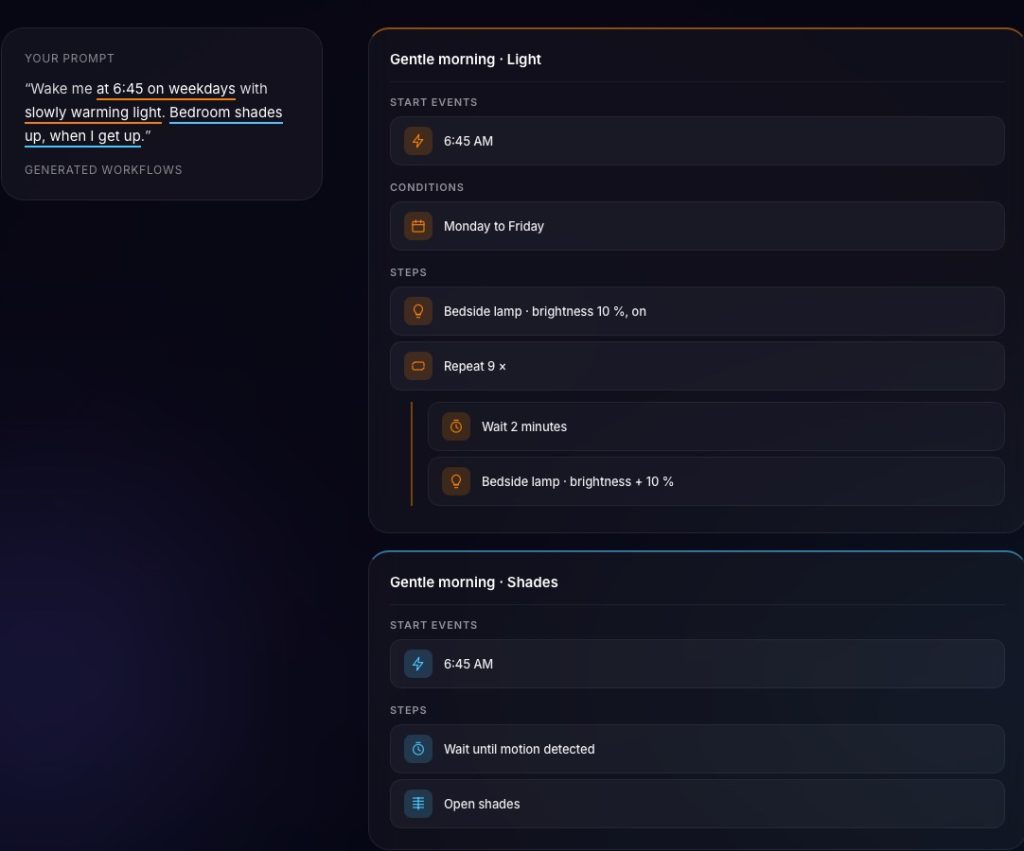
To illustrate the versatility of the new system, the developers have highlighted several practical examples that demonstrate how the AI handles different types of logic. One primary example focuses on a morning routine: "Wake me at 6:45 on weekdays with slowly warming light, and raise the bedroom shades when I get up." This single prompt involves several layers of complexity: a recurring schedule (weekdays), a specific time (6:45), a transitional command (slowly warming light, which implies a gradual increase in brightness and color temperature), and a secondary action triggered by an event (raising shades when motion or a "get up" state is detected). Traditionally, setting this up would involve creating a specific scene for the lights and a separate automation for the shades, ensuring all the conditions align perfectly. The AI handles the construction of these interlinked commands in the background.
Another example provided by the app developers showcases environmental control for entertainment: "Movie night: dim the living room lights to 20% and close the curtains." This is a classic "Scene" creation, where multiple devices across different categories are adjusted simultaneously to create a specific atmosphere. By interpreting the phrase "Movie night," the AI understands that the user is defining a state they wish to recall later, effectively building a pre-set configuration that can be activated with a single tap or voice command in the future.
The third example highlights the app’s ability to handle conditional security and convenience logic: "If someone comes home after midnight, turn only the hallway light to 15%." This prompt requires the AI to understand "if-then" parameters combined with temporal constraints. It identifies the trigger (an arrival at the home), the condition (the time being after 12:00 AM), and the specific action (a low-level illumination of a single light source). Such automations are vital for modern smart homes, yet they are often the most prone to user error during manual setup.
The introduction of natural language processing into HomeKit management comes at a time when the broader tech industry is racing to integrate Large Language Models (LLMs) into every facet of digital life. While Apple has recently announced its own suite of "Apple Intelligence" features, third-party developers like those behind Controller for HomeKit are often able to iterate faster, providing specialized tools that cater to the specific needs of the smart home community. By focusing exclusively on the HomeKit ecosystem, this app ensures that the AI-generated automations remain compliant with Apple’s strict privacy and security standards, as the underlying commands are still executed within the local HomeKit environment.
The effectiveness of the tool was put to the test in a real-world scenario, even under less-than-ideal conditions. In a preliminary trial of the update, the feature was tested in a home that was in the middle of a transition, with only a handful of active devices: two smart lights and one smart plug. Despite the limited hardware available for the AI to interact with, the system demonstrated a clear understanding of device categories and logical triggers. When asked to "switch on the bedroom fan when I switch off the living room lights," the AI correctly identified the smart plug (to which the fan was attached) and the lighting fixtures, successfully creating a functional automation that linked the two actions.
This level of adaptability is crucial for the success of AI in the smart home. Because every user’s home configuration is unique—varying in the number of rooms, the types of devices, and the specific naming conventions used—the AI must be able to map general requests to a specific, localized hardware list. The "Just say it" feature appears to handle this mapping with high precision, reducing the likelihood of the "command not understood" errors that have plagued voice assistants for years.
However, the power and convenience offered by Controller for HomeKit come with a professional-grade price point. The app operates on a subscription model, reflecting the ongoing development and server costs associated with maintaining advanced AI features and deep HomeKit integration. The "Essentials" tier is priced at $40 per year, providing a robust set of tools for most users. For those who require the full suite of advanced features, including the most sophisticated automation capabilities, the "Plus" tier is available for $80 per year. To allow users to experience the AI-driven workflow before committing to a subscription, the developer offers a seven-day free trial.
The move toward natural language automation represents a significant milestone in the evolution of the Internet of Things (IoT). For years, the barrier to entry for a truly automated home was the "programming" phase—the tedious task of telling every bulb and sensor exactly how to behave under every possible circumstance. By shifting the burden of configuration from the human to the AI, Controller for HomeKit is positioning itself as an essential layer of the smart home stack.

As the smart home market continues to mature, particularly with the industry-wide adoption of the Matter standard which aims to improve interoperability between different brands, the role of management apps will become even more critical. Users are no longer just looking for a way to turn off a light with their phone; they are looking for an intelligent environment that anticipates their needs and responds to simple instructions.
The "Just say it" update is currently available to all users of Controller for HomeKit. As more users adopt the feature and provide feedback, the developers are expected to continue refining the AI’s ability to handle even more complex, multi-step requests. For now, the update stands as a compelling look at a future where "programming" a home is as simple as having a conversation. Whether for seasoned enthusiasts with hundreds of devices or newcomers just beginning their smart home journey, the ability to describe a vision and have a digital architect build it in real-time is a powerful proposition.
 Smart Home & IoT Solutions
Apple Reimagines the Smart Home with iOS 27: 4K Video Support and Intelligence-Driven Notifications Take Center Stage
As Apple prepares for what is rumored to be one of its...
 Smart Home & IoT Solutions
Apple Signals Major Smart Home Pivot with Rumored 2027 Security Service and AI-Driven Hardware
For years, Apple’s presence in the smart home market has been characterized...
 Smart Home & IoT Solutions
Apple Intelligence and 4K Video: A Deep Dive into the iOS 27 Home App Overhaul
As Apple prepares for its highly anticipated "Welcome Home" special event on...







