
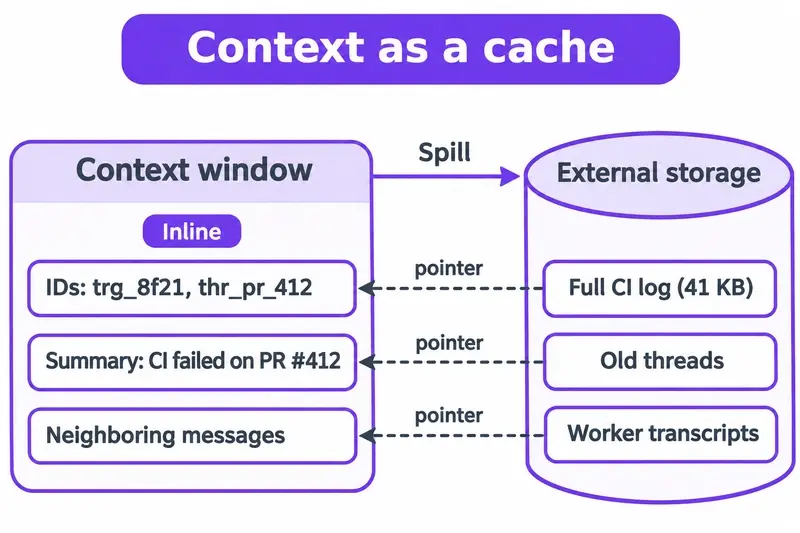
First and foremost is the requirement for stable resolution. If an agent requests a specific ID, the system must return that record or a clear error. If a system returns a successful status code but an empty body, or if IDs change after a database migration, the agent’s chain of thought is effectively severed. Furthermore, the system must support consistent pagination and provide clear "404 Not Found" messages for missing data. These errors allow the agent to understand that a piece of memory is truly gone, rather than letting it assume the data is present but empty, which often leads to logical errors in the agent’s output.
To maintain this stability, developers are increasingly turning to automated testing tools to validate their memory endpoints. For instance, using a command-line interface to define and test these endpoints ensures that the "links" in the chain remain functional even as the agent’s software is updated or refactored.
A Design Pattern, Not a Product
While the concept of Chain of Recall is compelling, the researchers at DeepSeek Harness have issued a clear caveat: this is an architectural pattern, not a feature that can be toggled on with a switch. Much of the implementation exists within a prototype plugin—dsh-superagent-prototype—which is explicitly described as a non-official product.
The essay positions Chain of Recall as a solution to one of the "open problems" in AI development: long-term memory. While the prototype demonstrated promising results, it also highlighted the inherent costs of such a system. In one experiment, removing the direct transfer of thread data increased cache-read tokens by approximately 37%, representing the computational overhead required to maintain a functional memory system.
The Future of Agentic Memory
Chain of Recall represents a significant step toward creating AI agents that can function as true digital coworkers. By moving away from the idea that an agent must "remember" everything in its active context, and toward a model where it "knows where to look," developers can build systems that are both more efficient and more reliable.
This approach is particularly suited for environments where data is naturally structured into discrete, linkable events—such as software development, project management, and customer support. In these fields, the "why" and "how" of a decision are often found in the connections between a chat message, a task ticket, and a code commit.
As AI agents continue to evolve, the challenge of memory will remain central to their utility. Chain of Recall offers a clear, testable path forward, emphasizing that for an AI to truly have a long-term memory, it doesn’t just need a bigger brain—it needs a better filing system.
 Software Development & Scripting for IT
Critical "php2shell" Vulnerabilities Trigger Emergency PHP Security Updates to Prevent Remote Execution
The global PHP security team has issued an emergency set of updates...
 Software Development & Scripting for IT
New Tool and Audit Reveal Common Structural Failures in the Emerging llms.txt Standard
As artificial intelligence agents and large language models increasingly become the primary...
 Software Development & Scripting for IT
CogniRunner Unveils AI-Driven License Management and Workflow Validation for Atlassian Cloud Ecosystem
The landscape of enterprise software management is undergoing a significant shift as...







