

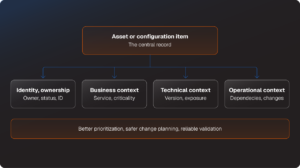
While ITAM focuses on the lifecycle and financial aspects of assets, the Configuration Management Database (CMDB) serves a different but equally vital purpose during remediation. The CMDB documents configuration items and, more importantly, the relationships between hardware, software, and business services.
These relationships are the backbone of change-impact analysis. When a critical vulnerability is found on a web server, the CMDB can reveal that the server relies on a shared identity service or supports a specific customer-facing application. This knowledge allows the team to develop a remediation plan that includes targeted application testing and a documented rollback strategy. Without this visibility, a security fix intended to protect the company could inadvertently cause a major service outage, creating a different kind of business crisis.
Tools like SolarWinds Service Desk are designed to bridge these silos, connecting asset discovery with configuration items, incidents, and changes. This integration allows a team to transition from simply knowing a vulnerable device exists to having a clear path toward closure, backed by an accountable owner and a documented implementation plan.
Closing the Ownership Gap
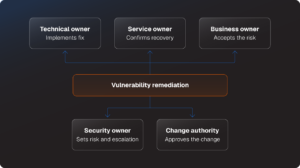
When remediation efforts stall, the problem is rarely a lack of technical skill. More often, the delay is caused by a gap in ownership. A security team may be aware of a risk but lack the authority to approve downtime. Conversely, a technical owner may understand the system but may not feel empowered to prioritize security work over their existing operational backlog.
To clear these hurdles, a practical remediation workflow must establish clear roles. This includes a security owner to define the risk, a technical owner to implement the fix, and a service owner who understands the business impact and can authorize the necessary changes. Additionally, a change approver ensures that the work is balanced against other organizational priorities.
The goal of establishing these roles is not to create a bureaucratic bottleneck. In fact, unnecessary approvals can be just as damaging as a lack of oversight. Instead, the objective is to match the level of governance to the risk and complexity of the work. For routine patches, automated workflows and pre-authorized "standard changes" can keep work moving quickly. For high-impact systems, a more formal review ensures that the cure isn’t worse than the disease.
Treating Remediation as Managed Work
The most successful vulnerability management programs treat remediation as a repeatable, managed process with defined stages. This begins with intake and triage, where findings are documented and owners are identified. It then moves into a prioritization phase that weighs technical severity against exploitability and business exposure.
Once the work is assigned, the planning phase becomes critical. This is where teams document their implementation approach, including testing and rollback procedures. The actual remediation—whether it involves a patch, a configuration change, or an upgrade—is only one part of the sequence. Following the fix, validation is required to confirm that the vulnerability is gone and the service is still functional.
This structured approach provides a central system of record, offering a superior alternative to the fragmented email threads and chat messages that often characterize ad-hoc remediation. A centralized system preserves the history of the work, including escalation paths and exception approvals, which is essential for both operational efficiency and regulatory compliance.
Prioritizing Risk Over Ticket Age
 Helpdesk & IT Service Management (ITSM)
Enterprises Grapple with Unintended Consequences as Half of Organizations Report Unauthorized AI Agent Actions
The rapid integration of agentic artificial intelligence into the modern enterprise has...
 Helpdesk & IT Service Management (ITSM)
IPhone 18 Pro Review: A Refined Powerhouse Redefining the Professional Flagship
While the tech industry’s collective gaze has recently been fixed on the...
 Helpdesk & IT Service Management (ITSM)
Bridging the Gap Between AI Adoption and Business Value: The Evolving Reality of IT Service Management
For years, the mere adoption of Artificial Intelligence was considered the ultimate...







