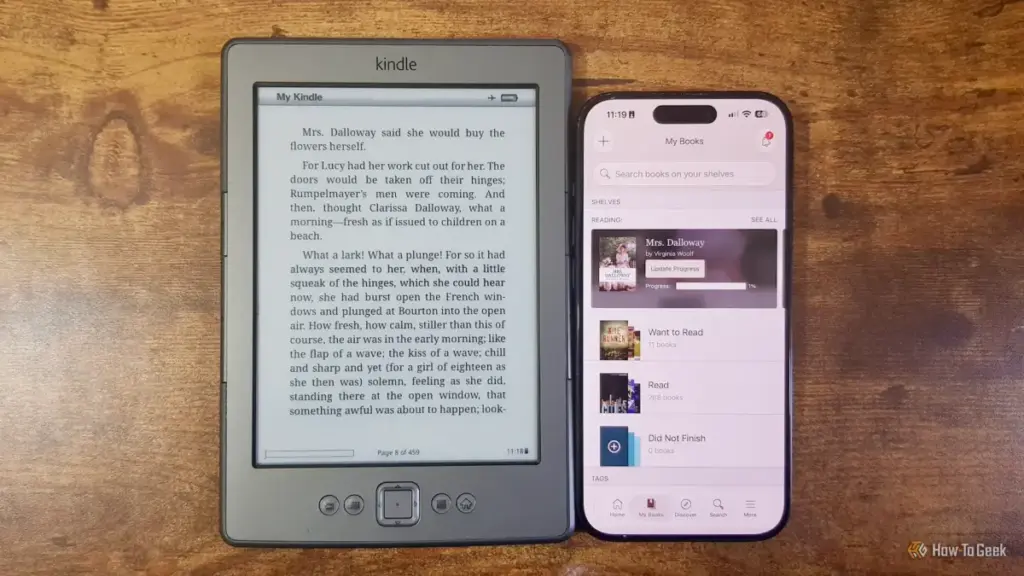
In the rapidly evolving landscape of consumer electronics, the lifespan of a device is often dictated more by software support than by the durability of its hardware. This is particularly evident in the world of e-readers, where the robust simplicity of E-ink displays allows devices to remain functional for over a decade, even as the ecosystems they inhabit move on. For owners of legacy hardware, such as the fourth-generation Amazon Kindle, the loss of native integration with modern services often signals a forced upgrade. However, for those willing to venture into the world of jailbreaking and open-source plugins, these aging devices can be granted a second life that, in some ways, surpasses the capabilities of their modern successors.
The challenge of maintaining a cohesive digital reading life often centers on Goodreads, the preeminent social platform for bibliophiles. Owned by Amazon, Goodreads allows readers to track their progress, share reviews, and participate in annual reading challenges. On contemporary Kindle models, this integration is seamless; the device communicates directly with the platform to update "Currently Reading" statuses and "Read" milestones. For older devices like the Kindle 4, which Amazon has officially moved into the "end-of-life" category, this connectivity has largely vanished. Furthermore, enthusiasts who choose to jailbreak their newer devices to run KOReader—a powerful, highly customizable document viewer—often find themselves disconnected from the native Amazon-Goodreads pipeline.
Adam Davidson, an engineer and long-time technology writer, recently explored a solution to this fragmentation. By utilizing a specialized plugin known as ShelfSync, Davidson was able to bridge the gap between his jailbroken Kindle 4 and his Goodreads account, automating a process that had previously required tedious manual entry.

The Power of KOReader and the Integration Gap
The decision to jailbreak a Kindle is often driven by a desire for greater control over the reading experience. KOReader, the software of choice for many in the jailbreaking community, offers advanced features that far exceed the standard Kindle firmware. It provides superior PDF reflow capabilities, extensive typography adjustments, and detailed reading statistics. As Davidson noted, KOReader already tracks the essential data points—time spent reading, pages turned, and percentage of completion. However, despite having access to this wealth of information, the software lacks a built-in mechanism to broadcast that data to external social platforms like Goodreads.
For many readers, the lack of synchronization is a significant friction point. The Goodreads Reading Challenge, a popular annual event where users set a goal for the number of books they wish to finish, relies on consistent data entry. When a device no longer talks to the platform, the user is forced to manually update their progress on a computer or smartphone. This manual step often leads to "data debt," where a reader finishes several books before remembering to update their profile, resulting in an inaccurate reflection of their reading habits and progress.
The problem is compounded on older hardware. The Kindle 4, released in 2011, features a non-touch interface navigated via a five-way directional pad and physical buttons. While this design is praised for its tactile reliability and lack of screen smudges, it makes text entry an arduous task. Typing a book title or a status update using an on-screen keyboard controlled by a D-pad is a "horrific process," as Davidson described it. Consequently, the need for an automated, "invisible" solution becomes not just a luxury, but a necessity for maintaining a modern reading workflow on vintage hardware.
A Community Solution: The ShelfSync Plugin
The solution arrived in the form of ShelfSync, a free and open-source plugin designed specifically for KOReader. Developed by the community, ShelfSync acts as a versatile intermediary, capable of sharing reading statistics not only with Goodreads but also with alternative tracking services such as StoryGraph, Hardcover, and Pagebound.
 Tech Tutorials & How-To Guides
Documentary Deep Dive: Exploring the Most Compelling Non-Fiction Titles on HBO Max This Weekend
The landscape of premium streaming continues to be defined by a relentless...
 Tech Tutorials & How-To Guides
Beyond the Command Line: How btop is Redefining System Monitoring for the Modern Linux User
The terminal has long been the sanctuary of the Linux power user—a...
 Tech Tutorials & How-To Guides
The Linux Mint Paradox: Why the ‘Windows Alternative’ May Not Be the Gateway It’s Marketed to Be
For years, the tech community has championed Linux Mint as the definitive...