
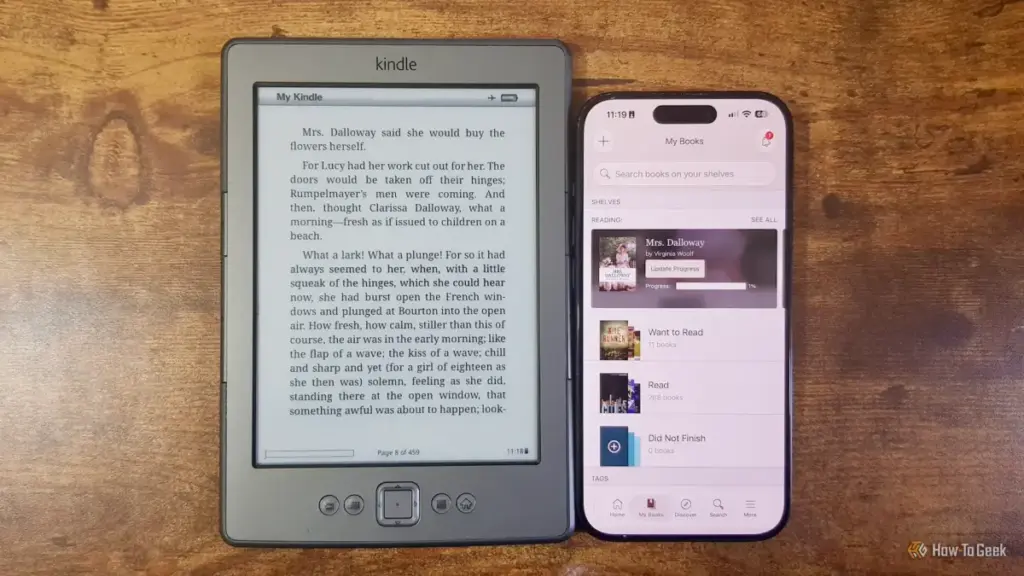
In the rapidly evolving landscape of consumer electronics, the lifespan of a device is often dictated more by software support than by the durability of its hardware. This is particularly evident in the world of e-readers, where the robust simplicity of E-ink displays allows devices to remain functional for over a decade, even as the ecosystems they inhabit move on. For owners of legacy hardware, such as the fourth-generation Amazon Kindle, the loss of native integration with modern services often signals a forced upgrade. However, for those willing to venture into the world of jailbreaking and open-source plugins, these aging devices can be granted a second life that, in some ways, surpasses the capabilities of their modern successors.
The challenge of maintaining a cohesive digital reading life often centers on Goodreads, the preeminent social platform for bibliophiles. Owned by Amazon, Goodreads allows readers to track their progress, share reviews, and participate in annual reading challenges. On contemporary Kindle models, this integration is seamless; the device communicates directly with the platform to update "Currently Reading" statuses and "Read" milestones. For older devices like the Kindle 4, which Amazon has officially moved into the "end-of-life" category, this connectivity has largely vanished. Furthermore, enthusiasts who choose to jailbreak their newer devices to run KOReader—a powerful, highly customizable document viewer—often find themselves disconnected from the native Amazon-Goodreads pipeline.
Adam Davidson, an engineer and long-time technology writer, recently explored a solution to this fragmentation. By utilizing a specialized plugin known as ShelfSync, Davidson was able to bridge the gap between his jailbroken Kindle 4 and his Goodreads account, automating a process that had previously required tedious manual entry.

The Power of KOReader and the Integration Gap
The decision to jailbreak a Kindle is often driven by a desire for greater control over the reading experience. KOReader, the software of choice for many in the jailbreaking community, offers advanced features that far exceed the standard Kindle firmware. It provides superior PDF reflow capabilities, extensive typography adjustments, and detailed reading statistics. As Davidson noted, KOReader already tracks the essential data points—time spent reading, pages turned, and percentage of completion. However, despite having access to this wealth of information, the software lacks a built-in mechanism to broadcast that data to external social platforms like Goodreads.
For many readers, the lack of synchronization is a significant friction point. The Goodreads Reading Challenge, a popular annual event where users set a goal for the number of books they wish to finish, relies on consistent data entry. When a device no longer talks to the platform, the user is forced to manually update their progress on a computer or smartphone. This manual step often leads to "data debt," where a reader finishes several books before remembering to update their profile, resulting in an inaccurate reflection of their reading habits and progress.
The problem is compounded on older hardware. The Kindle 4, released in 2011, features a non-touch interface navigated via a five-way directional pad and physical buttons. While this design is praised for its tactile reliability and lack of screen smudges, it makes text entry an arduous task. Typing a book title or a status update using an on-screen keyboard controlled by a D-pad is a "horrific process," as Davidson described it. Consequently, the need for an automated, "invisible" solution becomes not just a luxury, but a necessity for maintaining a modern reading workflow on vintage hardware.
A Community Solution: The ShelfSync Plugin
The solution arrived in the form of ShelfSync, a free and open-source plugin designed specifically for KOReader. Developed by the community, ShelfSync acts as a versatile intermediary, capable of sharing reading statistics not only with Goodreads but also with alternative tracking services such as StoryGraph, Hardcover, and Pagebound.

The installation of ShelfSync reflects the flexibility of the jailbroken ecosystem. Users can either manually place the plugin into the KOReader directory or utilize the "Storefront" plugin to install it directly from the device. However, the process of linking the plugin to a Goodreads account reveals the complexities of working outside of Amazon’s proprietary walls.
Because Amazon does not provide a robust, public API for Goodreads that allows third-party apps to easily authenticate users, ShelfSync utilizes a "cookie-import" method. This requires the user to sign into Goodreads on a desktop browser and export the session cookies to the Kindle. While this sounds technically demanding, it serves a vital purpose: it allows the Kindle to communicate with Goodreads as if it were the user’s browser, bypassing the need for the user to ever type their password into the Kindle’s cumbersome interface. For Davidson, whose philosophy on the ideal smart home involves "magic" automation with minimal user interaction, this setup phase was a small price to pay for long-term invisibility.
Automation in Action: From Mrs. Dalloway to the Reading Challenge
The true test of such a system lies in its daily utility. Davidson put the setup to work with Virginia Woolf’s Mrs. Dalloway, a title not previously present on his Goodreads shelves. The results were immediate: upon opening the file on the Kindle, ShelfSync identified the book and automatically added it to his "Currently Reading" list on Goodreads.
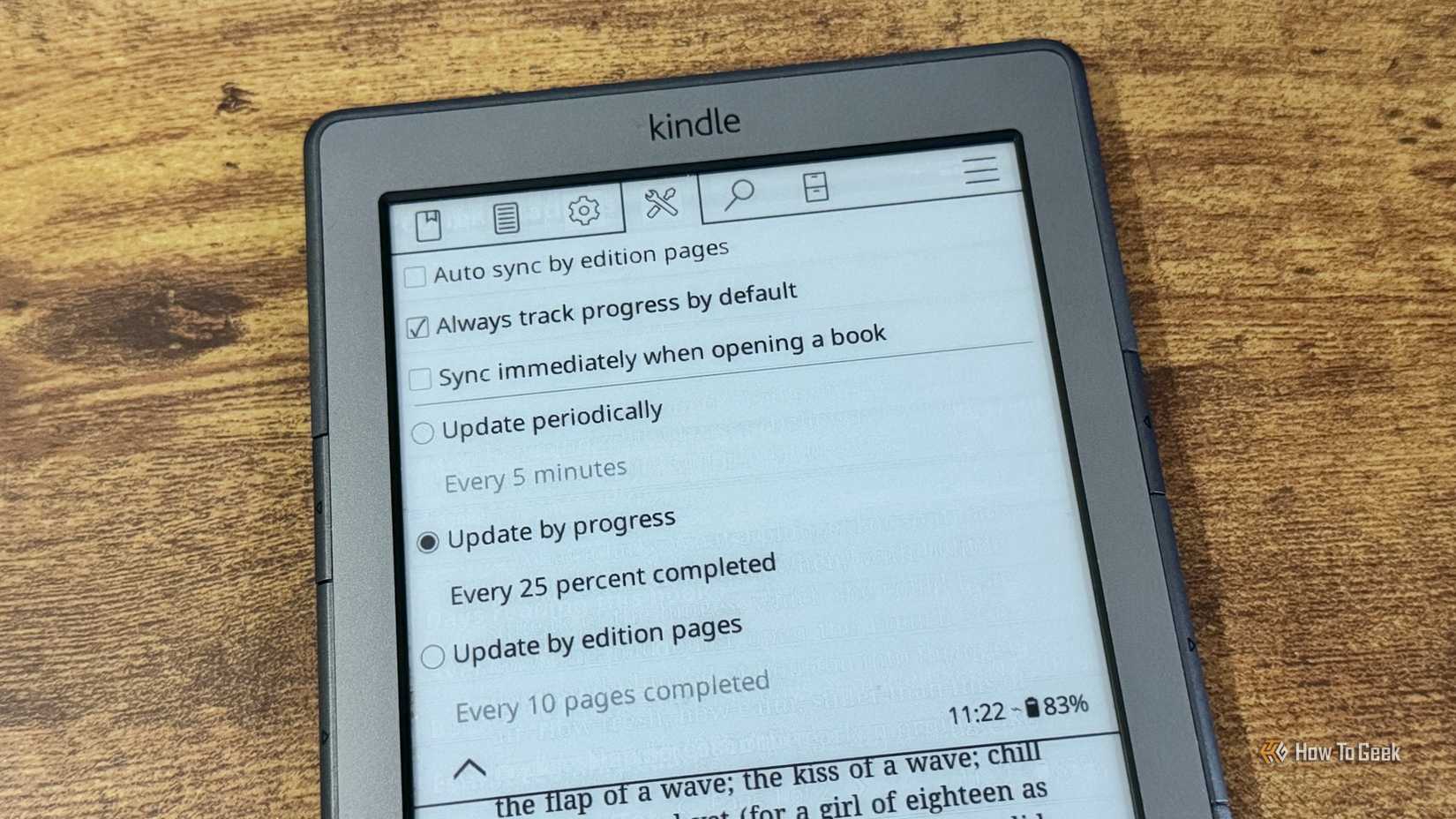
One of the primary advantages of ShelfSync is its granularity. While the native Kindle integration is often a "black box" that updates when it sees fit, ShelfSync allows users to define the frequency of updates. Initially, Davidson experimented with five-minute intervals, but found this created an overwhelming stream of updates on his Goodreads feed. He eventually settled on a more discreet configuration, triggering an update every time 25% of a book is completed. The plugin can also be set to sync every time a book is opened or closed, ensuring that the cloud always reflects the local state of the device.
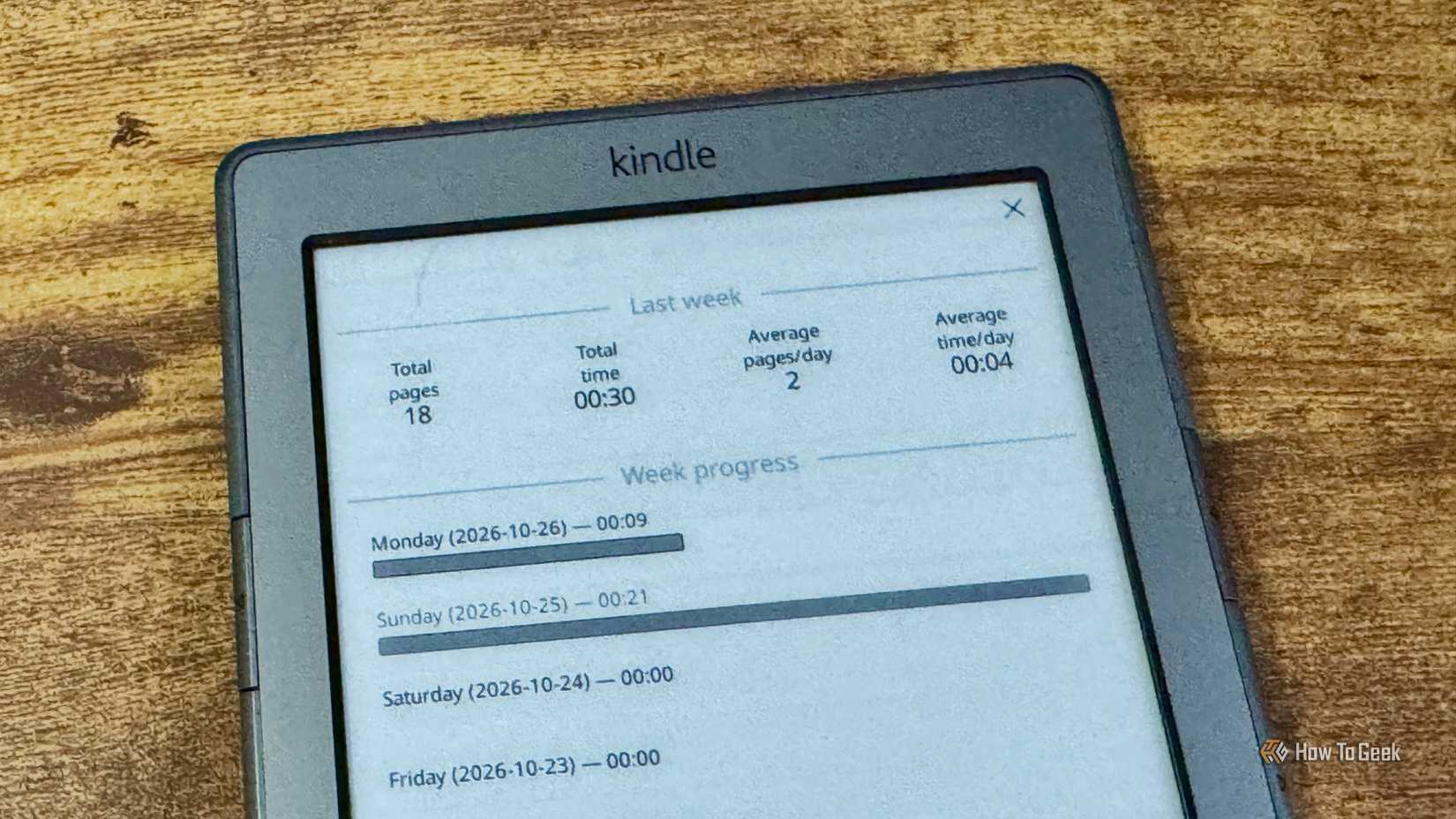
When the final page is turned and the book is marked as "Finished" in KOReader, ShelfSync automatically transitions the title to the "Read" shelf on Goodreads. This automation directly feeds into the Goodreads Reading Challenge, providing a sense of accomplishment without the administrative overhead that usually accompanies legacy devices.
Navigating the Friction of Unofficial Integration
Despite its successes, the transition from a proprietary ecosystem to an open-source one is rarely without its quirks. Because ShelfSync does not have the benefit of Amazon’s internal database linking, it occasionally struggles to find an exact match for a book title in the Goodreads library. This is particularly common with classic literature or different editions of the same work. In these instances, the user must briefly intervene to select the correct edition from a list provided on the Kindle’s screen.
Another hurdle involves the nature of the authentication cookies. These digital tokens can expire or be invalidated by Goodreads, which would normally require the user to repeat the manual export process. To mitigate this, the community has developed a companion tool called the "Goodreads Cookie Refresher." By running this tool on a secondary device—such as a home server or a mini PC—users can ensure that their Kindle is always supplied with "fresh" cookies, maintaining the automation indefinitely.
Furthermore, older hardware like the Kindle 4 introduces physical limitations. Davidson noted a "race condition" where ShelfSync would attempt to transmit data the moment a book was opened, often before the Kindle’s aging Wi-Fi chip had successfully established a connection to the local network. The solution was characteristic of the hobbyist community: the implementation of a small script that forces the plugin to wait for a confirmed internet connection before attempting a sync.
The Sideloading Advantage
Perhaps the most significant revelation of using ShelfSync is its ability to handle "sideloaded" content. On a standard, non-jailbroken Kindle, books that are purchased through Amazon are easily tracked. However, books acquired from other sources—such as Project Gutenberg, Humble Bundle, or independent publishers—and transferred via USB often exist in a "gray area." While they can be read on the device, they frequently fail to trigger the native Goodreads integration.
ShelfSync levels the playing field. Because it identifies books based on metadata rather than Amazon’s internal transaction IDs, it treats sideloaded EPUBs and PDFs with the same priority as any other title. For readers who maintain diverse libraries from multiple sources, this makes the jailbroken Kindle 4 a more capable tracking tool than a brand-new Kindle Paperwhite running stock firmware.
Conclusion: The Future of Legacy Hardware
The successful integration of the Kindle 4 with Goodreads via ShelfSync serves as a case study in the longevity of well-built hardware. By removing the burden of manual data entry and overcoming the limitations of an abandoned ecosystem, such plugins allow users to focus entirely on the act of reading.
For Davidson, the project was a success not just because it saved time, but because it adhered to the principle that technology should serve the user quietly in the background. As the world faces growing concerns over electronic waste and the "planned obsolescence" of digital devices, the ability to reclaim and modernize a fifteen-year-old e-reader is a testament to the power of open-source development. Through the efforts of the community, the Kindle 4 remains more than a relic; it is a fully functional participant in the modern social reading experience.
 Tech Tutorials & How-To Guides
Google Transitions Beyond Chromebooks: A Deep Look at the New Googlebook OS and Its Enhanced Local File Management
The landscape of portable computing has undergone a seismic shift with the...
 Tech Tutorials & How-To Guides
Netflix’s November Documentary Slate Explores Cartel Shadows, Comedy Legends, and Decades-Old Mysteries
As the streaming landscape continues to evolve, documentaries have emerged as one...
 Tech Tutorials & How-To Guides
Navigating the Linux Recovery Landscape: Essential Boot Options for System Restoration and Troubleshooting
The Linux operating system is frequently celebrated for its stability, modularity, and...







