
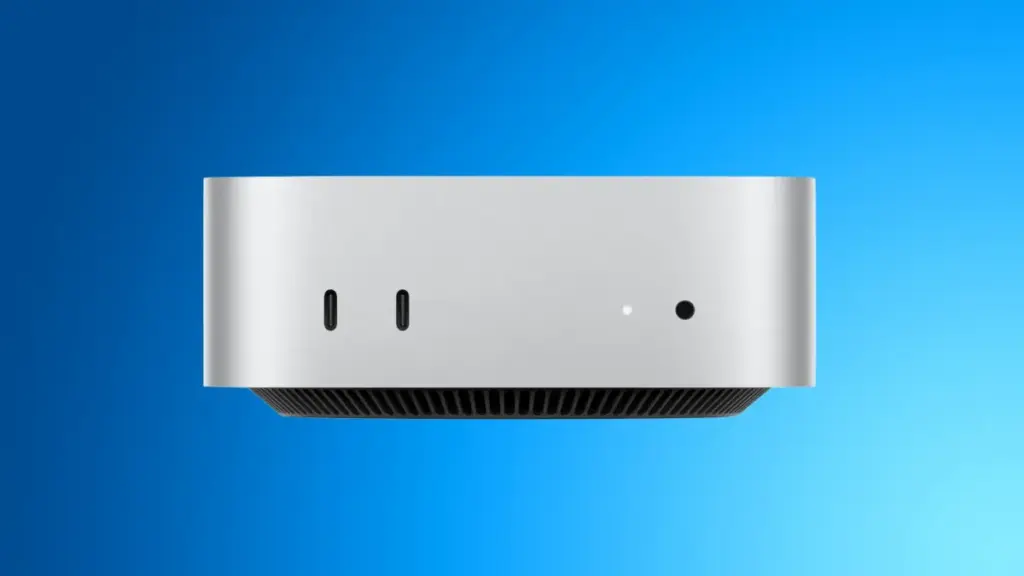
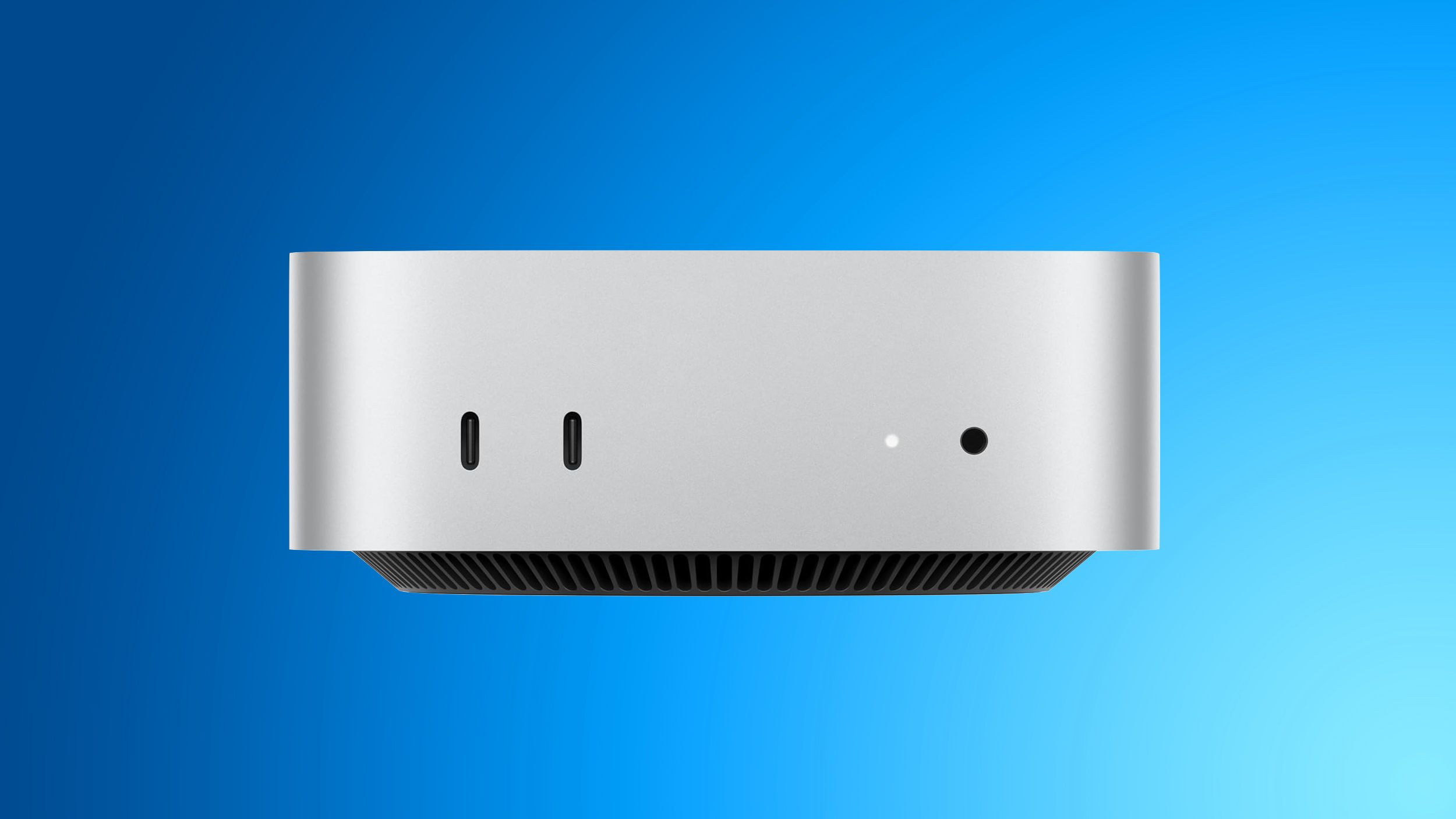
Apple’s latest update to the Mac mini line brings a significant architectural shift that will directly impact budget-conscious consumers and hardware enthusiasts alike. Detailed hardware analyses of the new Mac mini models equipped with the M6 and M5 Pro chips confirm that Apple has reverted to soldering NAND flash storage directly to the main logic board. The change effectively eliminates the possibility of aftermarket SSD upgrades, bringing an end to the modular storage design that was unexpectedly introduced in the previous generation of M4 and M4 Pro desktops.
The hardware change was uncovered and confirmed by hardware outlet "Expand Mac mini," an aftermarket specialist site that closely monitors Apple’s desktop internal architecture. During its technical teardowns of the newly released M6 and M5 Pro machines, the group verified that the solid-state storage chips are permanently affixed to the system board, returning the lineup to the non-upgradable status that characterized earlier Apple silicon desktops, including those powered by the M1, M2, and M2 Pro chips.
For buyers of the short-lived M4 and M4 Pro Mac mini models, storage flexibility had briefly returned. Those previous-generation systems utilized proprietary, socketed storage modules that, while not standard off-the-shelf M.2 NVMe drives, could still be physically removed and replaced. That design allowed third-party companies like "Expand Mac mini" to manufacture plug-and-play replacement SSD modules. These third-party drives matched the read and write performance of Apple’s official storage configurations while costing hundreds of dollars less than the premium upgrade fees charged on Apple’s online store.
Under the M4 generation, cost-conscious buyers could purchase a base-model Mac mini equipped with the minimum 256GB storage capacity directly from Apple and subsequently upgrade the internal storage to 1TB or 2TB using cheaper third-party modules. With the arrival of the M6 and M5 Pro configurations, that financial workaround has been completely shut down. Customers seeking additional onboard storage must once again pay Apple’s upfront configuration pricing at the time of purchase, as post-purchase internal upgrades are no longer physically possible.
Addressing the hardware change on its official blog, "Expand Mac mini" acknowledged the technical roadblock posed by Apple’s latest manufacturing decisions. The team noted that while they will continue looking for any potential openings or hardware workarounds, support for the M6 and M5 Pro models now looks unlikely. Apple, as is typical regarding internal component choices and hardware revisions, has offered no public comment on why it decided to abandon the modular storage design after just one hardware generation. The brief availability of removable storage on the M4 lineup appears to have been a temporary architectural anomaly rather than the beginning of a permanent trend toward repairability.
In addition to the return to soldered storage, benchmark testing reveals another critical difference in the entry-level Mac mini models that affects performance. Hardware testing indicates that all base 256GB configurations of the new Mac mini rely on a single NAND flash memory chip, rather than splitting the capacity across two 128GB chips.
This single-chip configuration creates a hardware bottleneck by limiting the available memory channels, resulting in substantially lower read and write speeds compared to models configured with 512GB of storage or more. Higher-capacity configurations utilize dual NAND flash chips, allowing the system controller to read and write data across two channels simultaneously, effectively doubling the bandwidth.
The performance discrepancy was confirmed through testing conducted by tech publication AAPL Ch., which evaluated the new systems using Blackmagic’s Disk Speed Test benchmark utility. The results demonstrate a sharp divide in disk performance depending on the chosen storage tier.
The M6 Mac mini equipped with a 512GB SSD recorded benchmark read speeds of 6,371.5 MB/s and write speeds of 6,577.4 MB/s. In contrast, the entry-level M6 Mac mini with 256GB of storage reached a read speed of 3,216.8 MB/s and a write speed of 3,000.2 MB/s. These metrics show that opting for the 256GB model cuts read and write performance roughly in half compared to the 512GB variant.
Despite the penalty caused by the single NAND chip, the baseline M6 Mac mini still shows a meaningful improvement over the entry-level 256GB M4 model. In identical testing, the 256GB M4 Mac mini recorded read speeds of 2,792.5 MB/s and write speeds of 2,014.5 MB/s. Thus, while the new 256GB M6 model is significantly slower than its 512GB sibling, it maintains a performance edge over the baseline system it replaces.
The use of a single NAND chip in entry-level storage tiers is not a new practice for Apple. The company faced similar criticism during the launch of the M2 and M2 Pro Mac mini models, which also utilized a single 256GB NAND chip that resulted in slower disk benchmarks compared to the dual-chip 256GB M1 configurations that preceded them. The M4 Mac mini had temporarily resolved this issue, making its return on the M6 baseline model another instance where Apple reinstated a cost-saving storage design.
For everyday consumer tasks—such as web browsing, document editing, and streaming media—the average user is unlikely to notice the benchmark difference between single and dual NAND configurations. However, power users, creative professionals working with high-resolution video assets, and developers handling large local databases will face noticeable throughput limitations on the baseline model. For these demanding workloads, purchasing at least 512GB of internal storage becomes a practical necessity to unlock the maximum read and write capabilities of the hardware.
The timing of the new Mac mini launch has also drawn attention across the industry. Apple announced the M6 and M5 Pro Mac mini, alongside updated Mac Studio hardware, unusually early in late August 2026. Apple typically reserves its desktop hardware updates for dedicated autumn media events in October or November, placing this mid-week announcement just weeks before the expected unveiling of its annual iPhone lineup.
Industry reports from The Information suggest that Apple was caught off guard by an unexpected surge in corporate demand for localized artificial intelligence hardware. Enterprise buyers have increasingly targeted compact desktop form factors like the Mac mini and Mac Studio to deploy low-latency, on-device AI models and automated workflows, prompting Apple to accelerate its hardware deployment schedule to meet commercial interest.
The processing capabilities of the new Mac mini line reflect this enterprise focus on artificial intelligence. The M6 processor is built on an advanced 2-nanometer manufacturing process, making the Mac mini the first commercial device to feature Apple’s next-generation silicon architecture. The M6 chip includes a 12-core CPU and a 12-core GPU, marking an upgrade over the 10-core CPU and 10-core GPU design found in the M5 chip.
To handle demanding machine learning workloads, Apple equipped the M6 with its first-ever dual Neural Engine architecture, pairing two 16-core units together on a single die. This dual-engine setup provides double the dedicated AI processing hardware found in prior-generation chips. Early Geekbench 7 database submissions that surfaced prior to the hardware’s retail launch highlighted the performance gains of the 2nm architecture, with the M6 chip scoring 4,071 in single-core CPU testing and achieving a multi-core CPU score of 22,783.
Ultimately, the latest Mac mini hardware presents a dual story of raw processing advancements paired with restrictive storage policies. While the M6 chip delivers high-end computational power and elevated AI processing through its 2nm architecture and dual Neural Engine design, the hardware layout forces buyers to make critical decisions at the point of sale. With soldered drives ending the era of third-party SSD upgrades and single NAND chips reducing performance on the 256GB baseline model, prospective buyers must carefully weigh their performance requirements before choosing a final configuration.
 macOS & Apple IT Support
Amazon Launches First Discounts on Apple Watch Ultra 4 and Series 12 Following Official Release
Following the official market arrival of Apple’s newest wearable lineup, retail channels...
 macOS & Apple IT Support
Apple Signals Major Smart Home Push With October 13 Announcement Featuring New Smart Display, Apple TV 4K, and HomePod mini
Apple is preparing to kick off a multi-stage autumn hardware rollout, starting...
 macOS & Apple IT Support
Apple Reaches Agreement to Hire AI Audio Startup Huxe’s Key Personnel and License Its Technology
Apple has reached an agreement to recruit key personnel from Huxe, an...







