
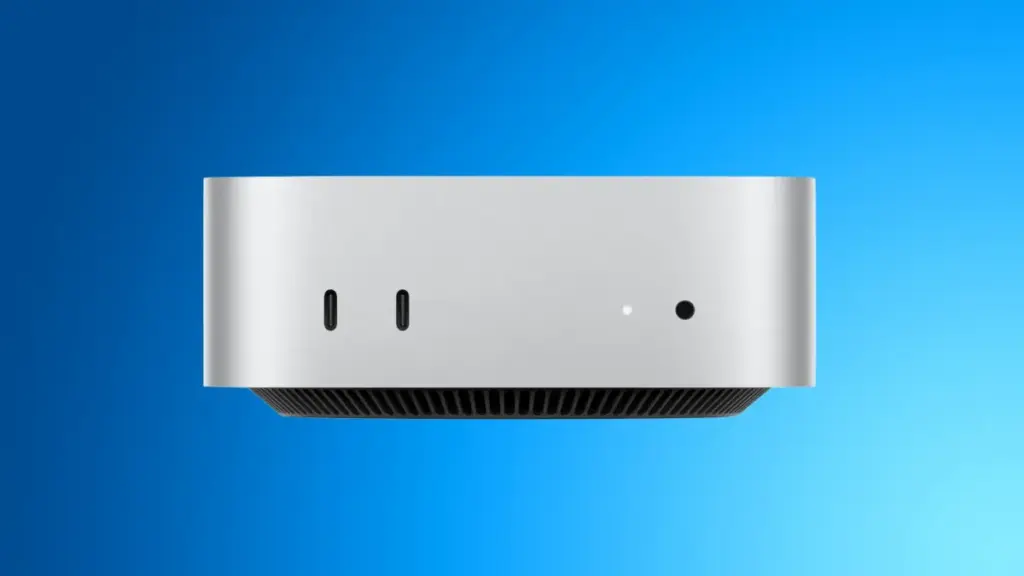
The timing of the new Mac mini launch has also drawn attention across the industry. Apple announced the M6 and M5 Pro Mac mini, alongside updated Mac Studio hardware, unusually early in late August 2026. Apple typically reserves its desktop hardware updates for dedicated autumn media events in October or November, placing this mid-week announcement just weeks before the expected unveiling of its annual iPhone lineup.
Industry reports from The Information suggest that Apple was caught off guard by an unexpected surge in corporate demand for localized artificial intelligence hardware. Enterprise buyers have increasingly targeted compact desktop form factors like the Mac mini and Mac Studio to deploy low-latency, on-device AI models and automated workflows, prompting Apple to accelerate its hardware deployment schedule to meet commercial interest.
The processing capabilities of the new Mac mini line reflect this enterprise focus on artificial intelligence. The M6 processor is built on an advanced 2-nanometer manufacturing process, making the Mac mini the first commercial device to feature Apple’s next-generation silicon architecture. The M6 chip includes a 12-core CPU and a 12-core GPU, marking an upgrade over the 10-core CPU and 10-core GPU design found in the M5 chip.
To handle demanding machine learning workloads, Apple equipped the M6 with its first-ever dual Neural Engine architecture, pairing two 16-core units together on a single die. This dual-engine setup provides double the dedicated AI processing hardware found in prior-generation chips. Early Geekbench 7 database submissions that surfaced prior to the hardware’s retail launch highlighted the performance gains of the 2nm architecture, with the M6 chip scoring 4,071 in single-core CPU testing and achieving a multi-core CPU score of 22,783.
Ultimately, the latest Mac mini hardware presents a dual story of raw processing advancements paired with restrictive storage policies. While the M6 chip delivers high-end computational power and elevated AI processing through its 2nm architecture and dual Neural Engine design, the hardware layout forces buyers to make critical decisions at the point of sale. With soldered drives ending the era of third-party SSD upgrades and single NAND chips reducing performance on the 256GB baseline model, prospective buyers must carefully weigh their performance requirements before choosing a final configuration.
 macOS & Apple IT Support
IFixit Teardown Finds Apple’s AirPods 5 Are Slightly More Repairable, Earning First-Ever Non-Zero Score Despite ‘Disaster’ Charging Case
In its traditional deep-dive disassembly video, repair authority iFixit has taken apart...
 macOS & Apple IT Support
Apple Signals Major Smart Home Push With October 13 Announcement Featuring New Smart Display, Apple TV 4K, and HomePod mini
Apple is preparing to kick off a multi-stage autumn hardware rollout, starting...
 macOS & Apple IT Support
Apple Expands watchOS 27.0.1 Update to All Compatible Apple Watch Models Following Targeted Initial Patch
Apple has officially broadened the distribution of watchOS 27.0.1, making the software...







