
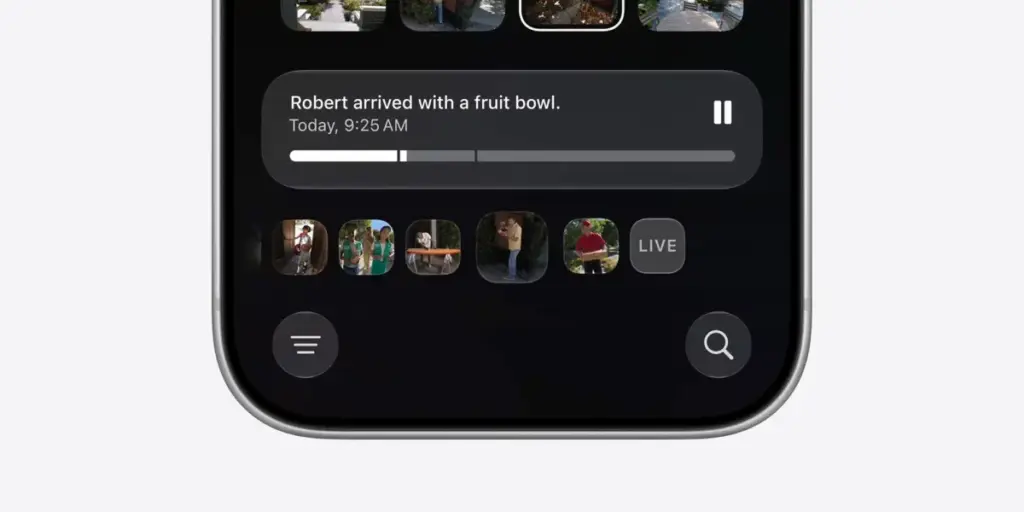
This requirement marks a shift in how Apple segments its cloud services. Currently, HomeKit Secure Video is already a tiered service. Users on the 50GB iCloud+ plan ($0.99/month) can support a single camera, while the 200GB plan ($2.99/month) supports up to five cameras. The 2TB plan ($9.99/month) has historically been the requirement for those wishing to connect an unlimited number of cameras.
The new policy, however, implies that even a user with a single camera who wishes to utilize the AI-generated summaries or 4K recording capabilities must jump directly to the 2TB tier. For a consumer who may only have a single video doorbell or one backyard camera, the leap from a $0.99 or $2.99 monthly commitment to nearly $10 represents a significant increase in the total cost of ownership for their smart home setup.
Industry analysts suggest that the move may be driven by the high computational and storage costs associated with processing 4K video and running large-scale AI models. While Apple has emphasized that much of its "Apple Intelligence" processing happens on-device to protect user privacy, the analysis of high-resolution video streams often requires a hybrid approach involving secure cloud compute resources. By gating these features behind the 2TB tier, Apple may be attempting to offset the infrastructure costs required to maintain a secure, encrypted cloud environment capable of handling such data-heavy tasks.
The "Subscription Era" of Home Security
The decision to link AI features to a high-capacity subscription plan places Apple in a delicate position relative to its competitors. For years, one of the primary selling points of the HomeKit ecosystem was the ability to bypass the expensive monthly fees charged by other security camera manufacturers. Brands like Ring, Nest, and Arlo typically require recurring subscriptions to access cloud recording, person detection, and advanced notification features.
HomeKit Secure Video was seen as a value-added service for those already paying for iCloud storage for their photos and device backups. By moving toward a more restrictive tier for AI features, Apple is narrowing the gap between its business model and that of the traditional security companies it once disrupted.
For many users, the frustration lies in the perceived trend of "subscription creep." In the modern tech landscape, hardware purchases are increasingly viewed as entry tickets into a world of recurring payments. While the hardware—the cameras and the hubs—may be owned by the user, the intelligence that makes that hardware useful is being treated as a service.

There is also the matter of the existing 2TB user base. For those who already subscribe to the $9.99 plan—perhaps to house a massive family photo library or to support a dozen cameras across a large property—the addition of AI summaries and 4K support is an objective upgrade with no additional cost. For these power users, the move is a net positive. However, for the average consumer with a more modest setup, the paywall may feel like an unnecessary barrier to features that are increasingly becoming standard in the industry.
 Smart Home & IoT Solutions
The Apple Home Collection: Why Seamless Integration Could Finally Drive Mass Market Smart Home Adoption
In the rapidly evolving world of consumer technology, it is often difficult...
 Smart Home & IoT Solutions
Apple Intelligence in the Home: New AI Security Features Require Top-Tier iCloud+ Subscription
As the development cycle for Apple’s upcoming software ecosystem continues, the release...
 Smart Home & IoT Solutions
Abode Expands Smart Home Ecosystem with New Apple Home-Compatible Outdoor and Garage Sensors
The landscape of DIY home security continues to evolve as homeowners seek...






