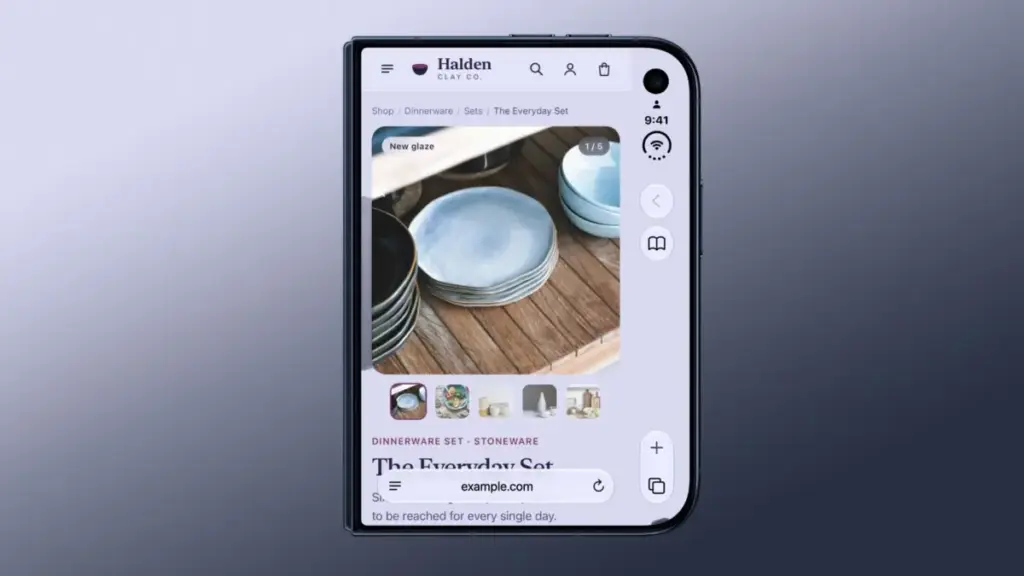
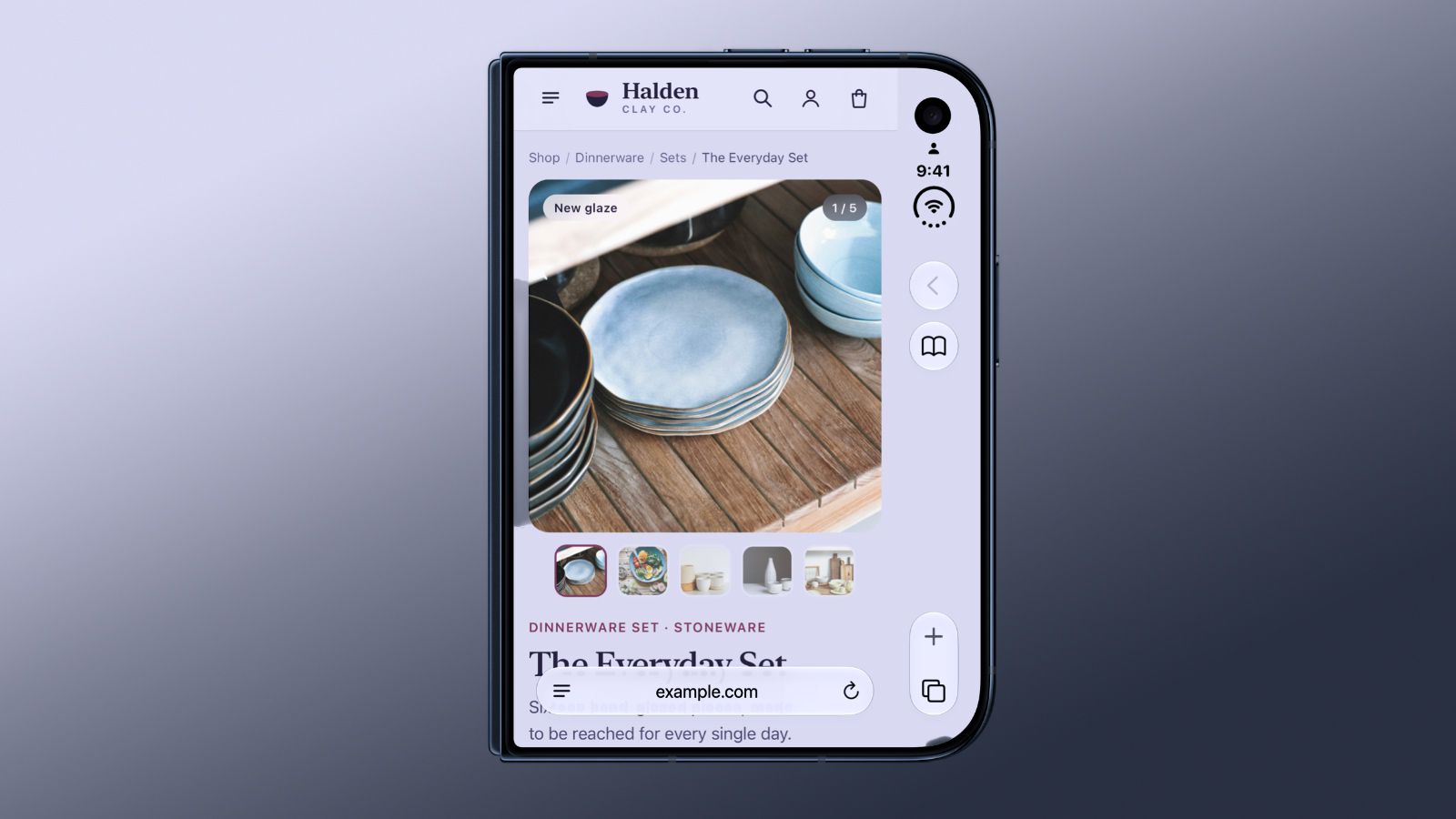
However, relying on viewport-fit="cover" requires website developers to carefully manage layout margins and safe area insets, leaving adequate padding around important content so that critical links, buttons, and text are not blocked by the interface. According to Simmons, Apple’s internal research and testing revealed that a vast majority of existing websites fail to properly implement these safety allowances across every edge of the screen. If Apple were to enforce full-bleed rendering using the existing standard without intervention, numerous websites would become broken or partially unreadable, with interactive links trapped underneath Safari’s side controls.
To resolve this issue without placing an unrealistic burden on web developers or breaking existing sites, Apple is investigating alternative rendering solutions that could offer site creators finer control with less risk of accidentally obscuring content. One prospective approach under evaluation would separate decorative page background layers from primary interactive content. Under such a system, a website’s header background, hero banner, or overall color scheme could span the full width of the physical screen—including the strip beneath the side controls—while navigation links, text, and active buttons remain strictly constrained within the unobstructed visual area. Apple has yet to settle on a final implementation, keeping the proposed change under active research while continuing to study web behavior.
Beyond the ongoing layout adjustments for the outer screen, Safari 27.1 introduces specialized built-in features engineered to take full advantage of the iPhone Duo’s foldable dual-screen architecture. A major addition in the update is automatic two-page document viewing when reading PDFs. When a user holds the iPhone Duo in a partially folded state—resembling an open physical book—Safari 27.1 automatically splits PDF documents into a side-by-side, two-page spread across the dual displays. If the user opens the device completely flat or closes it entirely, Safari seamlessly transitions the document back into a standard continuous single-page view.
Apple is also providing web developers with early experimental tools to construct custom responsive experiences tailored to the foldable hardware. Within Safari’s experimental feature flags, web developers can test early support for detecting the physical screen’s folding posture and dynamic angle. These experimental APIs allow web pages to recognize how the device is being held and automatically format or position web content around the middle fold or hinge area. While these posture-detection capabilities are currently available behind developer flags for testing, the proposed rendering changes regarding content beneath the side-mounted controls remain under active investigation.
 macOS & Apple IT Support
Early Black Friday Deals Bring Record-Low Prices Across Apple’s 2026 Lineup: AirPods, Apple Watch Ultra 4, Mac mini, and iPhone 18 Pro
With Black Friday set for Friday, November 27, 2026, the holiday shopping...
 macOS & Apple IT Support
Adobe Cuts Creative Cloud Pro Prices by Up to 77 Percent in Annual Black Friday Promotion
Adobe has officially kicked off its annual holiday discount season, launching a...
 macOS & Apple IT Support
Banks and Credit Unions to Team Up Against Apple Pay Fees
In a major procedural setback for Apple Inc., a U.S. federal judge...