
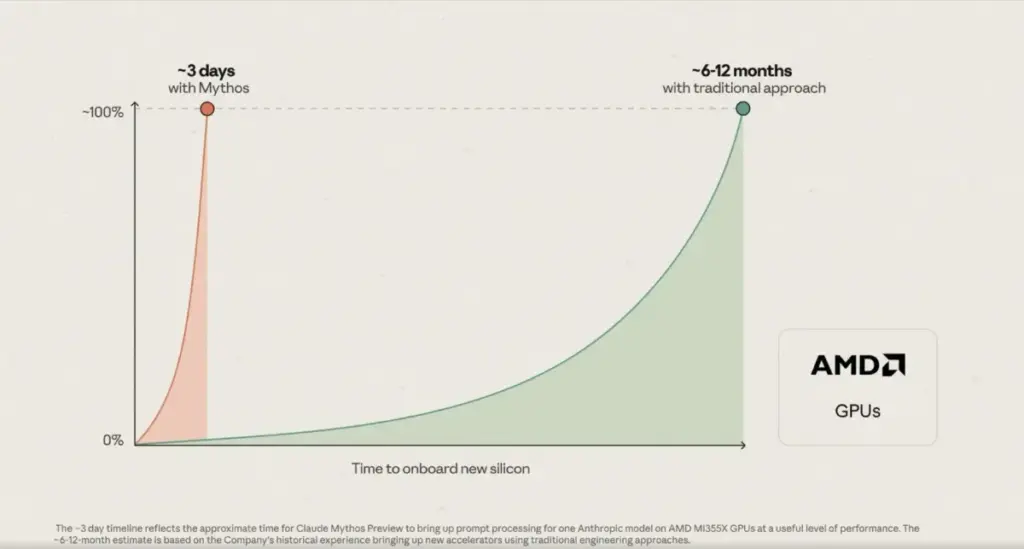
The "moat" that Nvidia has built over the last decade with CUDA is not just about the code itself, but the massive ecosystem of libraries, tools, and developer familiarity that surrounds it. Breaking that moat requires more than just functional code; it requires a way to make alternative hardware just as easy to use as Nvidia’s. Anthropic’s approach suggests that the "ease of use" problem is being solved by the models themselves. If the model can translate its own requirements into the native language of any chip it encounters, the developer’s familiarity with a specific hardware ecosystem becomes less relevant.
As Anthropic prepares for its future as a public company or seeks further private funding, its ability to demonstrate such high levels of technical efficiency will likely be a cornerstone of its valuation. The company is positioning itself not just as a creator of intelligent chatbots, but as a sophisticated systems engineering firm that can optimize the very infrastructure upon which AI is built.
The move toward a "fungible pool of compute" also aligns with the interests of major cloud providers like Amazon and Google, both of whom are investors in Anthropic and are eager to promote their own custom AI silicon. By proving that models can be ported quickly to non-Nvidia hardware, Anthropic provides a blueprint for how the industry might move away from a monoculture of silicon.
While the Claude Mythos Preview model is still an internal tool, its performance on the AMD porting project serves as a proof of concept for the next era of AI development. In this era, the constraints of hardware may no longer be defined by how many human hours it takes to write a driver or a kernel, but by how quickly an AI can understand the architecture of a new piece of silicon. For the chip industry, this could trigger a new wave of innovation, as manufacturers focus more on raw hardware performance and less on the software barriers that have historically protected the market leader.
As the AI industry continues to evolve, the distinction between software and hardware engineering is becoming increasingly blurred. Anthropic’s achievement with the AMD MI355X is a clear indicator that the future of AI infrastructure is one of high-speed automation, hardware diversity, and the steady dismantling of the technical moats that have defined the first decade of the AI revolution. The "unconventional bet" on multi-chip compatibility appears to be paying off, providing Anthropic with a level of flexibility that could be crucial in an increasingly competitive and resource-constrained market.
 Hardware Reviews & PC Building
Elon Musk’s xAI installs eight converted jet engines to power Mississippi data center — permits allow 25…
The data center, designed to house the immense computing power necessary for...
 Hardware Reviews & PC Building
Custom Power Distribution Mod Surfaces to Tackle RTX 5090 Overheating Concerns
The launch of NVIDIA’s flagship GeForce RTX 5090 has been met with...
 Hardware Reviews & PC Building
Amazon Prime Day 2026: Final 24 Hours of Big Deal Days Feature Massive Savings on RTX 5070 Systems, Ryzen 9800X3D, and Premium Gaming Peripherals
As the clock winds down on the 2026 iteration of Amazon’s Big...







