
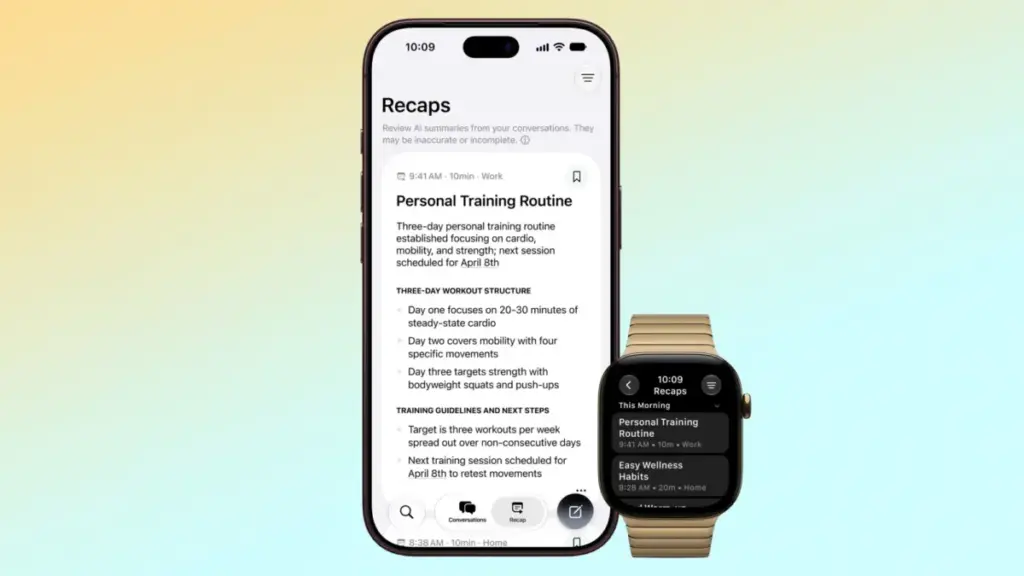
Apple’s latest software testing cycle has introduced one of its most ambitious—and controversial—wearable features to date: Siri Recap. Introduced in the watchOS 27.3 beta and targeted for a public release in December, the feature promises an ambient, privacy-centric way to passively track and summarize real-world spoken conversations. By isolating incoming audio from third-party applications, Apple services, and the broader operating system before immediately discarding the raw recording post-summarization, Apple has attempted to construct a fortress of privacy around personal voice data. However, extensive hands-on testing over a two-week trial reveals that Apple’s uncompromising privacy guardrails may have inadvertently compromised the feature’s core utility. Rather than delivering a seamless digital memory assistant, Siri Recap currently operates as an unpredictable, overly brief, and occasionally confusing tool that highlights the fundamental tension between strict user privacy and artificial intelligence functionality.
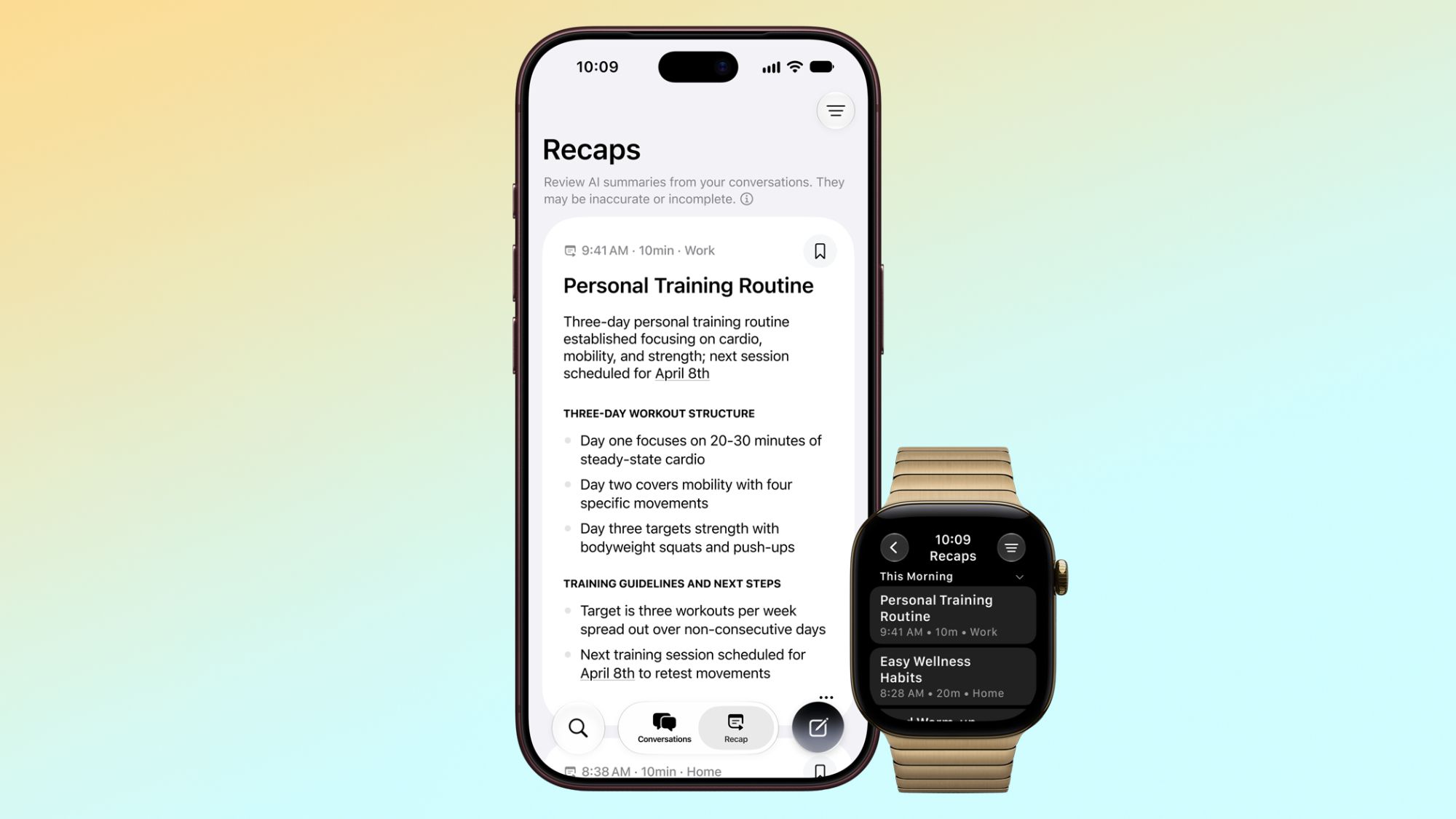
To understand the limitations of Siri Recap, one must first examine how Apple constructed the underlying feature within watchOS 27.3. Built specifically to leverage the advanced on-device processing capabilities of the Apple Watch Series 12 and Apple Watch Ultra 4 hardware, Siri Recap functions by maintaining a continuous, sectioned-off audio pipeline. This pipeline processes vocal interactions occurring in the user’s immediate environment to extract key talking points and construct concise text summaries. Crucially, Apple’s architecture ensures that raw audio files are never stored locally on the device long-term, nor are they transmitted to cloud servers or made accessible to other applications running on the watch. Once the on-device language models parse the speech and output a written summary, the original audio data is permanently purged. To give users greater agency over when ambient recording takes place, watchOS 27.3 includes granular toggle options allowing Siri Recap to operate only during specific hours of the day or within designated geofenced locations. While this privacy-first blueprint prevents the creation of a permanent audio paper trail, it simultaneously creates a major blind spot: without original recordings retained for validation or reference, users have no means of cross-checking Siri’s summaries against what was actually said.
During real-world testing, the immediate challenges of an always-listening wearable feature became quickly apparent. Rather than selectively capturing deliberate human interactions, Siri Recap frequently triggers on background media playing from nearby devices. Early summaries generated during testing were often derived from YouTube videos, Instagram Reels, and television programs broadcast in the background. While the algorithm demonstrates an ability to distinguish scripted movies and TV shows from unscripted dialogue in certain contexts, it struggles significantly to differentiate between a short digital video clip and an authentic, in-person conversation. This lack of discrimination points to a notable gap in Siri’s speech processing capabilities. Although Siri possesses the technical capacity to recognize a user’s unique voice profile—a feature long utilized for customized device commands—Siri Recap does not restrict its summarization trigger to the device owner’s voice. Instead, it continuously ingests ambient speech from anyone within microphone range. This leads to an unsettling dynamic: Siri Recap silently summarizes private conversations involving friends, family, or strangers without providing any visual or audible indicator to surrounding individuals that their dialogue is being captured and processed.
In day-to-day use, the vast majority of automated summaries generated by Siri Recap center on routine, low-stakes conversations that offer little practical value to revisit. Over a two-week period, the system routinely generated digital notes summarizing mundane household exchanges—ranging from casual comments about breakfast portion sizes and cat behavior to fleeting discussions regarding upcoming video game releases like Grand Theft Auto VI or spotting a rabbit in the driveway. Paradoxically, testing revealed an inverse relationship between conversation complexity and summary accuracy. Siri Recap performed its best, most coherent work when processing brief, superficial exchanges that required minimal context. When conversations were short and uncomplicated, the resulting summaries accurately reflected the dialogue. However, because these throwaway moments rarely warrant long-term documentation, the feature’s highest level of technical accuracy is routinely expended on information users have no practical desire to keep or review.
 macOS & Apple IT Support
Early Black Friday 2026 Apple Deals Hit Record-Low Prices Across Mac, iPhone 18, Apple Watch, and Accessories
With Black Friday approaching on Friday, November 27, 2026, the annual holiday...
 macOS & Apple IT Support
Cisco Webex Updates iOS App With Dedicated iPhone Duo Support, Flexible Display Modes, and AI Notetaking
Popular video conferencing platform Webex has officially rolled out a major software...
 macOS & Apple IT Support
Apple Blocks Compromised eMudhra Cryptographic Certificates Across Platforms to Safeguard Web Traffic
Apple has implemented automated security controls across its operating systems to block...







