
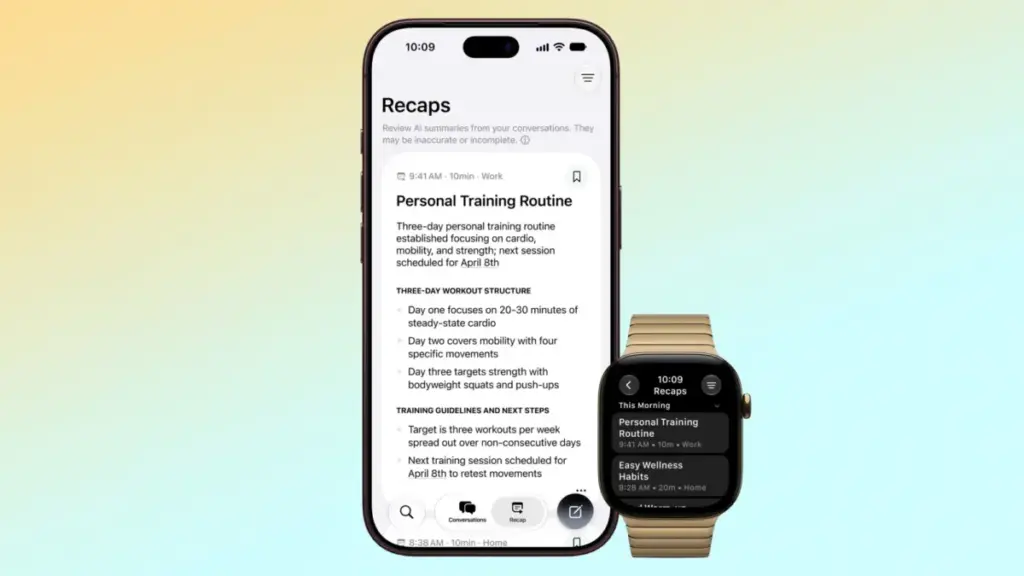
Apple’s latest software testing cycle has introduced one of its most ambitious—and controversial—wearable features to date: Siri Recap. Introduced in the watchOS 27.3 beta and targeted for a public release in December, the feature promises an ambient, privacy-centric way to passively track and summarize real-world spoken conversations. By isolating incoming audio from third-party applications, Apple services, and the broader operating system before immediately discarding the raw recording post-summarization, Apple has attempted to construct a fortress of privacy around personal voice data. However, extensive hands-on testing over a two-week trial reveals that Apple’s uncompromising privacy guardrails may have inadvertently compromised the feature’s core utility. Rather than delivering a seamless digital memory assistant, Siri Recap currently operates as an unpredictable, overly brief, and occasionally confusing tool that highlights the fundamental tension between strict user privacy and artificial intelligence functionality.
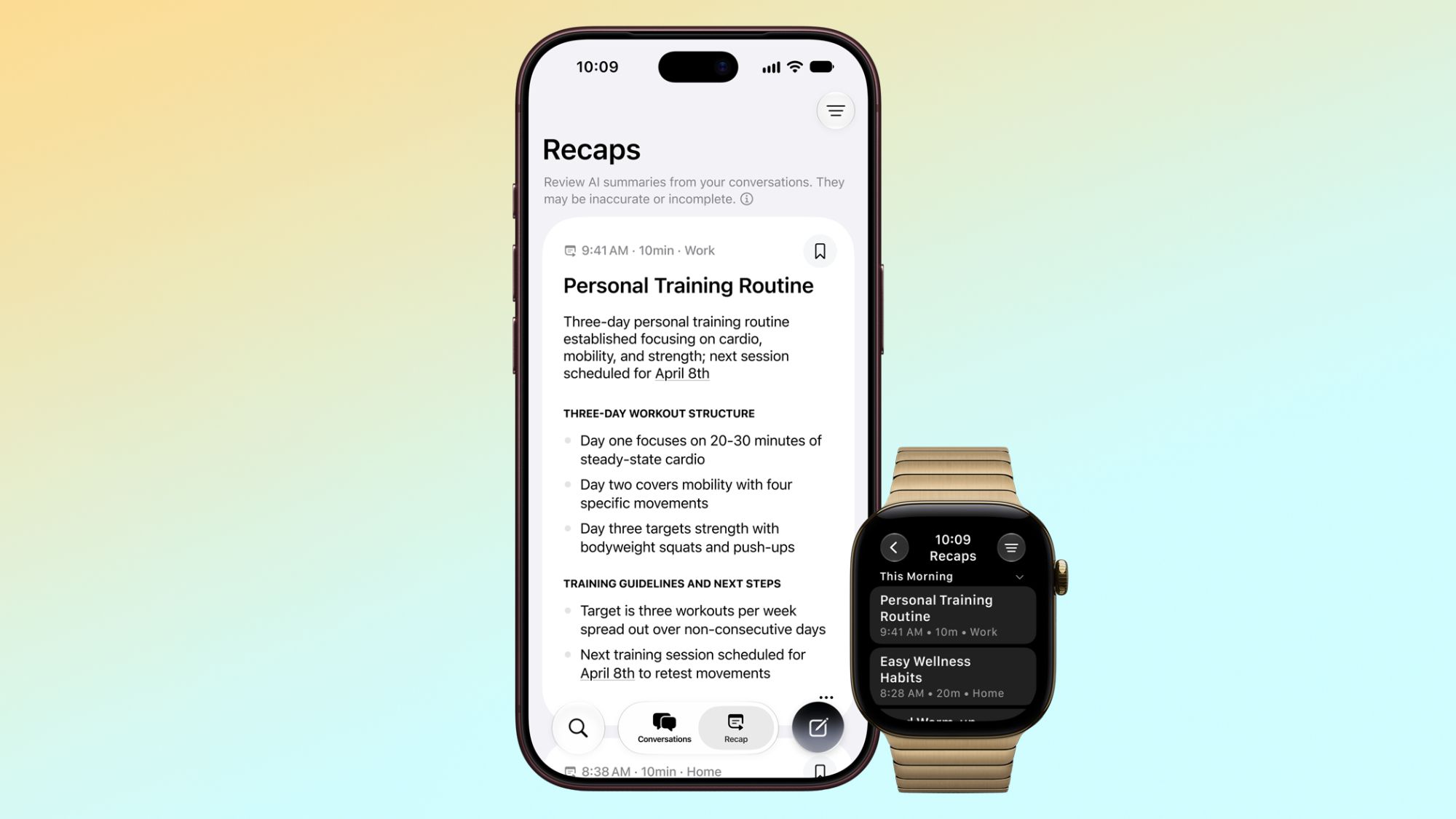
To understand the limitations of Siri Recap, one must first examine how Apple constructed the underlying feature within watchOS 27.3. Built specifically to leverage the advanced on-device processing capabilities of the Apple Watch Series 12 and Apple Watch Ultra 4 hardware, Siri Recap functions by maintaining a continuous, sectioned-off audio pipeline. This pipeline processes vocal interactions occurring in the user’s immediate environment to extract key talking points and construct concise text summaries. Crucially, Apple’s architecture ensures that raw audio files are never stored locally on the device long-term, nor are they transmitted to cloud servers or made accessible to other applications running on the watch. Once the on-device language models parse the speech and output a written summary, the original audio data is permanently purged. To give users greater agency over when ambient recording takes place, watchOS 27.3 includes granular toggle options allowing Siri Recap to operate only during specific hours of the day or within designated geofenced locations. While this privacy-first blueprint prevents the creation of a permanent audio paper trail, it simultaneously creates a major blind spot: without original recordings retained for validation or reference, users have no means of cross-checking Siri’s summaries against what was actually said.
During real-world testing, the immediate challenges of an always-listening wearable feature became quickly apparent. Rather than selectively capturing deliberate human interactions, Siri Recap frequently triggers on background media playing from nearby devices. Early summaries generated during testing were often derived from YouTube videos, Instagram Reels, and television programs broadcast in the background. While the algorithm demonstrates an ability to distinguish scripted movies and TV shows from unscripted dialogue in certain contexts, it struggles significantly to differentiate between a short digital video clip and an authentic, in-person conversation. This lack of discrimination points to a notable gap in Siri’s speech processing capabilities. Although Siri possesses the technical capacity to recognize a user’s unique voice profile—a feature long utilized for customized device commands—Siri Recap does not restrict its summarization trigger to the device owner’s voice. Instead, it continuously ingests ambient speech from anyone within microphone range. This leads to an unsettling dynamic: Siri Recap silently summarizes private conversations involving friends, family, or strangers without providing any visual or audible indicator to surrounding individuals that their dialogue is being captured and processed.
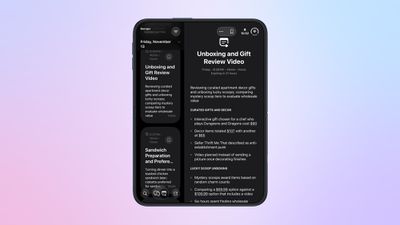
In day-to-day use, the vast majority of automated summaries generated by Siri Recap center on routine, low-stakes conversations that offer little practical value to revisit. Over a two-week period, the system routinely generated digital notes summarizing mundane household exchanges—ranging from casual comments about breakfast portion sizes and cat behavior to fleeting discussions regarding upcoming video game releases like Grand Theft Auto VI or spotting a rabbit in the driveway. Paradoxically, testing revealed an inverse relationship between conversation complexity and summary accuracy. Siri Recap performed its best, most coherent work when processing brief, superficial exchanges that required minimal context. When conversations were short and uncomplicated, the resulting summaries accurately reflected the dialogue. However, because these throwaway moments rarely warrant long-term documentation, the feature’s highest level of technical accuracy is routinely expended on information users have no practical desire to keep or review.
The functional limitations of Siri Recap become acutely problematic when applied to lengthy, information-dense scenarios where accurate record-keeping actually matters. In tests involving multi-step veterinary medical appointments—environments packed with detailed instructions, medical histories, and treatment plans—Siri Recap repeatedly failed to produce reliable documentation. One major structural flaw lies in the system’s tendency to improperly merge unrelated conversational threads. During a vet consultation, discussions regarding a pet’s picky eating habits and hydration levels were spoken separately from later comments about weight gain on a specialized prescription diet. In its final output, Siri Recap conflated these disparate fragments into a single, nonsensical narrative block. Similar logical errors occurred consistently across almost every extended conversation evaluated during the test period.
Compounding these narrative errors is Apple’s deliberate decision to exclude speaker labeling, or speaker diarization, from Siri Recap. In order to uphold strict privacy standards and avoid building detailed vocal profiles of non-users, Apple built Siri Recap to synthesize dialogue into a uniform text block without attributing statements to specific individuals. In practice, this design choice causes severe contextual confusion. During a discussion about preventative medications, the attending veterinarian shared a personal story regarding her own household pets—specifically mentioning that she kept a rabbit at home that was sensitive to certain chemical compounds. Because Siri Recap does not differentiate between speakers, the resulting summary incorrectly attributed the veterinarian’s personal anecdotes and pet ownership to the watch owner. Without speaker tags, multi-party conversations are systematically flattened into ambiguous amalgams, making it impossible to discern who made specific statements, promises, or medical recommendations.
Another critical limitation stems from Apple’s automated content moderation protocols embedded within its artificial intelligence models. Apple explicitly notes that potentially harmful content is excluded from Siri Recap summaries. However, in real-world testing, these safety filters appear to create significant blind spots during sensitive discussions. During a pre-surgery medical consultation for a pet, key portions of the conversation were entirely absent from the generated summary. Vital discussions surrounding surgical risks, potential complications, and emergency resuscitation preferences were completely omitted from Siri’s final notes. Crucially, Siri Recap provides no system notification, visual flag, or warning indicator to inform the user that specific portions of a conversation were omitted due to safety filters or lack of comprehension. This leaves users completely in the dark, unable to determine whether crucial information was omitted because the algorithm deemed it unimportant or because it was silenced by back-end content guardrails.
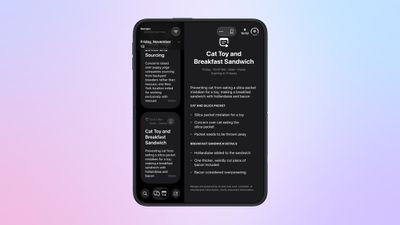
Despite these significant operational flaws, Siri Recap does demonstrate localized areas of impressive technical capability, particularly when processing highly specific, structured factual data. In test scenarios involving explicit dates, times, and numerical values, the feature performed admirably. When scheduling follow-up appointments, Siri Recap consistently extracted correct calendar dates and times from spoken dialogue. Surprisingly, the system also accurately recorded exact billing totals when spoken aloud during checkout—a notable outcome given Apple’s public documentation stating that Siri Recap is designed to filter out financial information. Furthermore, the on-device language models exhibited remarkable accuracy in parsing complex medical terminology. Technical drug names such as benazepril and clopidogrel were correctly identified and transcribed from spoken conversation without error, demonstrating that the feature’s underlying speech-to-text vocabulary parsing is highly sophisticated even when its contextual summarization logic falters.
Beyond technical accuracy, the hands-on evaluation uncovered a more subtle, psychological challenge associated with passive AI summarization: the potential to alter human memory. When reviewing inaccurate or distorted Siri Recap summaries days after an event, the artificial text began to compete with organic recollection. Reading a flawed Siri summary tended to anchor those specific, incorrectly framed details in the user’s mind, subtly overwriting their true memory of the conversation. Because Apple’s privacy architecture deliberately discards the original raw audio recordings, users have no objective audio baseline to consult when a summary feels inaccurate. This creates a dilemma where inaccurate AI notes can supplant actual human memory, effectively replacing authentic recollections with distorted algorithmic interpretations.

Siri Recap arrives at a pivotal moment in Apple’s broader software roadmap as the company continues to expand its Apple Intelligence initiative across its hardware ecosystem. The watchOS 27.3 beta coincides with a wave of major updates across Apple’s lineup, including the recent release of iOS 27.2 and iPadOS 27.2—which expanded Siri AI language support across devices like the iPhone Duo and the OLED iPad mini—and tvOS 27.2.1, which brought Siri AI capabilities to second- and third-generation Apple TV 4K units. Concurrently, Apple is actively testing daily access limits for server-side Apple Intelligence tasks across the latest iOS 27.3, iPadOS 27.3, and macOS 27.3 betas, laying the groundwork for tiered iCloud+ AI upgrades for power users. Yet while Apple continues to refine its cloud and on-device AI integration across platforms, Siri Recap highlights the clear boundaries of current wearable AI technology. In its pre-release form ahead of the public launch of watchOS 27.3, Siri Recap demonstrates that Apple’s noble focus on user privacy creates severe functional trade-offs. By stripping away speaker attribution, discarding audio verification tracks, and aggressively condensing complex dialogue, Apple has created a feature that regularly distorts reality rather than capturing it.
 macOS & Apple IT Support
Free App Recommendations Highlight Growing Software Ecosystem for Apple’s Dual-Screen iPhone Duo Amid Post-Launch Hardware and Retail Scrutiny
As Apple’s new dual-screen smartphone, the iPhone Duo, continues to settle into...
 macOS & Apple IT Support
Hands-On With Apple’s New OLED Touchscreen MacBook Pro
It has been half a decade since Apple last delivered a ground-up...
 macOS & Apple IT Support
Apple Updates Free Invites App for iPhone With Full-Resolution Shared Albums, Photorealistic AI Backgrounds, and Simplified Email Verification
CUPERTINO, Calif. — Apple on Wednesday released a substantial software update for...







