
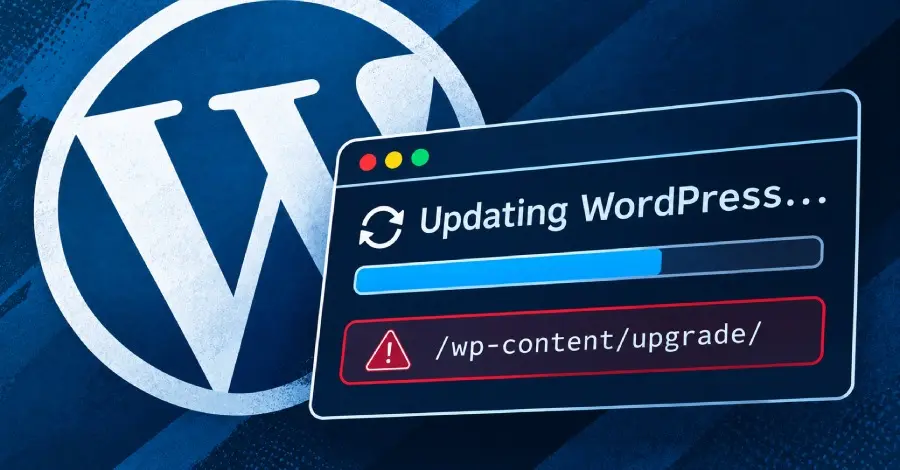
The very mechanism designed to keep millions of websites secure has emerged as a potential gateway for cyberattacks. A newly identified vulnerability in the WordPress core update process, tracked as CVE-2026-119977, has revealed a paradoxical risk: sites may be most vulnerable at the exact moment they are installing a security fix. This flaw, which affects a vast range of WordPress versions, has already been added to the U.S. Cybersecurity and Infrastructure Security Agency’s (CISA) list of known exploited vulnerabilities, signaling an urgent need for administrators to review their update procedures.
The vulnerability was discovered and reported by Umut Bayram, a security researcher at Picus Security. His findings highlight a critical "race condition" style flaw within the WordPress updater. According to Bayram, the danger lies in how the platform handles the unpacking of new core files. When a site initiates an update to patch existing security holes, it relies on its current, unpatched code to manage the transition. This creates a narrow but dangerous window where an attacker can execute malicious code on the server before the update process completes and deletes the temporary setup files.
The Mechanics of the Update Vulnerability
To understand the severity of CVE-2026-119977, one must look at the internal architecture of the WordPress core update system. When a site administrator triggers an update—or when an automatic background update begins—the system downloads a package containing the new version of the software. For major updates or situations where a "complete package" is required, WordPress unpacks these files into a temporary directory located within the wp-content/upgrade folder.
This temporary directory contains a full, functional copy of the WordPress installer. Because this folder is typically located within the public web root, it is often reachable by a web server and, by extension, the public internet. The flaw stems from the fact that the "old" updater code—the version currently running on the site—is responsible for creating this folder and managing the files within it.
In versions 5.9 through 7.1.3, the updater code uses a predictable naming convention for this temporary folder, often naming it after the downloaded zip file. This predictability is the linchpin of the exploit. An attacker who can predict the folder name and access the installer files during the brief window before they are moved or deleted can effectively hijack the installation process. By accessing the setup scripts within the temporary directory, an unauthenticated attacker can link the temporary WordPress instance to a database under their control, log in as an administrator, and execute arbitrary PHP code with the permissions of the web server.
Who Is Exposed During the Update
The scope of the vulnerability is extensive, covering WordPress versions 4.7 through 7.1.3. However, the level of risk varies depending on the specific version and the type of update package being deployed. Bayram’s research indicates that not every update cycle exposes the dangerous installer files.

WordPress utilizes two primary types of update packages: complete and partial. A complete package contains every file required to run the CMS, including the setup and installation scripts that are central to this vulnerability. A partial package, often used for minor "point" releases (such as moving from version 7.1.3 to 7.1.4), only contains the specific files that have changed between versions. If a partial package does not include the installer files, the temporary directory cannot be used to launch a rogue installation, significantly reducing the risk.
 Cybersecurity Basics & Security News
Google Intelligence Report Warns of Paradigm Shift as Threat Actors Deploy Autonomous Agentic AI Frameworks
In a comprehensive assessment that underscores a fundamental transformation in the digital...
 Cybersecurity Basics & Security News
Cybersecurity Researchers Identify New Wave of Targeted Attacks Against Qlik Sense Servers
In a significant escalation of activity targeting enterprise data visualization infrastructure, cybersecurity...
 Cybersecurity Basics & Security News
Critical Vulnerability in Elementor Plugin Leaves Two Million WordPress Sites Open to Full Takeover
A high-severity security flaw has been identified in Elementor, the most widely...







