
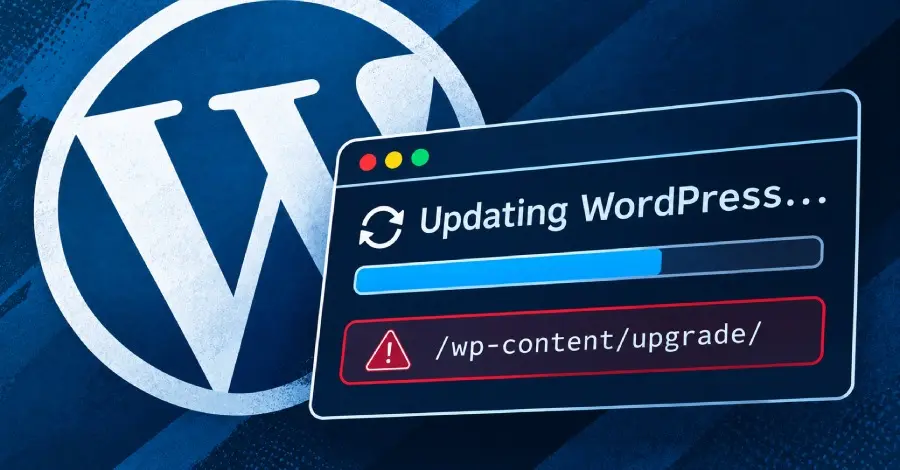
However, the delivery of a partial package is not guaranteed. WordPress often reverts to a complete package if it detects that core files have been modified or if the file checksums do not match the official repository. Furthermore, updates that move a site between major branches—for instance, upgrading from the 7.0 branch to the 7.1 branch—almost always utilize a complete package, thereby exposing the site to the flaw.
The predictability of the temporary folder name is another major factor in the risk profile. For sites running versions 4.4 through 5.8, the updater code appended a string of random characters to the temporary folder name. While this does not fix the underlying logic flaw, it provides a layer of "security through obscurity," making it much harder for an attacker to find the directory unless the name is leaked through server error messages or other information disclosure vulnerabilities. In contrast, versions 5.9 and later removed this randomness for certain update types, making the folders trivial to locate for motivated attackers.
Attacks and What to Check
The threat posed by CVE-2026-119977 is not merely theoretical. Earlier this week, CISA confirmed that the flaw is being actively exploited in the wild. While the agency did not provide specific details regarding the nature of the attackers or the targets, security firms have provided a glimpse into the speed at which these threats materialize.
Wordfence, a prominent WordPress security provider, reported that attack attempts began just nine minutes after they released a firewall rule to protect their customers. Their analysis showed that attackers were not necessarily targeting specific sites with known vulnerabilities but were instead scanning broad swaths of the internet. The goal of these scanners appears to be identifying sites in the middle of an update. Wordfence observed consistent scanning activity from specific sources for nearly 15 hours, a behavior consistent with botnets waiting for the precise moment a target site begins its update process.
Despite the high potential impact—represented by a CVSS score of 8.1—the "attack window" is incredibly small. In controlled lab environments, the window of opportunity for an attacker to access the installer and execute code lasted only a few seconds. This narrow timing requirement is likely why WordPress’s own security advisory originally rated the flaw as a low-severity risk. However, the automation of modern cyberattacks means that even a window of a few seconds is sufficient for a scripted exploit to succeed.
For administrators concerned that their sites may have been compromised during a previous update, security experts recommend auditing the server for any unusual files in the wp-content/upgrade or wp-admin directories. Signs of a successful exploit might include the presence of unauthorized wp-config.php files in temporary folders or unexpected entries in the web server’s access logs targeting the upgrade directory.

What to Do Before Updating
With the release of WordPress 7.1.4, a permanent fix is now available. The updated code ensures that the temporary folder name is randomized and, more importantly, it changes the way files are moved to prevent attackers from overwriting the live wp-config.php file. However, because the current unpatched code must be used to install this fix, the very act of updating to 7.1.4 carries a final moment of risk.
 Cybersecurity Basics & Security News
Beyond Policy Intent: Why Identity Visibility Has Become the Critical Frontier in Modern Cybersecurity
In the current landscape of enterprise security, the traditional perimeter has not...
 Cybersecurity Basics & Security News
Critical Remote Code Execution Vulnerability Discovered in GitLab AI Gateway
GitLab has issued an urgent security advisory regarding a critical vulnerability discovered...
 Cybersecurity Basics & Security News
Critical CVSS 10 Vulnerability in Canonical LXD and MicroCloud Allows Unauthorized Host Access
In a significant security development for the Linux container and cloud orchestration...







