

The pursuit of fault-tolerant quantum computing has long been defined by a singular, daunting obstacle: the propensity for quantum systems to generate errors. While the potential of quantum processing to revolutionize fields from materials science to cryptography is undisputed, the fragility of the underlying hardware remains the primary bottleneck. Over the past several years, the industry has seen a flurry of specialized attempts to mitigate this issue, ranging from the development of novel decoding algorithms to the application of artificial intelligence. However, a new collaboration between IBM, AMD, and the Quantum Science Center at Oak Ridge National Laboratory (ORNL) suggests that the solution may lie not just in better code, but in a fundamental reimagining of how quantum and classical systems physically coexist.
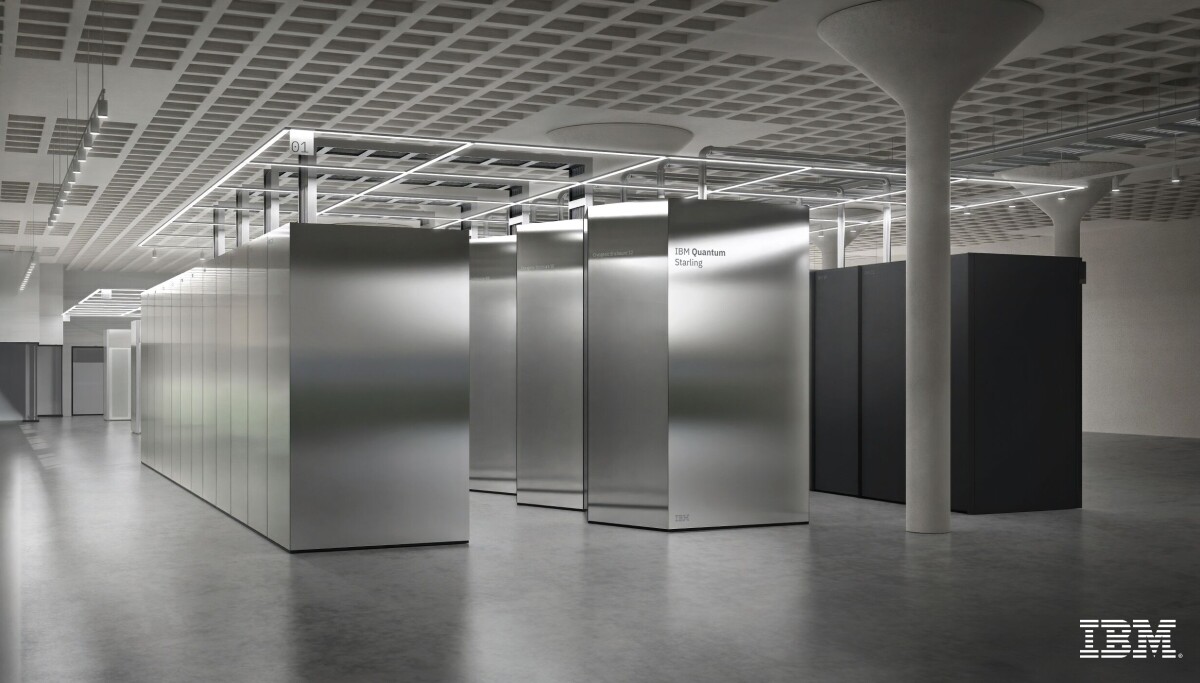
This week, the trio unveiled a specialized co-design platform for error correction that integrates quantum computing hardware directly with high-performance computing (HPC) resources. Located at IBM’s facility in Poughkeepsie, New York, the platform represents a departure from the industry standard of accessing quantum systems via the cloud. By placing quantum processing units (QPUs) and classical supercomputers in the same physical location, the partners aim to eliminate the latency and complexity inherent in cloud-based APIs, creating a tightly coupled environment where classical and quantum bits can interact in near real-time.
The challenge of quantum error correction (QEC) is rooted in the delicate nature of qubits. Unlike classical bits, which are robust and binary, qubits exist in states of superposition and entanglement that are easily disrupted. This phenomenon, known as decoherence, occurs when a qubit loses its quantum properties due to external noise. This noise is ubiquitous, stemming from sources as varied as thermal fluctuations, electromagnetic interference, sound, and even the activity of neighboring qubits within the same processor. Currently, most quantum systems operate with gate error rates between one error per 100 operations and one per 1,000. For a quantum computer to perform the complex, long-running calculations required for commercial utility, these error rates must be reduced by several orders of magnitude.
To bridge this gap, researchers have turned to the concept of logical qubits. A logical qubit is not a single physical entity but rather a group of many physical qubits working in concert to represent a single unit of information. By spreading information across multiple physical qubits using error-correction codes, the system can detect and fix individual errors without losing the overall quantum state. However, managing these logical qubits requires an immense amount of classical computational overhead. This is where the IBM, AMD, and ORNL collaboration seeks to innovate.
The new co-design platform is anchored by two primary hardware components: IBM’s Nighthawk r2 quantum chip and Oak Ridge’s Umbra HPC system. The Nighthawk r2 is a 120-qubit processor that marks a significant architectural shift for IBM. Previously, the company utilized a "heavy-hex" lattice design, but the Nighthawk r2 employs a square lattice connectivity. This two-dimensional grid topology allows most qubits to connect directly to four nearest neighbors, representing a 60 percent increase in connectivity over previous iterations.
 Enterprise Tech & Infrastructure
Nvidia Unveils Silicon-Level Guardrails as Industry Grapples with Surging AI Agent Breaches
The artificial intelligence industry, once defined by a breakneck race toward ever-greater...
 Enterprise Tech & Infrastructure
Understanding the Architecture of Modern Storage: The Nuances Between Flash Memory and Solid-State Drives
In the rapidly evolving landscape of data management, the terminology used to...
 Enterprise Tech & Infrastructure
Cerebras Systems Forges Cloud Path as OpenAI Mega-Deal Anchors Massive Revenue Backlog
Throughout 2026, Cerebras Systems, the innovator behind the world’s largest AI processors,...







