

The pursuit of fault-tolerant quantum computing has long been defined by a singular, daunting obstacle: the propensity for quantum systems to generate errors. While the potential of quantum processing to revolutionize fields from materials science to cryptography is undisputed, the fragility of the underlying hardware remains the primary bottleneck. Over the past several years, the industry has seen a flurry of specialized attempts to mitigate this issue, ranging from the development of novel decoding algorithms to the application of artificial intelligence. However, a new collaboration between IBM, AMD, and the Quantum Science Center at Oak Ridge National Laboratory (ORNL) suggests that the solution may lie not just in better code, but in a fundamental reimagining of how quantum and classical systems physically coexist.
This week, the trio unveiled a specialized co-design platform for error correction that integrates quantum computing hardware directly with high-performance computing (HPC) resources. Located at IBM’s facility in Poughkeepsie, New York, the platform represents a departure from the industry standard of accessing quantum systems via the cloud. By placing quantum processing units (QPUs) and classical supercomputers in the same physical location, the partners aim to eliminate the latency and complexity inherent in cloud-based APIs, creating a tightly coupled environment where classical and quantum bits can interact in near real-time.
The challenge of quantum error correction (QEC) is rooted in the delicate nature of qubits. Unlike classical bits, which are robust and binary, qubits exist in states of superposition and entanglement that are easily disrupted. This phenomenon, known as decoherence, occurs when a qubit loses its quantum properties due to external noise. This noise is ubiquitous, stemming from sources as varied as thermal fluctuations, electromagnetic interference, sound, and even the activity of neighboring qubits within the same processor. Currently, most quantum systems operate with gate error rates between one error per 100 operations and one per 1,000. For a quantum computer to perform the complex, long-running calculations required for commercial utility, these error rates must be reduced by several orders of magnitude.
To bridge this gap, researchers have turned to the concept of logical qubits. A logical qubit is not a single physical entity but rather a group of many physical qubits working in concert to represent a single unit of information. By spreading information across multiple physical qubits using error-correction codes, the system can detect and fix individual errors without losing the overall quantum state. However, managing these logical qubits requires an immense amount of classical computational overhead. This is where the IBM, AMD, and ORNL collaboration seeks to innovate.
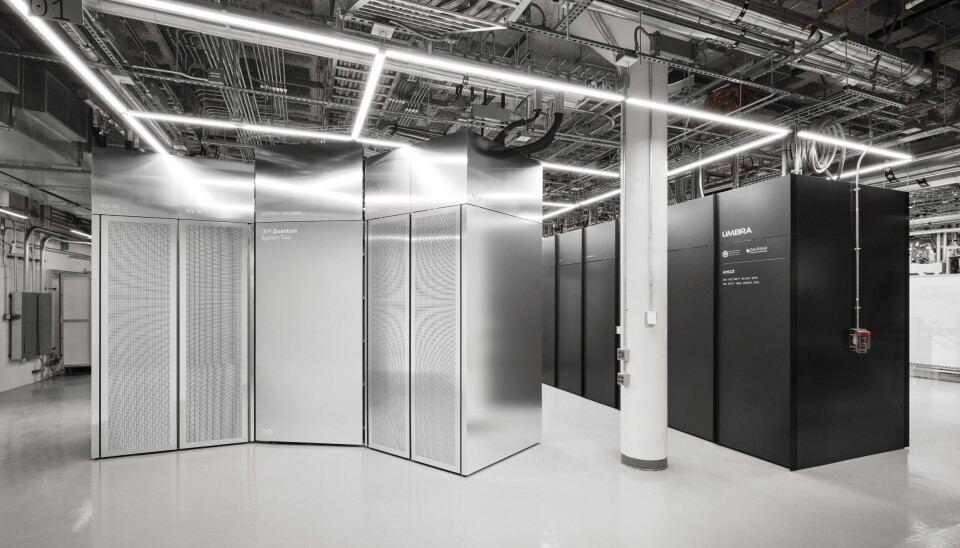
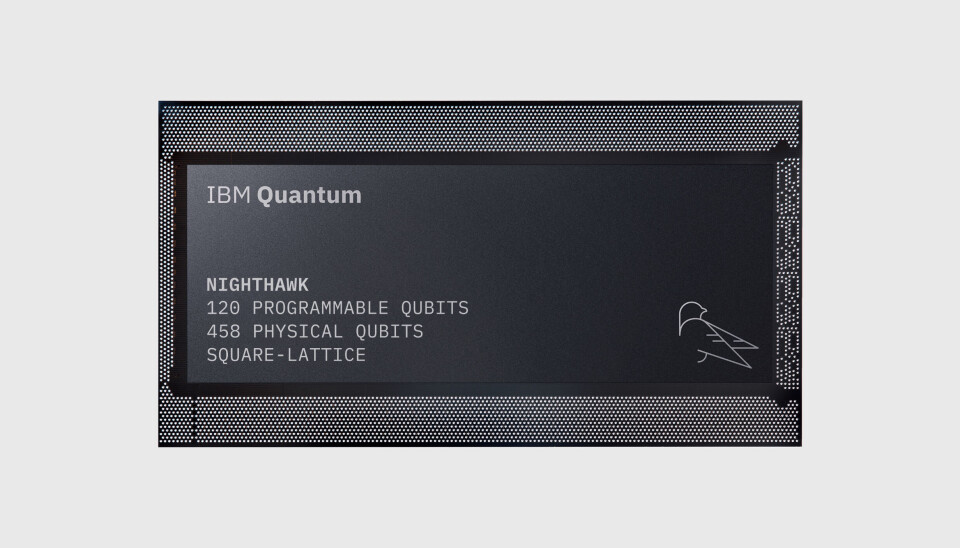
The new co-design platform is anchored by two primary hardware components: IBM’s Nighthawk r2 quantum chip and Oak Ridge’s Umbra HPC system. The Nighthawk r2 is a 120-qubit processor that marks a significant architectural shift for IBM. Previously, the company utilized a "heavy-hex" lattice design, but the Nighthawk r2 employs a square lattice connectivity. This two-dimensional grid topology allows most qubits to connect directly to four nearest neighbors, representing a 60 percent increase in connectivity over previous iterations.
This increased connectivity is not merely a hardware upgrade; it is a strategic shift designed to facilitate better error correction. The square lattice is natively compatible with standard surface codes, which are among the most promising frameworks for protecting quantum information. Furthermore, the architecture supports shorter execution times and real-time pulse control. Through IBM’s quantum API, researchers can access deep pulse capabilities, allowing them to measure qubits in the middle of a calculation and adjust the signals in real-time to shield them from noise.
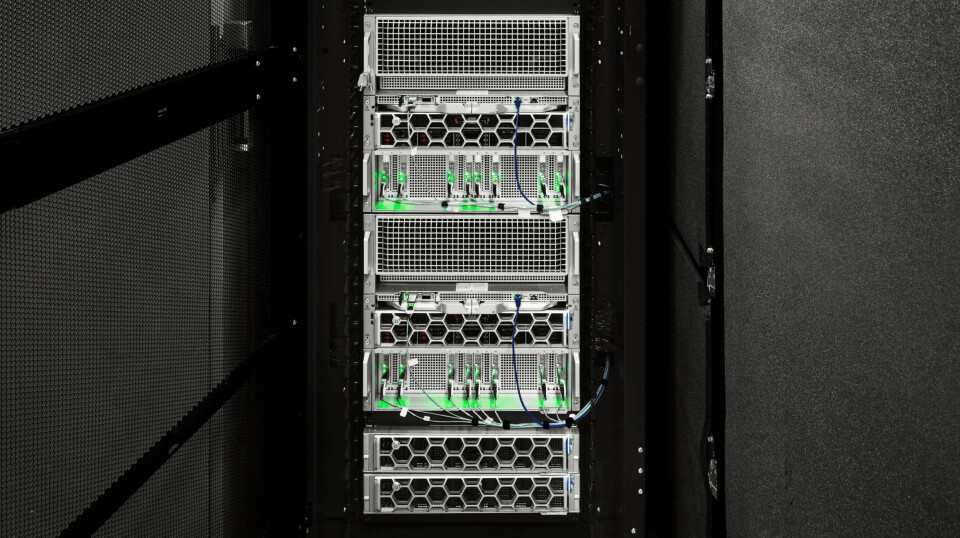
On the classical side, the Umbra system provides the "muscle" required to process the massive streams of data generated by the quantum chip. Umbra is powered by AMD’s fifth-generation Epyc "Turin" 9005 datacenter CPUs and "Antares" Instinct MI355X GPUs. In this hybrid environment, the AMD hardware acts as the primary engine for quantum error correction research, decoding optimization, and software orchestration.
The role of the GPU in this stack is particularly critical. As Seetharami Seelam, IBM’s Distinguished Engineer and chief architect of classical system co-design, explains, the classical and quantum processors must work in a symbiotic relationship. In this model, the QPU acts as a specialized accelerator, much like a GPU or TPU does in modern AI workloads. The AMD GPUs will be responsible for running the complex AI models and algorithms that scientists are developing to identify and correct errors as they occur.
Artificial intelligence is expected to serve as the "connective tissue" of this integrated system. Researchers at Oak Ridge are already exploring the roles that generative and agentic AI will play in managing quantum workflows. AI can be used to develop more effective algorithms, predict noise patterns, and optimize the decoding process that translates physical qubit data into stable logical qubits. By having the GPUs physically adjacent to the QPUs, the system can achieve the low-latency communication necessary for these AI models to intervene during the brief window before a qubit decoheres.
One of the more advanced techniques the platform will explore is hierarchical error correction. This approach involves layering two different error-correction codes. An "inner" code protects the qubits within a specific module, while an "outer" code provides a second layer of defense across the entire system. IBM research suggests that this hierarchical approach could potentially allow a system to reach a trillion logical operations even with a physical qubit error rate of one in 1,000. This method is attractive because it keeps the hardware and connectivity requirements relatively simple compared to other scaling models, but it relies heavily on high-speed classical computation to manage the layers—a task perfectly suited for the Umbra supercomputer.
The collaboration is also a direct response to the U.S. Department of Energy’s Quantum Genesis Mission. This federal initiative has set ambitious targets for the development of fault-tolerant quantum systems, including the "Q Competition," which aims to have 100 logical qubits performing 100,000 "hard" operations by late 2028. To put the scale of this challenge in perspective, current state-of-the-art experiments—such as a recent demonstration by IBM and the University of Chicago—have reached approximately 70 logical qubits and 438 hard operations.
Reaching the Genesis Mission’s goal will require a 238-fold increase in the count of hard operations in just a few years. Seelam notes that such a rapid acceleration is only possible through the type of close collaboration among industry leaders, national laboratories, and government researchers that this new platform facilitates. By providing a pre-integrated environment, the platform allows researchers to jump straight into testing algorithms and workflows without the need to build their own underlying infrastructure from scratch.
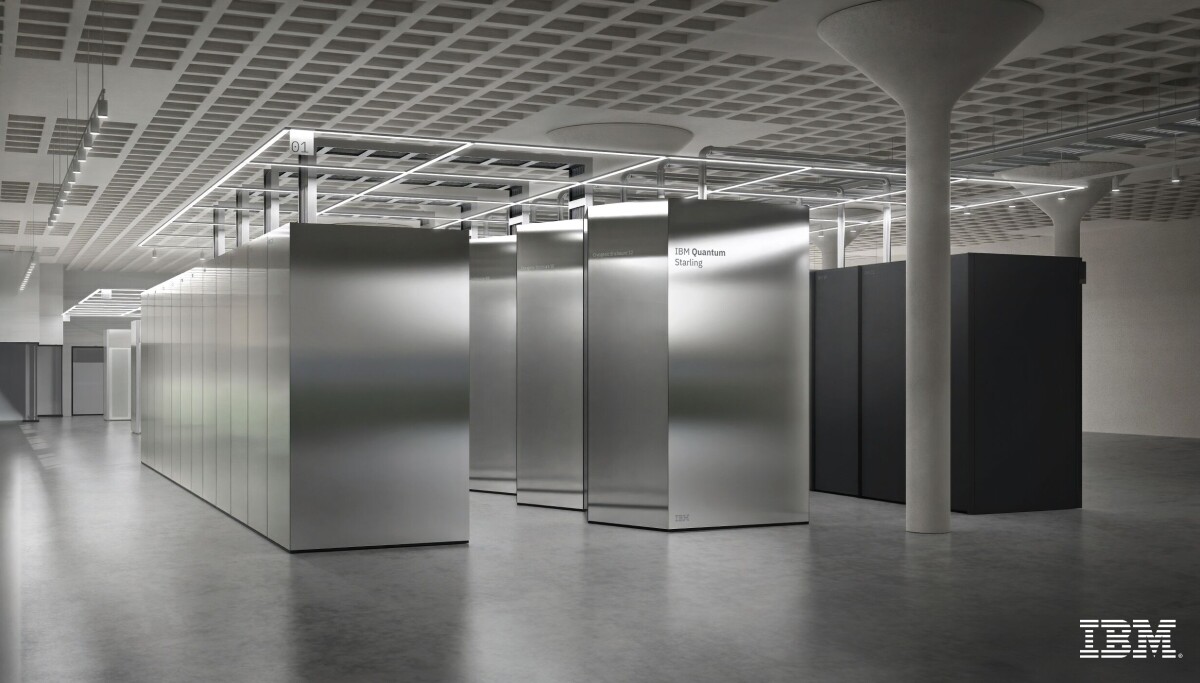
Beyond the immediate goals of the Genesis Mission, IBM intends to use the insights gained from the Poughkeepsie facility to inform the development of its own roadmap. Specifically, the company is looking toward the delivery of its "Quantum Starling" system. Expected to arrive by 2029, Starling is envisioned as a fully fault-tolerant quantum computer, representing the culmination of the error-correction techniques and hardware-software co-design strategies being pioneered today.
The establishment of this co-design platform signals a shift in the quantum computing industry from a purely experimental phase to one focused on systems engineering. While the fundamental physics of the qubit remain as volatile as ever, the ability to surround those qubits with massive classical computing power and sophisticated AI-driven error correction provides a clear path forward. By bringing IBM’s quantum architecture, AMD’s processing power, and Oak Ridge’s scientific expertise under one roof, the partners are attempting to turn the "noise" of quantum computing into a manageable variable, bringing the era of practical, large-scale quantum computation one step closer to reality.
 Enterprise Tech & Infrastructure
Bridging the Gap in Data Center Convergence: The Evolving Role of Fibre Channel over Ethernet
As data centers face unprecedented pressure to handle massive workloads driven by...
 Enterprise Tech & Infrastructure
Navigating the Complexity of Amazon S3 Cost Management: Beyond the Per-Gigabyte Rate
In the world of enterprise cloud infrastructure, Amazon S3 has long been...
 Enterprise Tech & Infrastructure
Upscale AI Challenges Nvidia’s Dominance with SkyHammer Scale-Up Fabric
For decades, the architecture of high-performance computing has been defined by a...







