

This increased connectivity is not merely a hardware upgrade; it is a strategic shift designed to facilitate better error correction. The square lattice is natively compatible with standard surface codes, which are among the most promising frameworks for protecting quantum information. Furthermore, the architecture supports shorter execution times and real-time pulse control. Through IBM’s quantum API, researchers can access deep pulse capabilities, allowing them to measure qubits in the middle of a calculation and adjust the signals in real-time to shield them from noise.
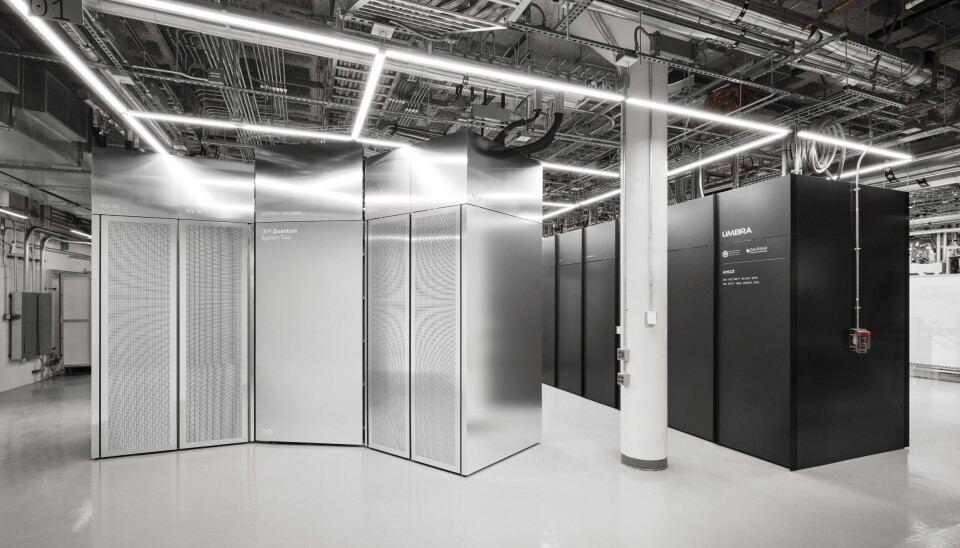
On the classical side, the Umbra system provides the "muscle" required to process the massive streams of data generated by the quantum chip. Umbra is powered by AMD’s fifth-generation Epyc "Turin" 9005 datacenter CPUs and "Antares" Instinct MI355X GPUs. In this hybrid environment, the AMD hardware acts as the primary engine for quantum error correction research, decoding optimization, and software orchestration.
The role of the GPU in this stack is particularly critical. As Seetharami Seelam, IBM’s Distinguished Engineer and chief architect of classical system co-design, explains, the classical and quantum processors must work in a symbiotic relationship. In this model, the QPU acts as a specialized accelerator, much like a GPU or TPU does in modern AI workloads. The AMD GPUs will be responsible for running the complex AI models and algorithms that scientists are developing to identify and correct errors as they occur.
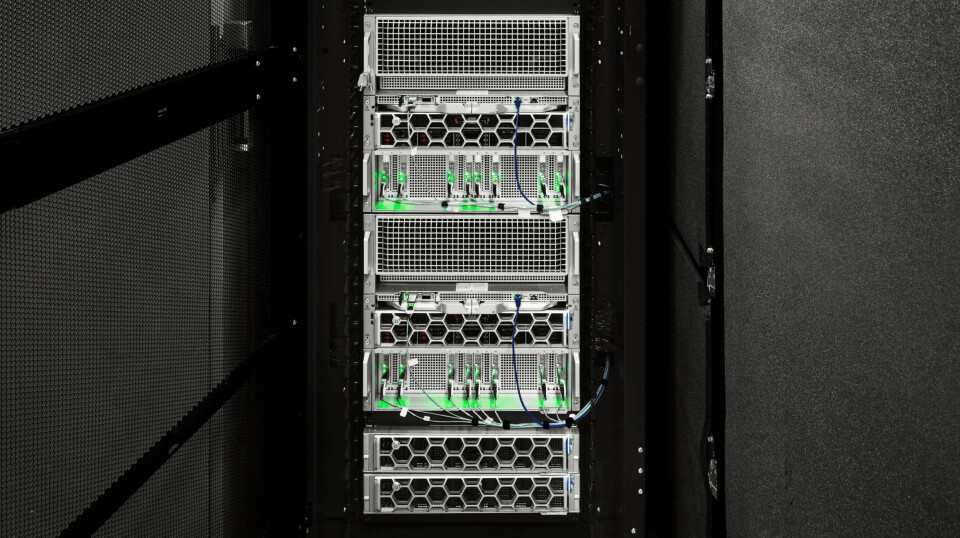
Artificial intelligence is expected to serve as the "connective tissue" of this integrated system. Researchers at Oak Ridge are already exploring the roles that generative and agentic AI will play in managing quantum workflows. AI can be used to develop more effective algorithms, predict noise patterns, and optimize the decoding process that translates physical qubit data into stable logical qubits. By having the GPUs physically adjacent to the QPUs, the system can achieve the low-latency communication necessary for these AI models to intervene during the brief window before a qubit decoheres.
One of the more advanced techniques the platform will explore is hierarchical error correction. This approach involves layering two different error-correction codes. An "inner" code protects the qubits within a specific module, while an "outer" code provides a second layer of defense across the entire system. IBM research suggests that this hierarchical approach could potentially allow a system to reach a trillion logical operations even with a physical qubit error rate of one in 1,000. This method is attractive because it keeps the hardware and connectivity requirements relatively simple compared to other scaling models, but it relies heavily on high-speed classical computation to manage the layers—a task perfectly suited for the Umbra supercomputer.
 Enterprise Tech & Infrastructure
Navigating the Hidden Complexities of Amazon S3 Cost Optimization: A Strategic Approach to Storage Management
For enterprise IT leaders and cloud architects, the promise of Amazon S3...
 Enterprise Tech & Infrastructure
Mastering the Economics of Amazon S3: Strategies for Navigating Complex Cloud Storage Costs
For modern enterprises, the migration to cloud storage was once championed as...
 Enterprise Tech & Infrastructure
Navigating the Complexity of Amazon S3 Cost Management: Beyond the Per-Gigabyte Rate
In the world of enterprise cloud infrastructure, Amazon S3 has long been...







