
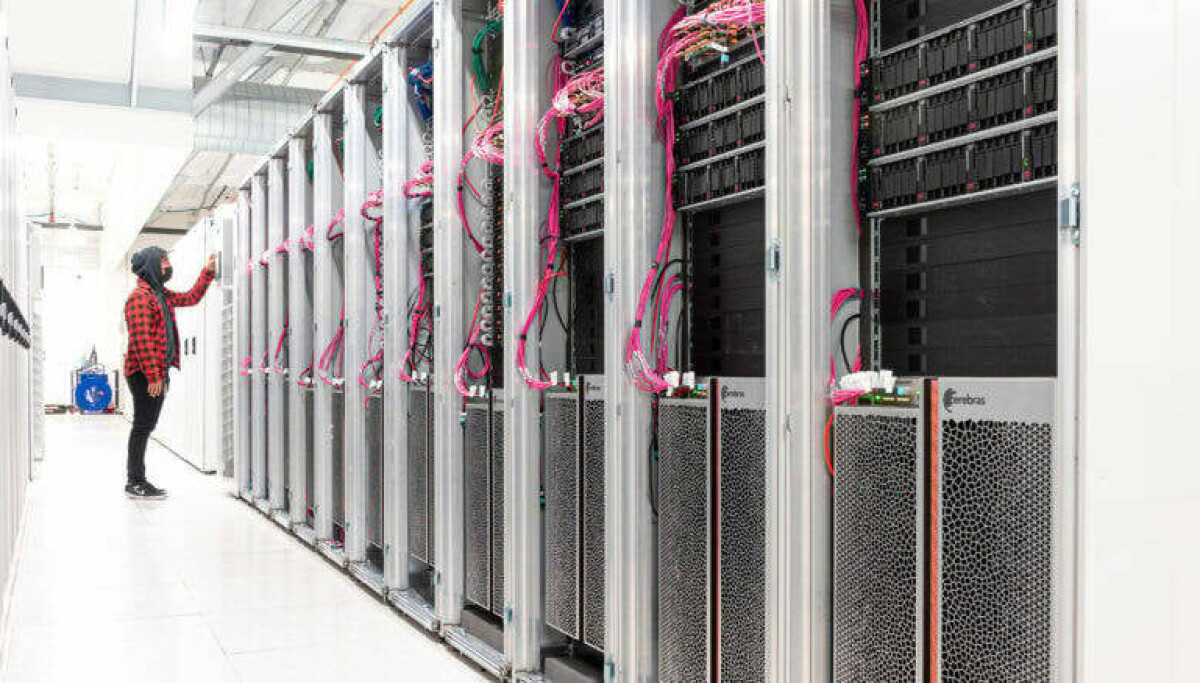
Throughout 2026, Cerebras Systems, the innovator behind the world’s largest AI processors, has remained steadfast in its strategic narrative: this is the year of infrastructure and manufacturing. The company has spent the better part of the year aggressively building out its cloud services and scaling its manufacturing footprint to meet the staggering demands of its burgeoning contract list. While the company has successfully inked agreements with industry titans such as Amazon Web Services (AWS), Oracle Cloud, and Microsoft Azure, its immediate financial trajectory is currently being defined by a transformative partnership with OpenAI. This deal, which is finally moving into its primary ramp-up phase, accounts for the vast majority of Cerebras’ current revenue backlog and nearly all of its recent incremental growth.
The broader AI landscape is approaching a critical juncture as the industry looks toward 2027. Market analysts suggest that next year could be a banner period for AI hardware providers, though a shadow of uncertainty remains. There is a distinct, non-zero possibility that 2027 could represent the peak of the current Generative AI spending boom. Predicting the longevity of this investment cycle is a challenge even for the most advanced AI systems. In the complex supply chain of the technology sector, organizations often operate based on the immediate forecasts of their customers, creating a cycle where demand signals can sometimes be amplified beyond reality. However, the consistent high-volume purchasing observed over the past four years suggests that, despite persistent fears of a market correction, the appetite for high-performance AI systems remains robust.
The underlying reality is that Generative AI has moved beyond mere hype to become a foundational shift in computing. The primary driver of this evolution is the rapidly decreasing cost of "token chewing"—the process of generating and processing AI outputs. As these costs fall, AI integration is becoming pervasive, embedding itself either directly within the world’s software applications or forming a critical layer around them. While some industry enthusiasts believe AI will eventually replace traditional applications entirely, this view often overlooks the inherent risk aversion of the global corporate sector. In many of the world’s most critical banking and insurance systems, mainframe code dating back several decades remains operational. Much like a granite mountain, this legacy infrastructure has survived wave after wave of technological evolution. While AI will undoubtedly augment and surround these systems, the core of corporate computing is built on a foundation that resists total displacement.
Financial results for the third quarter of 2026 reflect this transitional period for Cerebras. The company reported a dip in sales for its CS-3 and CS-4 hardware compared to previous quarters. This decline, however, was not a sign of waning interest but rather a tactical redirection of resources. Cerebras has been prioritizing the build-out of its own cloud services infrastructure to support the massive $10 billion inference deal it secured with OpenAI in January 2026. This agreement, which involves providing 750 megawatts of computing capacity for fast inference tasks, has the potential to expand significantly. Revised estimates suggest the deal could be worth between $20 billion and $30 billion through 2032, provided OpenAI exercises options to add another 1.25 gigawatts of capacity by 2030. For OpenAI, the economics of this deal are compelling. Utilizing Cerebras’ waferscale engines for inference prefill and decode operations offers a cost-effective alternative to traditional Nvidia GPU clusters, particularly as Cerebras integrates AMD GPUs for prefill tasks within its cloud environment.
 Enterprise Tech & Infrastructure
The Hidden Complexity of Cloud Storage: Decoding the Real Drivers of Amazon S3 Expenditures
For many enterprise IT departments, the monthly Amazon Web Services (AWS) bill...
 Enterprise Tech & Infrastructure
The Security Architecture of Enterprise Storage: Evaluating the Vulnerabilities of DAS and NAS Systems
In the modern enterprise landscape, data is frequently characterized as the lifeblood...
 Enterprise Tech & Infrastructure
The Architecture of Performance: Analyzing the Strategic Role of RAID 10 in Enterprise Storage
In the rapidly evolving landscape of enterprise data management, the selection of...