
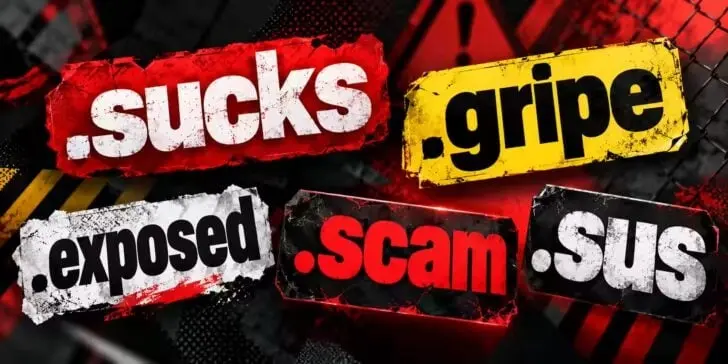
The global domain name landscape is once again on the precipice of a massive expansion, and with it comes the revival of a decade-old debate regarding trademark protection, corporate "shakedowns," and the fine line between free speech and digital extortion. As the internet community prepares for the 2026 round of New Generic Top-Level Domain (gTLD) applications, industry veterans and brand managers are looking back at the 2012 expansion with a mixture of caution and trepidation. The primary source of this anxiety is the memory of .sucks, a domain extension that became the poster child for controversial registry practices.
In the 2012 round, the introduction of hundreds of new extensions—ranging from .app to .photography—was intended to foster innovation and competition. However, when the application for .sucks was approved, it triggered an immediate and fierce backlash from the trademark community. Brand owners argued that the extension served no legitimate purpose other than to force corporations to pay exorbitant fees to prevent their own names from being registered by critics, trolls, or competitors. The fear was that a "brandname.sucks" domain would become a magnet for negative publicity and consumer complaints, effectively holding a company’s reputation for ransom.
The business model adopted by the .sucks registry, Vox Populi, only served to fuel these accusations. During the "Sunrise" period—a mandatory phase where trademark holders have the first right to register domains matching their marks—the price for a .sucks domain was set at a staggering $2,500. This was an unprecedented figure in the industry, where most Sunrise registrations typically cost a few hundred dollars. In a move that many viewed as a calculated provocation, the registry simultaneously announced that ordinary consumers who wished to use the extension for its stated purpose of "criticism and consumer advocacy" could register a name for as little as $10, provided they used the registry’s own platform to host the site.
The controversy reached such a fever pitch that the Internet Corporation for Assigned Names and Numbers (ICANN) took the rare step of asking the U.S. Federal Trade Commission (FTC) and the Canadian Office of Consumer Affairs to review the registry’s business practices. While the regulatory intervention did not ultimately halt the extension, the incident left a permanent mark on the domain industry, establishing a blueprint for what brands describe as "predatory" TLDs.
As we approach the 2026 round, a new set of applications is beginning to emerge, and some of them bear a striking resemblance to the .sucks model. Trademark interests are already sounding the alarm over several strings that appear designed to provoke defensive registrations.
Chief among these is the application for .scam, submitted by XYZ, the registry operator best known for the highly successful .xyz extension. On the surface, the applicant’s justification for .scam is rooted in public service and transparency. According to XYZ, the .scam extension is intended to give people a dedicated space to exercise free speech, share warnings about fraudulent activities, and help others identify deceptive practices before they spread. The registry’s pitch is to "turn the word against deception," positioning the TLD as a tool for consumer protection and whistleblower activity.
 Web Hosting & Domain Management
WIPO Panel Denies Reliance Industries’ Claim Over Jiolat.com, Citing Attempted Reverse Domain Name Hijacking
In a significant legal setback for one of the world’s most powerful...
 Web Hosting & Domain Management
Major Move in Domain Industry as Anonymous Million-Domain Registrar Hits the Auction Block Without Reserve
The domain name industry, a sector often characterized by quiet consolidations and...
 Web Hosting & Domain Management
Tucows Revises Domain Guidance Downward as Expired Domain Revenue Softens in Third Quarter
Tucows (NASDAQ: TCX), a long-standing pillar of the internet infrastructure and domain...







