
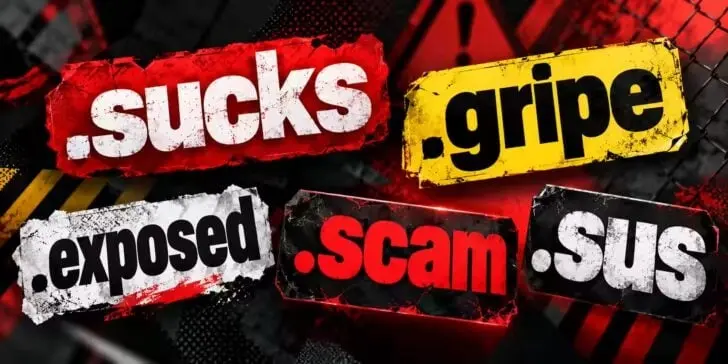
However, the 2026 round also includes strings that are not "negative" in the traditional sense but still pose a significant defensive challenge for brands. These are the "authoritative" strings, such as .official and .brand.
The competition for .official is particularly intense, with eight different companies applying for the right to operate the registry. In the digital age, where "blue checkmark" verification and authenticity are highly prized, the term "official" carries immense weight. Many companies already use the word "official" in their social media handles or secondary domain names to distinguish their legitimate presence from fan sites, critics, or counterfeiters.
If .official becomes a widely available TLD, brand owners will likely feel a strong urge to secure "brand.official" to ensure they maintain control over their authoritative digital identity. Unlike .sucks, which brands register to hide, .official is something brands would register to use. The high number of applicants for this string suggests that the industry expects it to be a high-demand, high-value extension.
Similarly, nine applicants are vying for .brand. While many large corporations have already registered their own specific "dot brand" TLDs (such as .apple, .google, or .nike), the general .brand extension could serve as a generic alternative for smaller companies or as a marketing tool for agencies. The sheer volume of interest in these types of strings indicates that the next round of expansion will be driven as much by the search for digital authority as it is by the potential for controversy.
As the 2026 round approaches, the domain industry remains in a state of watchful waiting. We do not yet know what the specific business models or pricing structures will be for XYZ’s .scam, .sus, or .ass applications. If these registries opt for a standard, non-discriminatory pricing model, they may avoid the vitriol that was directed at .sucks. However, if they follow the 2012 playbook of high-cost Sunrise periods and tiered pricing targeting trademark holders, the battle between registries and brand owners is certain to reignite.
For now, trademark holders and intellectual property attorneys are keeping a close eye on the list of applications. The lessons of the past have taught them that while some "scary" domains end up being harmless flops, others can create years of legal and reputational headaches. Whether the 2026 round produces a new "shakedown" or a new era of digital innovation will depend largely on how these controversial strings are managed by the applicants and regulated by ICANN.
 Web Hosting & Domain Management
Double Defeat for Serial Complainant in Consecutive Reverse Domain Name Hijacking Rulings
In the complex and often contentious world of digital real estate, the...
 Web Hosting & Domain Management
Woman faces changing 211 accounts after .name domain termination
The .name top-level domain (TLD) was originally launched in the early 2000s...
 Web Hosting & Domain Management
Citizen Journalist Escalates Legal Battle Against Porn Studio Over Persistent Domain Harassment
In the complex and often volatile intersection of digital journalism and online...







