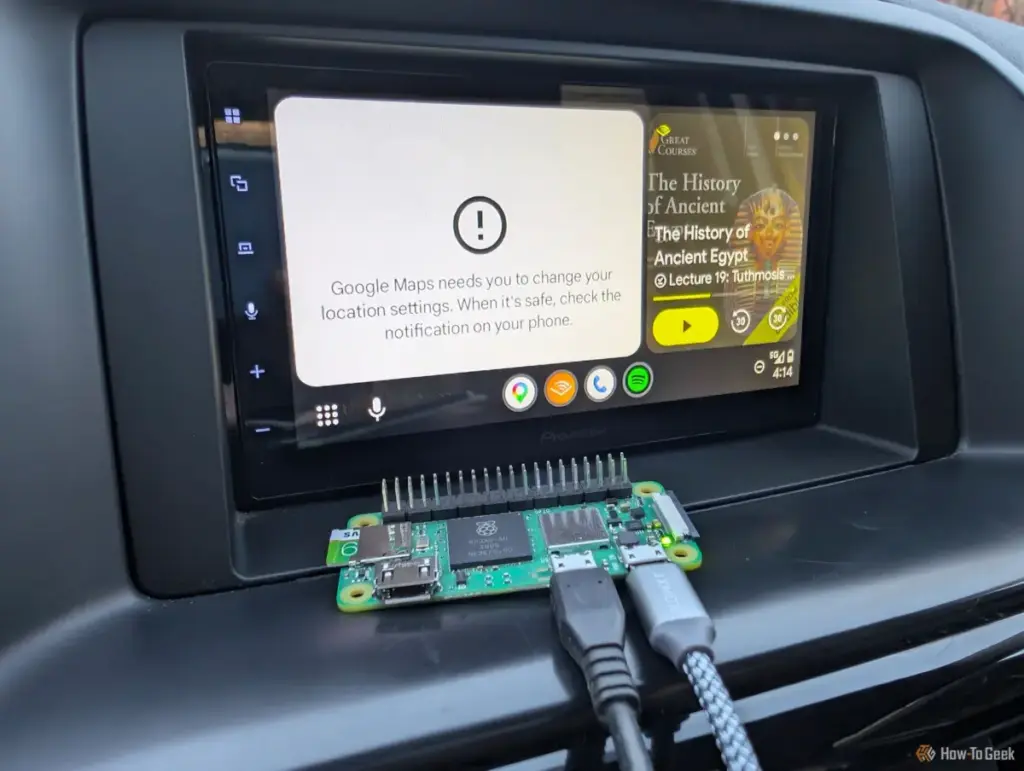
In the rapidly evolving landscape of automotive technology, the integration of smartphone ecosystems into vehicle infotainment systems has transitioned from a luxury feature to a fundamental expectation. Since its debut nearly a decade ago, Android Auto has redefined the driving experience by bringing navigation, communication, and media directly to the dashboard. However, for a significant portion of the motoring public, this convenience remains tethered by a physical constraint: the requirement for a wired USB connection. While modern vehicles increasingly offer wireless connectivity as a standard feature, owners of older models or aftermarket head units are often left behind, forced to manage cables that clutter the cabin and wear down device ports.
To address this disparity, a burgeoning market of commercial wireless adapters has emerged, with popular solutions often retailing between $30 and $100. Yet, for the tech-savvy enthusiast and the budget-conscious consumer, these proprietary dongles are not the only path forward. A new movement in the DIY hardware community has demonstrated that a functional, high-performance wireless Android Auto adapter can be constructed for as little as $15 using a Raspberry Pi Zero 2 W and open-source software. This approach not only slashes the cost of entry but also offers a level of transparency and customization that commercial products often lack.
The Technical Foundation of Wireless Connectivity
The core challenge of enabling wireless Android Auto lies in creating a digital bridge that can satisfy the protocol’s high-bandwidth requirements. Unlike standard Bluetooth audio streaming, which handles relatively small amounts of data, Android Auto requires a robust connection to stream high-resolution video and interface data simultaneously. To achieve this, the system utilizes a dual-layered connection: Bluetooth handles the initial "handshake" and telephony, while a dedicated Wi-Fi link manages the heavy lifting of the graphical interface.
The Raspberry Pi Zero 2 W has emerged as the ideal candidate for this intermediary role. Released as a successor to the original Zero W, the Zero 2 W features a quad-core 64-bit ARM Cortex-A53 processor. This boost in computational power is critical; while the original Zero W could theoretically handle the task, its single-core architecture often led to bottlenecks during the intensive process of relaying data packets between a phone and a car’s head unit.
By leveraging an open-source project titled "WirelessAndroidAutoDongle," developers have created a streamlined Linux environment designed specifically for this purpose. This custom image acts as a translator, utilizing the Pi’s hardware to mimic a wired connection to the car while maintaining a wireless link to the smartphone. The result is a device that the car perceives as a standard, cable-connected phone, even as the actual device remains in the driver’s pocket.
Hardware Versatility and the "Goldilocks" Device
While the Raspberry Pi Zero 2 W is favored for its balance of price and performance, the open-source nature of the project allows for a variety of hardware configurations. Support extends to the Raspberry Pi 3 A+, the Raspberry Pi 4, and the original Pi Zero W. However, each alternative brings its own set of trade-offs that the DIY community has carefully documented.
 Tech Tutorials & How-To Guides
Pixel 11’s Rambler AI Voice Typing Proven to Run Seamlessly on Older Hardware
The launch of a new flagship smartphone is almost always accompanied by...
 Tech Tutorials & How-To Guides
The Hidden Cost of Convenience: Why Windows’ Automated OneDrive Folder Backup Is Raising Alarms
For years, Microsoft Windows has been criticized for an increasing reliance on...
 Tech Tutorials & How-To Guides
The Evolution of the Pocket: How 3D Printing Refined the Search for the Perfect Everyday Carry
For many, the morning ritual is a simple, three-point checklist: phone, wallet,...