
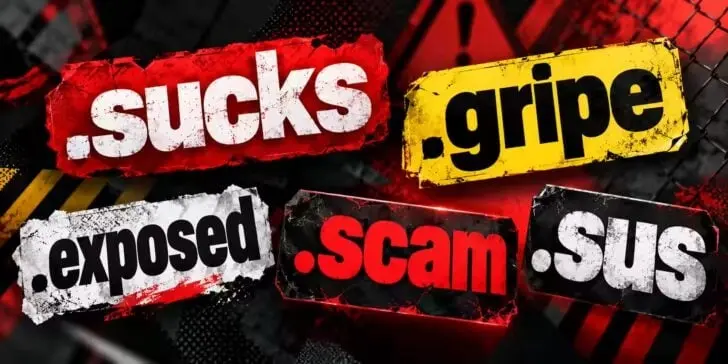
The global domain name landscape is once again on the precipice of a massive expansion, and with it comes the revival of a decade-old debate regarding trademark protection, corporate "shakedowns," and the fine line between free speech and digital extortion. As the internet community prepares for the 2026 round of New Generic Top-Level Domain (gTLD) applications, industry veterans and brand managers are looking back at the 2012 expansion with a mixture of caution and trepidation. The primary source of this anxiety is the memory of .sucks, a domain extension that became the poster child for controversial registry practices.
In the 2012 round, the introduction of hundreds of new extensions—ranging from .app to .photography—was intended to foster innovation and competition. However, when the application for .sucks was approved, it triggered an immediate and fierce backlash from the trademark community. Brand owners argued that the extension served no legitimate purpose other than to force corporations to pay exorbitant fees to prevent their own names from being registered by critics, trolls, or competitors. The fear was that a "brandname.sucks" domain would become a magnet for negative publicity and consumer complaints, effectively holding a company’s reputation for ransom.
The business model adopted by the .sucks registry, Vox Populi, only served to fuel these accusations. During the "Sunrise" period—a mandatory phase where trademark holders have the first right to register domains matching their marks—the price for a .sucks domain was set at a staggering $2,500. This was an unprecedented figure in the industry, where most Sunrise registrations typically cost a few hundred dollars. In a move that many viewed as a calculated provocation, the registry simultaneously announced that ordinary consumers who wished to use the extension for its stated purpose of "criticism and consumer advocacy" could register a name for as little as $10, provided they used the registry’s own platform to host the site.
The controversy reached such a fever pitch that the Internet Corporation for Assigned Names and Numbers (ICANN) took the rare step of asking the U.S. Federal Trade Commission (FTC) and the Canadian Office of Consumer Affairs to review the registry’s business practices. While the regulatory intervention did not ultimately halt the extension, the incident left a permanent mark on the domain industry, establishing a blueprint for what brands describe as "predatory" TLDs.
As we approach the 2026 round, a new set of applications is beginning to emerge, and some of them bear a striking resemblance to the .sucks model. Trademark interests are already sounding the alarm over several strings that appear designed to provoke defensive registrations.
Chief among these is the application for .scam, submitted by XYZ, the registry operator best known for the highly successful .xyz extension. On the surface, the applicant’s justification for .scam is rooted in public service and transparency. According to XYZ, the .scam extension is intended to give people a dedicated space to exercise free speech, share warnings about fraudulent activities, and help others identify deceptive practices before they spread. The registry’s pitch is to "turn the word against deception," positioning the TLD as a tool for consumer protection and whistleblower activity.
However, from the perspective of a brand owner, a domain like "yourbrand.scam" is a PR nightmare waiting to happen. Regardless of the registry’s stated intentions, the potential for abuse is significant. Even if a brand has done nothing wrong, the mere existence of a site under that extension could confuse consumers or provide a platform for malicious actors to damage a company’s reputation. If the registry chooses to implement a high-priced Sunrise period similar to .sucks, brands will likely feel compelled to pay a "protection tax" to keep their names off the extension.
XYZ has also applied for .sus, a term that has gained immense popularity among younger generations. Derived from the word "suspect" or "suspicious," the term "sus" became a cultural phenomenon through social media and online gaming. In the context of the domain world, a .sus extension carries a similar weight to .scam or .sucks. It implies that the entity associated with the domain is untrustworthy or "shady." While the term is often used colloquially or humorously, its application in a commercial context could be damaging, leading to another wave of defensive registrations from companies eager to avoid being labeled as "sus" by the internet public.
Perhaps the most eyebrow-raising application from XYZ is for the string .ass. While the word has an obvious and crude primary association in English-speaking cultures, the registry has provided a more formal justification in its application. XYZ states that "ASS" can serve as a short form for professional terms such as "asset," "association," or "assistant." They argue that the extension could represent something of value, a group organized around a shared purpose, or even a digital agent or assistant.
The industry reaction to the .ass application has been a mixture of amusement and skepticism. While the official definition provides a veneer of professional legitimacy, the reality of the internet suggests that the extension is far more likely to be used for its double-entendre potential. For brand owners, the concern remains the same: the need to protect their trademarks from being associated with a string that is inherently provocative or unprofessional.
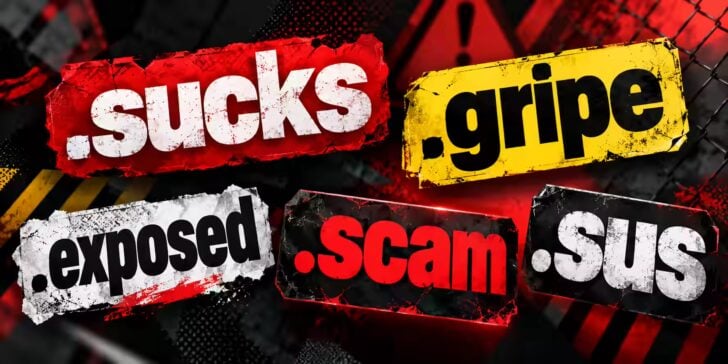
Despite these concerns, there is a school of thought suggesting that the threat of "negative" TLDs may be overstated. History shows that not every controversial extension becomes a commercial success or a significant threat to brands. In the 2012 round, extensions like .gripe and .exposed were launched with similar fears that they would become havens for corporate bashers. However, more than a decade later, neither of these extensions has gained significant traction. Both .gripe and .exposed currently have fewer than 3,000 registrations in their respective zones, despite being priced affordably at under $20.
The lack of adoption for .gripe and .exposed suggests that consumers and critics may not actually want specialized extensions for their grievances. Most consumer complaints continue to take place on established social media platforms like X (formerly Twitter), Facebook, or Reddit, where they are more likely to reach a wide audience. For many brands, the realization that these "negative" domains often sit empty and ignored has led to a more relaxed approach toward defensive registrations. They have found that if a domain isn’t ranking in search results and isn’t being visited by consumers, it poses little actual risk to the brand’s bottom line.
However, the 2026 round also includes strings that are not "negative" in the traditional sense but still pose a significant defensive challenge for brands. These are the "authoritative" strings, such as .official and .brand.
The competition for .official is particularly intense, with eight different companies applying for the right to operate the registry. In the digital age, where "blue checkmark" verification and authenticity are highly prized, the term "official" carries immense weight. Many companies already use the word "official" in their social media handles or secondary domain names to distinguish their legitimate presence from fan sites, critics, or counterfeiters.
If .official becomes a widely available TLD, brand owners will likely feel a strong urge to secure "brand.official" to ensure they maintain control over their authoritative digital identity. Unlike .sucks, which brands register to hide, .official is something brands would register to use. The high number of applicants for this string suggests that the industry expects it to be a high-demand, high-value extension.
Similarly, nine applicants are vying for .brand. While many large corporations have already registered their own specific "dot brand" TLDs (such as .apple, .google, or .nike), the general .brand extension could serve as a generic alternative for smaller companies or as a marketing tool for agencies. The sheer volume of interest in these types of strings indicates that the next round of expansion will be driven as much by the search for digital authority as it is by the potential for controversy.
As the 2026 round approaches, the domain industry remains in a state of watchful waiting. We do not yet know what the specific business models or pricing structures will be for XYZ’s .scam, .sus, or .ass applications. If these registries opt for a standard, non-discriminatory pricing model, they may avoid the vitriol that was directed at .sucks. However, if they follow the 2012 playbook of high-cost Sunrise periods and tiered pricing targeting trademark holders, the battle between registries and brand owners is certain to reignite.
For now, trademark holders and intellectual property attorneys are keeping a close eye on the list of applications. The lessons of the past have taught them that while some "scary" domains end up being harmless flops, others can create years of legal and reputational headaches. Whether the 2026 round produces a new "shakedown" or a new era of digital innovation will depend largely on how these controversial strings are managed by the applicants and regulated by ICANN.
 Web Hosting & Domain Management
Public Interest Registry Names TECHO as .Org of the Year at Annual Impact Awards in Washington, D.C.
The Public Interest Registry, the long-standing non-profit organization responsible for managing and...
 Web Hosting & Domain Management
Forward-Looking Strategies in Domain Investing: Moving Toward the 2027 Market
The domain name industry has long been characterized by its unique blend...
 Web Hosting & Domain Management
Taylor Swift Secures Digital Real Estate with Application for Personal Top-Level Domain
The digital landscape is preparing for a significant transformation as one of...







