
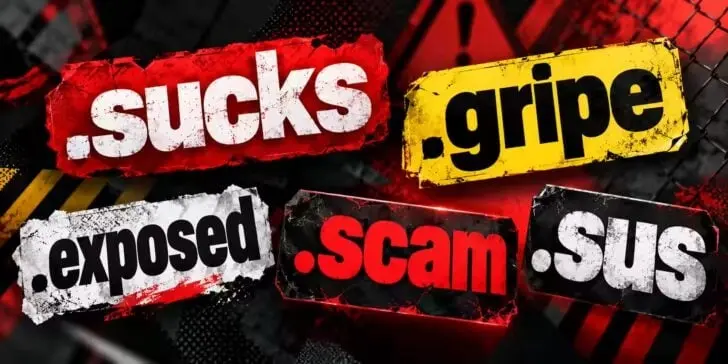
However, from the perspective of a brand owner, a domain like "yourbrand.scam" is a PR nightmare waiting to happen. Regardless of the registry’s stated intentions, the potential for abuse is significant. Even if a brand has done nothing wrong, the mere existence of a site under that extension could confuse consumers or provide a platform for malicious actors to damage a company’s reputation. If the registry chooses to implement a high-priced Sunrise period similar to .sucks, brands will likely feel compelled to pay a "protection tax" to keep their names off the extension.
XYZ has also applied for .sus, a term that has gained immense popularity among younger generations. Derived from the word "suspect" or "suspicious," the term "sus" became a cultural phenomenon through social media and online gaming. In the context of the domain world, a .sus extension carries a similar weight to .scam or .sucks. It implies that the entity associated with the domain is untrustworthy or "shady." While the term is often used colloquially or humorously, its application in a commercial context could be damaging, leading to another wave of defensive registrations from companies eager to avoid being labeled as "sus" by the internet public.
Perhaps the most eyebrow-raising application from XYZ is for the string .ass. While the word has an obvious and crude primary association in English-speaking cultures, the registry has provided a more formal justification in its application. XYZ states that "ASS" can serve as a short form for professional terms such as "asset," "association," or "assistant." They argue that the extension could represent something of value, a group organized around a shared purpose, or even a digital agent or assistant.
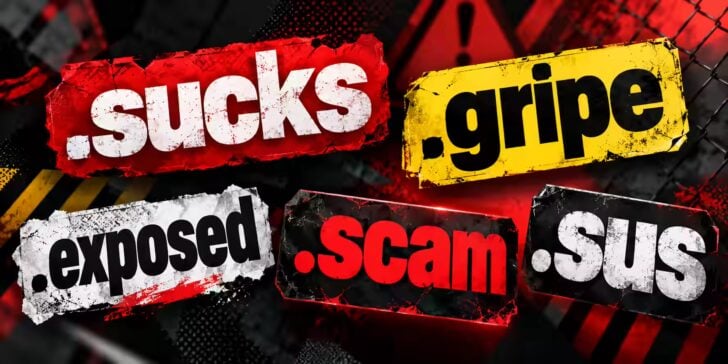
The industry reaction to the .ass application has been a mixture of amusement and skepticism. While the official definition provides a veneer of professional legitimacy, the reality of the internet suggests that the extension is far more likely to be used for its double-entendre potential. For brand owners, the concern remains the same: the need to protect their trademarks from being associated with a string that is inherently provocative or unprofessional.
Despite these concerns, there is a school of thought suggesting that the threat of "negative" TLDs may be overstated. History shows that not every controversial extension becomes a commercial success or a significant threat to brands. In the 2012 round, extensions like .gripe and .exposed were launched with similar fears that they would become havens for corporate bashers. However, more than a decade later, neither of these extensions has gained significant traction. Both .gripe and .exposed currently have fewer than 3,000 registrations in their respective zones, despite being priced affordably at under $20.
The lack of adoption for .gripe and .exposed suggests that consumers and critics may not actually want specialized extensions for their grievances. Most consumer complaints continue to take place on established social media platforms like X (formerly Twitter), Facebook, or Reddit, where they are more likely to reach a wide audience. For many brands, the realization that these "negative" domains often sit empty and ignored has led to a more relaxed approach toward defensive registrations. They have found that if a domain isn’t ranking in search results and isn’t being visited by consumers, it poses little actual risk to the brand’s bottom line.
 Web Hosting & Domain Management
Deadline Approaches for .Com Domain Price Increase Scheduled for November 1
The window of opportunity for domain name owners to secure current pricing...
 Web Hosting & Domain Management
Qatar Implements Strict New Residency and Usage Restrictions for .qa Domain Names
The landscape for the .qa country-code top-level domain (ccTLD) is undergoing a...
 Web Hosting & Domain Management
AuDA plans to grandfather existing .com.au and .net.au registrants
The controversy began when the auDA board recently approved a series of...







