
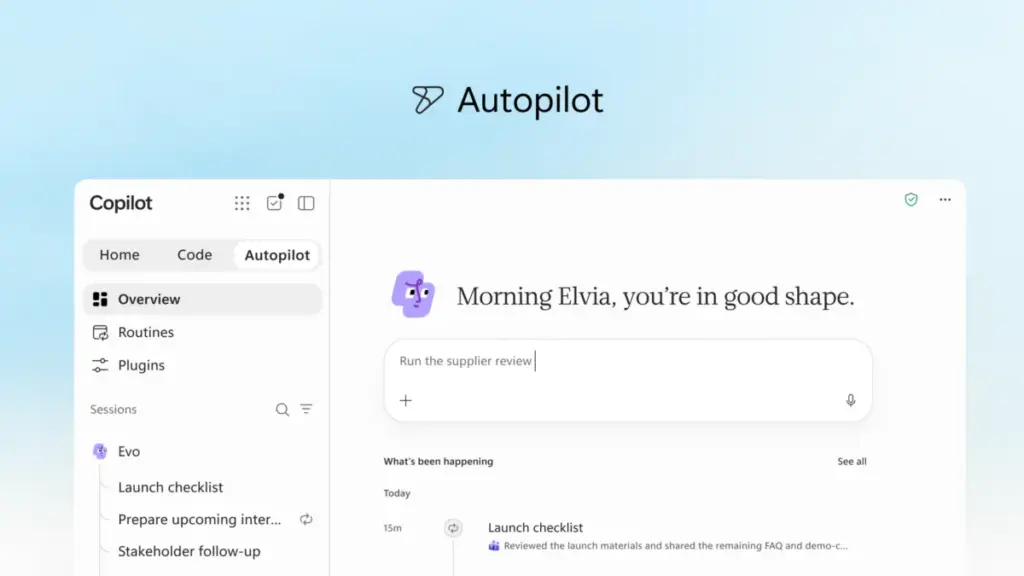
Microsoft has announced a comprehensive overhaul of its Copilot platform, signaling a strategic shift from reactive AI assistance to a proactive, integrated ecosystem designed to scale with the complexities of modern organizational workflows. The "new Copilot" is being positioned not merely as a chatbot, but as a central hub for human ambition, connecting the essential tools of the modern workplace with a next generation of agentic capabilities that allow users to build, customize, and automate work at an unprecedented scale.
This evolution comes at a time when organizations are increasingly looking for ways to move beyond the experimental phase of generative AI and into a stage of deep integration and measurable value. By reimagining the user interface and introducing persistent digital teammates, Microsoft aims to keep AI interactions within the natural flow of work, reducing the friction often associated with switching between disparate applications and data sources.
A New Experience for Every Mode of Work
Central to this transformation is the introduction of a new starting point for the user experience: Home. As professional life increasingly fragments across various channels—including meetings, group chats, shared documents, emails, and specialized apps—the Home interface serves as a grounding point. It is designed to help users get their bearings by providing a unified view of recent activity and personalized suggestions on how Copilot can assist with pending tasks.
The Home experience brings together two distinct modes of AI interaction: Chat and Cowork. While Chat remains the destination for instant, conversational needs—such as asking quick questions, conducting lookups, or generating initial drafts—Cowork represents a shift toward delegation. In the Cowork environment, users define a complex task and allow the AI to manage the process from end to end. This is particularly suited for high-stakes, iterative projects such as responding to a Request for Proposal (RFP), assembling a product launch kit, or preparing a financial close package. Microsoft has indicated that in the near future, the system will become even more intuitive; users will simply state their objective, and Copilot will automatically route the request to the most appropriate mode—Chat, Cowork, or Code.
Furthermore, Microsoft is deepening the integration of its core productivity suite through "Office in Copilot." This feature embeds the full functionality of Word, Excel, and PowerPoint directly into the Copilot experience. The goal is to eliminate the "broken formatting" and version control issues that often arise when moving content between an AI interface and a traditional document. From within the Copilot Home, users can initiate a draft, model a budget, or build a presentation deck that exists as a real, editable file from the moment of creation. These documents are live and synchronized, allowing for real-time collaboration where @mentions and teammate edits appear instantly, ensuring that progress remains consistent across both Copilot and the standalone Office applications.

The specific capabilities within these apps have also seen significant refinements. PowerPoint now features automated brand alignment, ensuring that AI-generated slides adhere to corporate templates. Excel users can now benefit from a more transparent audit trail, as Copilot can explain exactly what changes were made to a workbook and why, while also recommending the most effective data visualizations. Across the Microsoft 365 suite, new "Skills" are being introduced to provide specialized expertise, such as legal-specific workflows in Word or financial modeling expertise in Excel, allowing organizations to standardize best practices across their workforce.
Empowering Non-Developers with "Code"
One of the most significant additions to the platform is "Code," a feature designed to move solution-building beyond the exclusive domain of software developers. Microsoft posits that for decades, the primary units of knowledge work have been the document, the spreadsheet, and the presentation deck. With the introduction of Code, a fourth unit is added: the purpose-built solution.
 Productivity Software & Office Suites
Microsoft Unveils Natural Language App Creation in Copilot Studio, Bridging the Gap Between AI Innovation and Enterprise Governance
The landscape of software development is undergoing a fundamental transformation, driven by...
 Productivity Software & Office Suites
Microsoft Reimagines Copilot as a Unified AI Platform with New Proactive Agents and App-Building Capabilities
Microsoft has announced a comprehensive reimagining of its Copilot platform, signaling a...
 Productivity Software & Office Suites
Microsoft Unveils Strategic Roadmap for Enterprise AI, Prioritizing Agentic Workflows and Flexible Economic Models
In an era defined by rapid-fire technological breakthroughs and a relentless cycle...







