
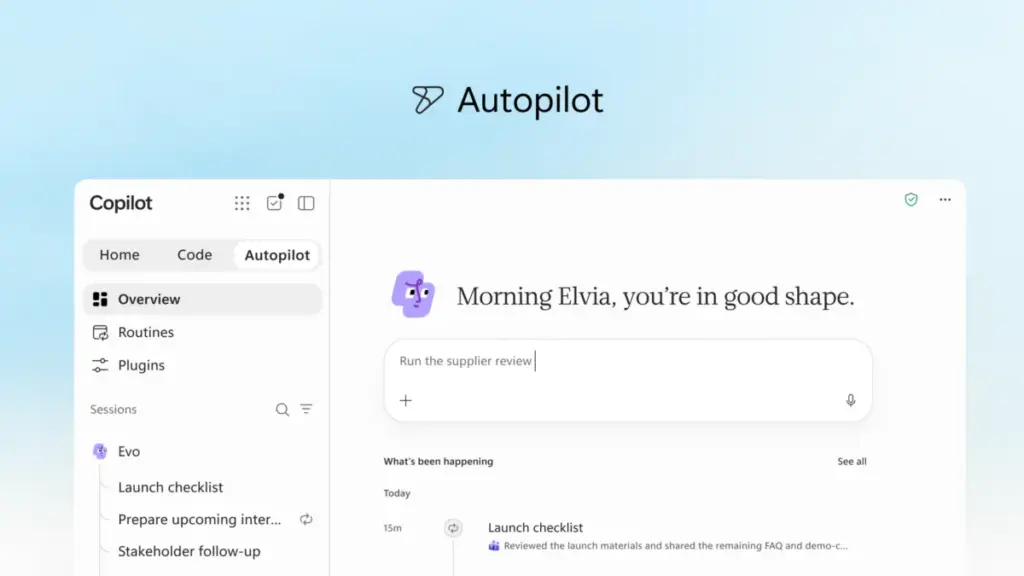
To further extend these capabilities, Microsoft is launching a new plugin registry. This unified catalog will house plugins from Microsoft, third-party partners, and custom-built internal tools. The registry provides a centralized location for IT departments to approve and manage these extensions, while developers can publish their tools once to have them appear across all supported Copilot surfaces.
Managing the Economics of AI
As AI usage scales, the challenge of managing costs and ensuring a return on investment becomes paramount. Microsoft is addressing this through a dual-pronged approach to pricing and the introduction of "FinOps for AI" capabilities.
For "everyday AI" tasks like summaries and initial drafts, Microsoft offers a User Subscription License (USL), which provides predictable costs for standard Copilot features. At the heart of this subscription is "Auto," a routing system that evaluates each request based on accuracy, speed, and cost to determine the best model for the job.

For more complex, "agentic" work—such as the long-running tasks performed by Cowork, Code, and Autopilot—Microsoft is utilizing Usage-Based Billing (UBB). This allows organizations to match their spending to the value generated by advanced frontier models. To help organizations navigate this landscape, Microsoft is introducing new cost management tools within "Agent 365" and "Insights." Admins can now manage spending policies via API, route credit requests through existing approval workflows, and restrict specific model families to certain user groups. End users will also have visibility into their own credit usage and remaining balances directly within the Copilot interface, encouraging responsible AI consumption within organizational guardrails.
A Vision for Proactive Assistance
Looking ahead, Microsoft provided a glimpse into upcoming features designed to make Copilot even more personalized. A new command center called "Today" is set to enter private preview in October. "Today" is designed to act as a proactive dashboard across mail, calendar, and Teams, surfacing what needs immediate attention and what can wait. Beyond just flagging tasks, it will prepare the necessary work in advance—such as writing a draft for a forgotten follow-up or proposing a schedule change based on a meeting conflict.
The company also announced "@Copilot in Teams," which will allow the AI to participate in group chats and channels with the shared context of the entire team. Instead of an individual user having to explain a project’s background, @Copilot can pull context from across previous conversations to answer questions about past decisions or prepare cross-functional reviews that highlight dependencies and open questions.
These updates represent a significant step in Microsoft’s ambition to turn AI into a foundational element of the workplace. The new Copilot experience is currently rolling out through the Frontier program, with broad availability of various features expected in the coming weeks and months. As Jared Spataro, who leads Microsoft’s AI at Work efforts, noted, the goal is to help every organization leverage these agents to solve unique business problems and drive net-new value creation. Further details and innovations are expected to be shared at the upcoming Microsoft Ignite event in November.
 Productivity Software & Office Suites
Microsoft Unveils Natural Language App Creation in Copilot Studio, Bridging the Gap Between AI Innovation and Enterprise Governance
The landscape of software development is undergoing a fundamental transformation, driven by...
 Productivity Software & Office Suites
Microsoft Unveils Microsoft 365 G7: A New Era of AI-Driven Productivity and Governance for Government Agencies
In a significant move to modernize the digital infrastructure of the U.S....
 Productivity Software & Office Suites
Microsoft Shifts Focus to Enterprise AI Utility: A New Strategic Framework for Agents, Economics, and Partnership
In an era defined by a relentless cycle of artificial intelligence breakthroughs,...







