Seven months ago, a provocative thesis sent ripples through the technology and software-as-a-service (SaaS) sectors. The argument was bold: source code, once the highly guarded crown jewel of the digital economy, was rapidly becoming a common good. The rise of generative artificial intelligence, it was argued, had effectively collapsed the economic cost of clean-room reimplementation. In this new reality, pure software expression was losing its scarcity, leaving the SaaS model—built on high-margin proprietary code—facing an existential squeeze. The only remaining moats would be genuine data gravity and established network effects.
At the time, the prediction suggested a transition period of five to ten years. However, the pace of technological evolution has proven those estimates conservative. Recent developments across the gaming, emulation, and productivity software landscapes suggest that the "death of SaaS" and the commoditization of code are not distant possibilities, but a visible, unfolding reality. The barriers that once protected multi-billion dollar software ecosystems are not just thinning; they are collapsing in real-time.
Halo Everywhere: The New Frontier of Porting and Expansion
The most visible manifestation of this shift has appeared in the world of classic gaming. In a matter of weeks, Halo: Combat Evolved—the title that defined the original Xbox and served as a cornerstone of Microsoft’s gaming empire—has appeared on platforms it was never intended to touch. More significantly, it has been radically expanded in ways that were previously thought impossible for a title of its age.
These are not the "asset flips" or rudimentary ports of the past. They are the result of sophisticated decompilation projects that have achieved near byte-matching fidelity. While the groundwork for decompilation has been laid by community efforts over several years, the "last mile" of development has been supercharged by AI. A single developer or a lean team, augmented by modern coding agents, can now complete tasks that previously required years of specialized engineering.
Within days or weeks, developers are shipping new renderers, complex platform integrations, and expanded netcode. On the PC, this has manifested as 100-player co-op modes, a feat the original hardware could never have dreamed of supporting. Beyond the PC, the game is now appearing on the Nintendo 64, the Sega Dreamcast, mobile phones, and even web browsers. Halo is rapidly becoming the "new Doom"—a game that runs on everything not because the original developer ported it, but because the technical barriers to doing so have been obliterated by AI-assisted reverse engineering.
The Great Leap Forward in PS5 Emulation
While the porting of older titles demonstrates the collapse of software barriers, the world of console emulation provides a high-visibility stress test for modern, high-performance software. The pace of progress in PlayStation 5 emulation has defied historical precedents.
In early September, the Demon’s Souls Remake—a marquee PS5 title—was barely functional on the KyTyPS5 emulator and its various forks. Even on top-tier consumer hardware, the game crawled at a mere 1 to 2 frames per second (FPS). Historically, moving from a "bootable" state to a "playable" state in console emulation takes years of painstaking optimization and hardware-specific debugging.
 Software Development & Scripting for IT
Architecting Precision: Why Staged Retrieval and Explicit Contracts are Redefining AI Insurance Claims Intake
In the rapidly evolving landscape of insurance technology, the integration of Large...
 Software Development & Scripting for IT
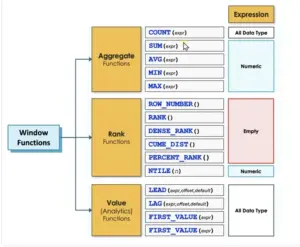
The Evolution of Data Analysis: Mastering the Power of SQL Window Functions
In the modern landscape of data-driven decision-making, Structured Query Language (SQL) remains...
 Software Development & Scripting for IT
Re-evaluating the Enterprise Test Automation Stack: Why Past Decisions Require New Scrutiny in the Age of AI
In the fast-moving world of enterprise software, a test automation tool that...