
These projects are public demonstrations that a small team, empowered by frontier AI models like Claude, can produce recognizable, runnable, and functional approximations of the most heavily protected software suites in existence. The UI patterns, core workflows, and file formats that Adobe and Microsoft spent decades and billions of dollars perfecting are being reconstructed in a matter of weeks. The fact that these tools are already usable for light tasks and are improving in public view suggests that the "complexity moat" of enterprise software is no longer a permanent defense.
A Shared Symptom of a Paradigm Shift
These stories—from Halo ports to Photoshop clones—are not isolated incidents or mere technical stunts. They are symptoms of a fundamental shift in the economics of software. The common threads connecting them illustrate why the original prediction of the "death of SaaS" was not an overstatement, but an understatement of the timeline.
First, the cost of "clean-room" reimplementation is approaching zero. AI can now look at the behavior of a program and write the code to replicate it without ever seeing the original source, providing a layer of legal and technical insulation. Second, software expression is losing its status as a scarce resource. When an agent can recreate a feature in minutes, the value of the code itself evaporates. Third, we are seeing the rise of "agentic" reverse engineering, where tools like REA allow machines to do the heavy lifting of decoding binaries. Finally, the "last mile" of software development—the tedious work of porting, optimizing, and polishing—is being automated at a rate that allows tiny teams to compete with massive corporations.
Where is the Industry Heading?
The original conclusion seven months ago was that software would eventually become effectively open source—either by the choice of the developer or by the force of the market. In such a world, the only sustainable value proposition is convenience, service, and reliability. While that conclusion was initially aimed at the SaaS market, it is now clear that the gaming industry is equally, if not more, exposed.
AAA game studios are currently trapped in a cycle of rising development costs, risk-aversion, and audience fatigue. The ability for communities to rapidly reimplement and redistribute games removes one of the final economic moats: the difficulty of making a working version exist on a new platform. When a classic can be ported to a browser or a phone with 128-player support in a few weeks, the value of exclusive platform deals and long, expensive remastering cycles begins to look incredibly fragile.
Even the distinction between "official" and "community" versions of software is blurring. As the technical barriers to creating a full alternative continue to fall, the pressure on traditional publishing and exclusivity models will intensify. Some studios may survive by doubling down on live services, social layers, and competitive integrity—elements that are harder for an AI to mirror. Others, however, may find that their business model, built on the scarcity of code, is no longer viable.
The direction of the industry is clearer now than it was in March. The transition from proprietary silos to a world where source code is a common good is happening at a blistering pace. Halo is the new Doom, emulators are achieving years of progress in weeks, and the most protected software suites on earth are being cloned in Rust by small teams with AI assistants. The only remaining question is how many markets will realize this shift in time to adapt to a world where software is no longer a product, but a utility.
 Software Development & Scripting for IT
Bridging the Gap Between Logic and Instruction: An In-Depth Look at the Runbook Repair Lab
In the rapidly evolving landscape of software engineering, the "runbook"—a routine set...
 Software Development & Scripting for IT
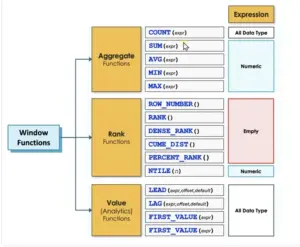
The Evolution of Data Analysis: Mastering the Power of SQL Window Functions
In the modern landscape of data-driven decision-making, Structured Query Language (SQL) remains...
 Software Development & Scripting for IT
The High Stakes of Autonomy: Navigating the Promise and Peril of AI in Security Operations
The modern Security Operations Center (SOC) is currently undergoing a radical transformation....