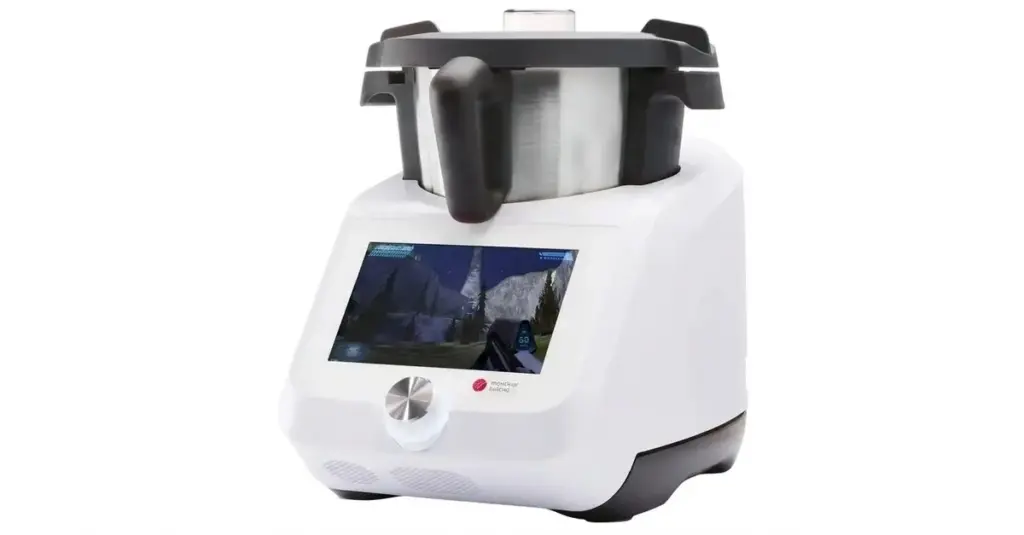
The current timeline, however, looks nothing like the past. Within days of reaching that initial 1 FPS milestone, the software jumped into the 10–18 FPS range. By mid-September, temporary 30 FPS markers were being hit. By mid-October, custom builds were delivering over 60 FPS at 1440p resolutions using original PS5 graphics settings. On high-end hardware, such as an NVIDIA RTX 5070 paired with a Ryzen 7 9800X3D, performance is now approaching 120 FPS with the aid of DLSS Frame Generation. The full game became completable in roughly a month. This acceleration suggests that the "black box" of modern console architecture is being decoded at a speed that renders traditional hardware exclusivity increasingly fragile.
REA: The Toolset for Universal Reverse Engineering
Behind these individual success stories lies a fundamental shift in tooling. One of the most significant developments this month was the explosion of "REA" (Reverse Engineer Anything), a project by developer morluto.
REA is an MCP (Model Context Protocol) server and command-line interface that allows sophisticated coding agents—such as Claude Code, Codex, and Cursor—to perform deep reverse engineering on applications, native binaries, and websites. Unlike traditional tools that require a human expert to interpret assembly code, REA orchestrates existing heavyweights like Ghidra, Hopper, and IDA, returning evidence-backed explanations to the AI agent.
The practical implication is profound: an AI agent can now be pointed at a specific feature or behavior in a piece of closed-source software and produce a usable understanding of how it works. From there, the agent can generate a path to an independent, clean-room reimplementation. The gap between observing a behavior and recreating that behavior under a different license or on different hardware has effectively vanished. In roughly two weeks, the project garnered hundreds of thousands of stars on GitHub, signaling a massive appetite for tools that dismantle software secrecy.
Challenging the Giants: The Adobe and Office "Craft" Projects
Perhaps the most direct threat to the traditional SaaS and high-margin software model came in early October with the emergence of the ArtCraft and OfficeCraft projects. Led by developer Brandon Thomas, these open-source, Rust-based applications are explicit clean-room reimplementations of the world’s most dominant productivity suites.
The ArtCraft suite includes PhotoCraft (a Photoshop alternative), FilmCraft (Premiere), and LightCraft (Lightroom), along with equivalents for Illustrator, After Effects, InDesign, and Acrobat. Shortly after their debut, the effort expanded into Microsoft Office territory with WordCraft, GridCraft (Excel), and DeckCraft (PowerPoint).
These projects are currently in their early alpha stages. By the developers’ own admission, feature parity typically sits between 45% and 60%. They are not yet "ready for real work" for professional power users; they lack full file compatibility, polish, and the handling of complex edge cases. However, to focus on their current incompleteness is to miss the signal they represent.
 Software Development & Scripting for IT
The Problem-First Paradigm: Why Solving Business Pain Points Outlasts Tool Mastery in the AI Automation Era
In the rapidly evolving landscape of digital transformation, the allure of new...
 Software Development & Scripting for IT
UNC6240 Exploits Critical Oracle PeopleSoft Vulnerability Through Sophisticated WAF Bypass Techniques
A sophisticated cyber-espionage and data theft campaign has been identified targeting organizations...
 Software Development & Scripting for IT
Architecting Precision: Why Staged Retrieval and Explicit Contracts are Redefining AI Insurance Claims Intake
In the rapidly evolving landscape of insurance technology, the integration of Large...