
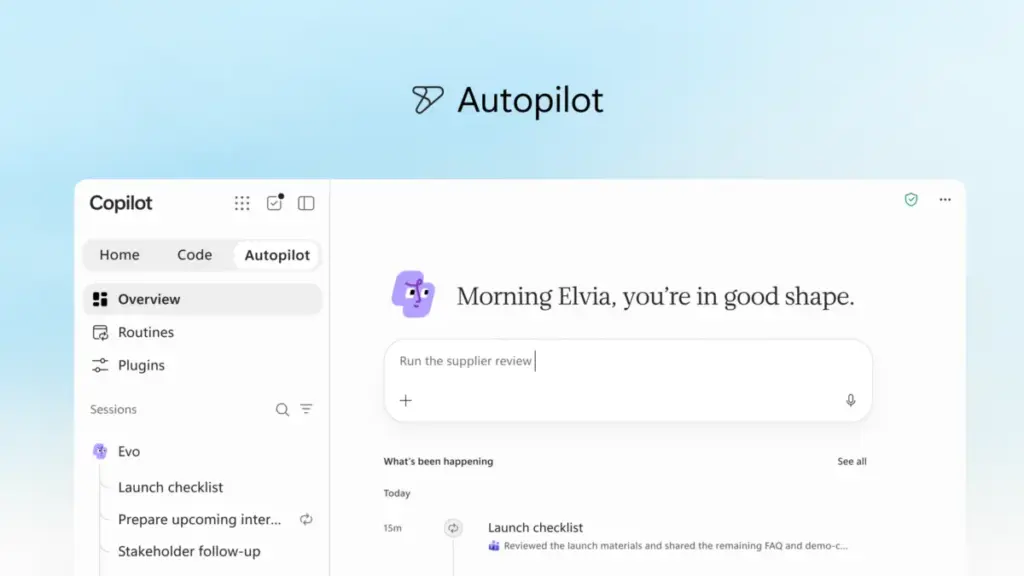
In a significant move to redefine the landscape of digital productivity, Microsoft has announced a comprehensive reimagining of its Copilot platform. The tech giant is introducing what it calls the "new Copilot," a consolidated ecosystem designed to bridge the gap between traditional software tools and a new generation of artificial intelligence capabilities. This update aims to integrate AI more deeply into the "flow of human ambition," allowing both individuals and large-scale organizations to build, customize, and scale AI-driven workflows with unprecedented ease.
The announcement signals a shift in Microsoft’s strategy, moving away from viewing AI as a mere chatbot and toward treating it as a foundational layer for all professional activities. By connecting the tools that workers rely on daily with advanced agentic capabilities, Microsoft hopes to enable a more proactive and personalized approach to work. The "new Copilot" is built around three primary pillars: Home, Code, and Autopilot, each targeting a different mode of professional engagement.
A Centralized Hub for Every Mode of Work
The centerpiece of this update is the introduction of "Home," a new starting point within the Copilot app designed to serve as a unified command center. In the modern workplace, employees often find themselves bouncing between disparate platforms—emails, video meetings, collaborative documents, and various specialized apps. Microsoft’s vision for Home is to provide a grounded environment where users can regain their bearings and maintain momentum.
Within the Home interface, two distinct modes of interaction coexist: Chat and Cowork. Chat remains the familiar, conversational interface optimized for rapid-fire questions, quick data lookups, and the drafting of simple messages. It is designed to keep users "in the loop" without requiring deep dives into complex menus.
Cowork, however, represents a more advanced shift toward delegation. Rather than simply asking for information, users can define complex tasks and delegate them to the AI to be executed end-to-end. Microsoft envisions Cowork handling labor-intensive projects such as generating Request for Proposal (RFP) responses, assembling comprehensive launch kits, or preparing financial close packages. The system is designed to iterate on these tasks until a polished, completed result is achieved.

Perhaps most notably, Microsoft is integrating the full suite of Office applications—Word, Excel, and PowerPoint—directly into the Copilot experience. This "Office in Copilot" feature allows users to initiate real work from within the AI interface without the friction of switching applications. For example, a user can ask Copilot to draft a brief or build a slide deck, and the AI will create an editable, live document that remains in sync across the Microsoft 365 ecosystem. This ensures that formatting remains intact and that team members can collaborate in real-time, with @mentions and edits appearing seamlessly regardless of whether a user is working in the standalone app or the Copilot interface.
Democratizing Solution Building with "Code"
Recognizing that the "unit of work" in the knowledge economy is evolving, Microsoft is introducing "Code," a feature that extends the power of solution-building to non-developers. While documents, spreadsheets, and presentations remain vital, Microsoft argues that small, purpose-built applications are becoming equally essential for getting work done.
The Code feature allows users to describe an application, automation, or dashboard using natural language. Copilot then selects the appropriate technical approach and builds the solution. These can range from persistent desktop widgets for quick data reference to cloud-hosted internal apps that can be shared across a team.
 Productivity Software & Office Suites
Microsoft Announces New AI-Integrated Office Suites to Streamline Small Business Operations
In the demanding ecosystem of small business management, success is often measured...
 Productivity Software & Office Suites
Microsoft Unveils Reimagined Copilot with Agentic Capabilities and New "Autopilot" Digital Teammate
Microsoft has announced a sweeping overhaul of its Copilot platform, signaling a...
 Productivity Software & Office Suites
Microsoft Launches Copilot Cowork Globally, Bringing Agentic AI to the Fortune 500
Microsoft has officially announced the general availability of Copilot Cowork, marking a...







